14th National Party Congress - pivotal moment for Vietnam to consolidate its rising position: former ambassador

Vietnam is expected to continue playing a very active role within ASEAN and to further strengthen its position as a genuine pillar of stability in Southeast Asia.

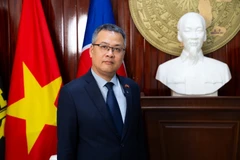
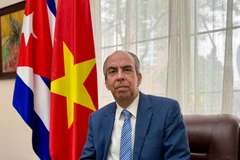
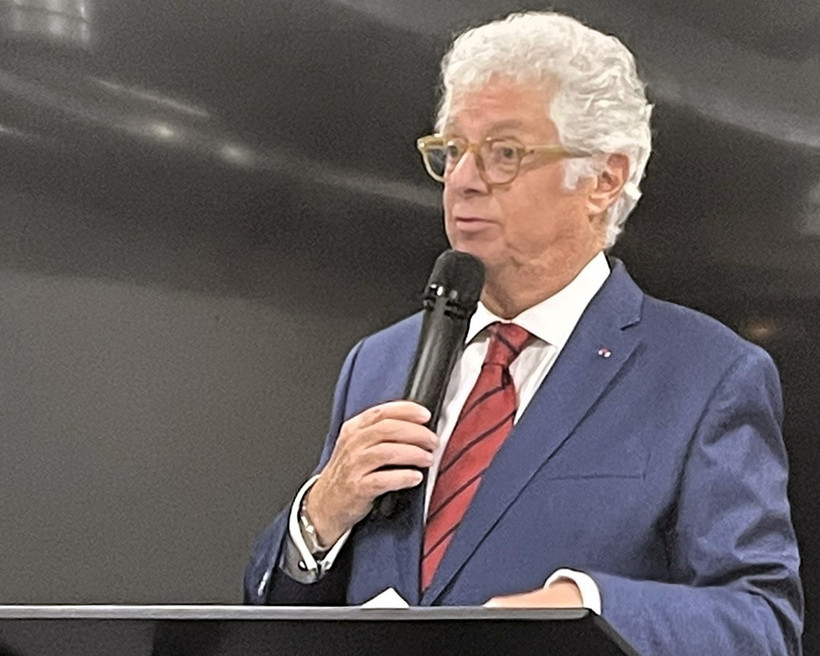
Fomer Frech Ambassador to Vietnam Antoine Pouillieute (Photo: VNA)

Paris (VNA) – The 14th National Congress of the Communist Party of Vietnam (CPV) is expected to set out major development orientations that will help Vietnam consolidate its position as a rising nation, while reaffirming its role as a pillar of stability in Southeast Asia, a former ambassador said.

Speaking to the Vietnam News Agency, Antoine Pouillieute, who worked as French Ambassador to Vietnam from 2001 to 2004, said that for years, Vietnam has been recognised by the international community as a successful country on its development path.

This success is reflected not only in economic indicators but also in the tangible progress perceived within Vietnamese society itself, he said.

However, Pouillieute stressed that the current international context is placing new demands on Vietnam. One major shift is the end of the early 21st-century model of globalisation, as global trade increasingly moves from globalisation toward regionalisation. In this context, Vietnam needs to adapt swiftly, transitioning from deep integration into global markets to more proactive and effective participation in regional frameworks.

Another challenge, he said, is the re-emergence of major power structures, accompanied by tougher approaches in international relations. Amid growing uncertainty, Vietnam is expected to continue playing a very active role within ASEAN and to further strengthen its position as a genuine pillar of stability in Southeast Asia.

Commenting on the major orientations expected to be adopted at the 14th Party Congress, Pouillieute said such a congress must provide fundamental and long-term directions. After a successful “take-off” phase, Vietnam is now entering a stage where it must demonstrate its capacity for adaptability and endurance over the long run.

Key priorities, in his view, include simplifying the state apparatus and decision-making processes, improving the effectiveness of public policies in line with the strong dynamism of the private economic sector, and enhancing the competitiveness of a more diversified economy with higher added value. He placed particular emphasis on investing in human capital, strengthening social cohesion, and improving accountability among all actors toward the community.

Pouillieute held that Vietnam should continue to assert itself as a stability anchor in the region, guided by the long-term vision of its political leadership. As Vietnamese society becomes increasingly well educated, there is also a growing need to ensure that every individual has the conditions to develop in a balanced manner and contribute more effectively for the common good.

Addressing international challenges, Pouillieute noted that Vietnam, a country that has consistently upheld the principle of territorial integrity, should continue affirming this stance on land, at sea and in the air. At the same time, climate change challenges, particularly in low-lying delta regions, require Vietnam to play a leading role in ecological and energy transitions.

Looking at Vietnam–France relations, the former ambassador said traditional areas of cooperation within the framework of the bilateral strategic partnership should continue to be strengthened. However, if one top priority were to be identified, it should be investment in human resources.

According to Pouillieute, elevating scientific and technological cooperation would not only enhance the quality of bilateral ties, but also help build durable links between the two peoples. These people-to-people connections form the long-term foundation of Vietnam–France relations, clearly demonstrated in fields such as healthcare, even during the most difficult periods of shared history.

He concluded that if the 14th National Party Congress strongly advances professionalisation, improves effectiveness, strengthens social cohesion and promotes sustainable development, it will be a congress of particular significance for Vietnam’s next stage of development./.
VNA

See more

Assaf Talgam, a historian and a journalist of Zo HaDerekh, the official newspaper of the Communist Party of Israel. (Photo: VNA)

CPV's leadership - central factor shaping Vietnam’s enduring stability, impressive achievements: Israeli historian

Talgam said that from a comparative and historical perspective, the CPV’s leadership has been the central factor underpinning the country’s enduring political stability and impressive development trajectory. In a world marked by rapid and unpredictable changes, few political organisations have been able to maintain continuity of leadership while simultaneously adapting their governance approach as effectively as the CPV.

Prime Minister Pham Minh Chinh presents Certificates of merit from the Government’s Party Committee to individuals with outstanding achievements. (Photo: VNA)

Prime Minister outlines five specific strategies for Government’s Party Committee

PM Chinh noted that the Government’s Party Committee exercised comprehensive leadership over the Government's operations, proactively and effectively responded to emerging issues, with a particular focus on socio-economic development. As a result, 2025 witnessed high economic growth, sustained macroeconomic stability and ensured major balances.

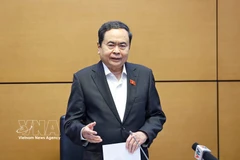
Politburo member, Standing member of the Party Central Committee’s Secretariat Tran Cam Tu attends the rehearsal. (Photo: VNA)

Security forces stage rehearsal for 14th National Party Congress

The People’s Public Security forces have been praised for their core role in closely working with the army and relevant ministries and agencies, with success in thwarting hostile plots at an early stage, drastically combating fake news and disinformation surrounding the 14th National Party Congress.

Senior Lieutenant General Le Quoc Hung (L), member of the Communist Party of Vietnam (CPV) Central Committee and Deputy Minister of Public Security, and General Vilay Lakhamfong, Politburo member and permanent member of the Secretariat of the Lao People’s Revolutionary Party (LPRP) Central Committee. (Photo: VNA)

Deputy Minister of Public Security congratulates Lao officials following succesful 12th National Party Congress

Deputy Minister of Public Security Senior Lieutenant General Le Quoc Hungconveyed the warmest congratulations of the Central Public Security Party Committee, the Ministry of Public Security leadership, and the Vietnamese People’s Public Security Forces to Lakhamfong and other Lao public security leaders on the congress’s success and their election to key leadership positions for the new term.

A session of the National Assembly Standing Committee. (Photo: VNA)

NA Standing Committee's key work agenda for 2026 approved

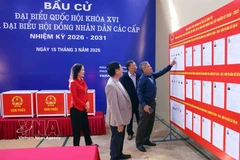
A major focus will be preparations for the election of deputies to the 16th NA and to People’s Councils at all levels for the 2026–2031 term. The NASC will coordinate with the National Election Council, the Government, the Vietnam Fatherland Front Central Committee, and relevant agencies and organisations to continue implementing the election plan, organise oversight of the electoral process, and carry out its duties and powers as prescribed.

Party General Secretary To Lam receives US Ambassador Marc Evans Knapper in Hanoi on January 9, 2026. (Photo: VNA)

Party leader receives outgoing US Ambassador

Vietnam always values its relationship with the US and looks forward to continuing close cooperation with the US government to deepen bilateral relations based on mutual respect for each other’s independence, sovereignty, territorial integrity, and political institutions, contributing positively to peace, stability, cooperation, and development regionally and globally.