Vietnam highly values WHO’s close technical partnership: official

Deputy Minister of Health Nguyen Thi Lien Huong affirmed Vietnam’s appreciation of the World Health Organisation (WHO)’s close technical partnership with its Government, while attending the 76th World Health Assembly (WHA76) in Geneva on May 23.
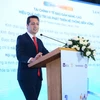
Vietnam highly values WHO’s close technical partnership: official ảnh 1Deputy Minister of Health Nguyen Thi Lien Huong (fourth from right), Ambassador Le Thi Tuyet Mai (fourth from left) - Permanent Representative of Vietnam to the UN, WTO and other international organisations in Geneva, and other members of the Vietnamese delegation at the 76th World Health Assembly. (Photo: VNA)
Geneva (VNA) – Deputy Minister of HealthNguyen Thi Lien Huong affirmed Vietnam’s appreciation of the World Health Organisation(WHO)’s close technical partnership with its Government, while attending the 76th World Health Assembly (WHA76) in Geneva on May 23.

In her remarks, Huong said the WHA76takes place in coincidence with many important milestones of the World HealthOrganisation (WHO), including its 75th founding anniversary.

Vietnamhas gained a number of major healthcare achievements, including the average lifeexpectancy raised to over 75. It has also been pressing on with reforming thehealth sector to meet medical demand in the future, especially amid fastsocio-economic development and lessons from the COVID-19 pandemic, she noted.

Mentioning WHO’s recent declaration of the end to the COVID-19pandemic as global health emergency of international concern, the Deputy Ministersaid Vietnam quickly carried out a large-scale vaccination campaign in2021 and 2022 and has ensured vaccine access nationwide.

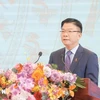
Vietnam highly values WHO’s close technical partnership: official ảnh 2Deputy Minister of Health Nguyen Thi Lien Huong addresses the 76th World Health Assembly. (Photo: VNA)
She cited statistics as showing that the country has reachedan average of 273.7 administered doses of COVID-19 vaccines every 100 people,1.6 times the global average of 170.1 and also higher than mostdeveloped nations. The rate of people fully vaccinated with primary doses is1.4 times while the rate of those given booster doses doubles the world’srespective averages.

Thanks to these efforts, since the beginning of 2022, Vietnamhas shifted to a period of sustainably managing the pandemic, whichmeans balancing socio-economic development and public health measures toprotect vulnerable groups and the healthcare system, Huong went on.

Highlighting WHO’s close technicalpartnership with the Vietnamese Government, the official added the country is proud of allthe health achievements obtained with support from WHO during the pandemic andover the past years, and hopes to continue this partnership./.
VNA
See more

Screening and early cancer detection using advanced medical equipment at a healthcare facility (Photo: VNA)

Vietnam targets Southeast Asia’s leading medical tourism position by 2030

Medical tourists to Vietnam currently mainly comprise overseas Vietnamese and visitors from Cambodia, Laos, the Republic of Korea, Japan, Australia and several European countries. Popular services include cosmetic dentistry, assisted reproduction, aesthetic medicine, general health check-ups and some advanced medical specialties.

An ambulance from the pre-hospital emergency care service in Phu Quoc special zone in An Giang province. (Photo: VNA)

Pre-hospital emergency care system to be launched nationwide

From 2027, the national pre-hospital emergency management platform will be put into operation, connecting data with the 113, 114 and 115 emergency call systems to facilitate rapid emergency dispatch and improve public access to emergency services.

Foreign patients travel to Vietnam for robotic cancer surgery at one-tenth of US costs

Foreign patients travel to Vietnam for robotic cancer surgery at one-tenth of US costs

With robot-assisted surgery costing tens of thousands of dollars in the US and Singapore, a growing number of international patients are traveling to Vietnam for robotic cancer surgery, including procedures for prostate, gynecological and gastrointestinal cancers, using the US made da Vinci Xi system at costs starting from just 3,000 USD.

Under a phased rollout beginning in 2026, every resident in Ho Chi Minh City will receive at least one annual health check-up or health screening. (Photo: VNA)

Ho Chi Minh City develops integrated multi-tier healthcare system

Under the new model, healthcare is organised into interconnected levels based on people's needs rather than administrative boundaries. Patients can move seamlessly between levels while their electronic health records and treatment information remain connected through digital platforms, referral systems, telemedicine, electronic medical records, and integrated health databases.

Doctors conduct heart and lung examinations for workers. (Photo: VNA)

Draft policy encourages people to prepare for old age from middle age

A draft circular guiding the implementation of the National Target Programme on Health Care, Population and Development (2026-2035) marks a shift from focusing solely on elderly care to encouraging healthy and independent ageing through early preparation. It covers healthy lifestyles, regular health check-ups, financial planning, suitable employment and home-based elderly care skills.

The meeting between the Vietnam Military Medical University delegation and leaders of the Lao Ministry of National Defence in Vientiane (Photo: VNA)

Vietnam, Laos deepen military medical cooperation

Since 1954, Vietnam Military Medical University has trained 687 Lao military medical personnel, including 322 doctors, 67 master's degree holders, 10 doctorate holders, and dozens of specialist physicians, alongside hundreds of pharmacists and medical technicians.

Vietnam's first penis transplant from a brain-dead donor is successfully performed at Viet Duc University Hospital. (Photo published by VNA)

Vietnam reaches new milestone in reconstructive transplant surgery

As the first operation of its kind in Vietnam, the hospital spent months developing treatment protocols, studying international experience and assembling a multidisciplinary team that included experts in transplantation, andrology, microsurgery, anaesthesia, immunology and pathology.

Dr. Nguyen Thanh Xuan is performing brain surgery on a patient (Photo published by VNA)

National strategy aims to build advanced medical ecosystem

Vietnam's adjusted healthcare network master plan for 2021–2030, with a vision to 2050, also outlines a regional structure covering the country's six socio-economic regions. It envisages 17 provincial general hospitals serving regional functions, at least one highly specialised hospital in each region, and at least one advanced medical facility in every province and city.