Vietnam listed among 19 iodine-deficient countries

The Iodine Global Network has ranked Vietnam among the top 19 iodine-deficient countries, according to the Vietnamese Health Ministry’s National Institute of Nutrition (NIN).
Vietnam listed among 19 iodine-deficient countries ảnh 1A farmer harvests salt (Source: VNA)
Hanoi (VNA) – The Iodine GlobalNetwork has ranked Vietnam among the top 19 iodine-deficient countries, accordingto the Vietnamese Health Ministry’s National Institute of Nutrition (NIN).

A 2013-2014 report by the National Hospitalof Endocrinology showed that goiter (neck swelling from enlarged thyroid) rateamong children aged 8-10 was 9.8 percent while the coverage of household iodizedsalt consumption was nearly 60 percent.

Meanwhile, its 2000-2010 study pointed outthat food grown naturally in the country held an inconsiderable amount ofiodine that can’t meet body demand. Only 6 percent of respondents said they useiodized salt while 75 percent of the remaining season their food with fishsauce and other seasonings.

Before 2005, Vietnam conducted a nationaltarget programme on iodine addition. However, after iodine deficiency waseliminated, regulations on compulsory use of iodine were removed so iodineconsumption slumped suddenly. The lack of a national target programme on goitreprevention and control or State funding to mix iodine into salt also madepeople switch to using non-iodised seasonings.

The NIN said a governmental decree on addingmicro-nutrients into food took effect in March 15, 2017 but it was ignored bymost firms.

Do Hong Phuong, nutrition policy expert fromUNICEF said among 130 countries that enforce use of iodine, 69 required iodizedsalt be used in processed food.

She said adding micro-nutrients into foodonly costs 0.06 USD per person per year, and urged food processors to raisetheir sense of social responsibility.

The NIN warned that iodine deficiency willlead to goitre, mental retardation, miscarriages and brain damage in the fetusand infants.

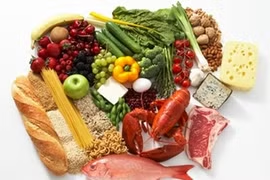
The recommended dietary allowance of iodineis 90-120 mcg per day for children and 150 mcg per day for adults. Sea fish,seaweed, amaranth and watercress are all rich in iodine.-VNA

VNA

See more

Male plastic surgery: Why masculine aesthetics require a different approach

Male plastic surgery: Why masculine aesthetics require a different approach

Plastic surgery has long been associated with procedures for women, but men also seek treatment for abdominal fat, enlarged breasts and age-related changes around the eyes and face. The American Society of Plastic Surgeons (ASPS) includes liposuction, gynecomastia surgery and eyelid surgery among procedures performed on male patients.

A speaker delivers presentations at the conference (Photo published by VNA)

Vietnam, Denmark expand cooperation in high-tech healthcare

Ambassador Nguyen Le Thanh called on Vietnamese and Danish partners to identify priority areas and promote research and training programmes, knowledge transfer and technology application in line with Politburo's Resolution No. 57-NQ/TW on breakthroughs in science – technology development, innovation and national digital transformation.

Ho Chi Minh City has favourable conditions for developing the ecosystem, including a large population, diverse healthcare needs and an extensive public and private medical network. (Illustrative photo: VNA)

Ho Chi Minh City develops multi-tier elderly care network amid population ageing

Dr. Huynh Minh Chin, Deputy Director of the department, said rising elderly care needs are putting pressure on traditional family-based care, as older people increasingly face multiple chronic illnesses, mobility problems, malnutrition, dementia and depression, requiring continuous support and closer coordination among hospitals, grassroots healthcare facilities, families and social support institutions.

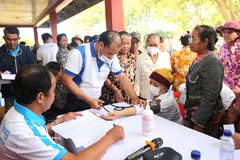
Local residents in Mondulkiri province, Cambodia, receive free medical check-ups and health consultation. (Photo: VNA)

Free medical examinations provided to remote communities in Cambodia

Vietnamese Ambassador Nguyen Minh Vu said the programme has been jointly organised by the embassy and the hospital annually in various Cambodian localities to provide healthcare support to disadvantaged households and contribute to the Cambodian Government’s efforts to improve public health. The initiative also reflects close cooperation in healthcare and the strong bonds between the people of Vietnam and Cambodia.

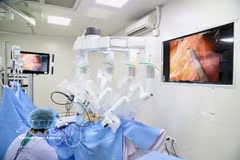
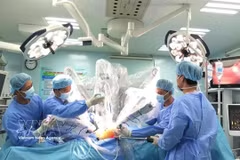
With the assistance of robotic-assisted laparoscopic surgery, doctors successfully perform a complex operation (Photo: VNA)

Vietnam advances towards high-quality, specialised healthcare

Recent developments in Hanoi and other localities highlight efforts to develop specialised treatment, standardise professional practices and apply artificial intelligence (AI) and advanced medical techniques, towards a more modern healthcare system.

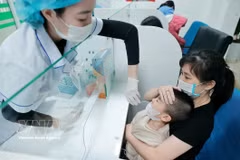
Collecting a sample from a pediatric patient for influenza testing (Photo: VNA)

Ho Chi Minh City acute respiratory infections surge over 64%

According to the Ho Chi Minh City Centre for Disease Control (HCDC), influenza viruses are are among the fastest-rising pathogens, with 151 positive samples in a single week. Influenza A is the dominant strain, with A/H1N1pdm09 in 116 samples, or nearly 77%.