Hanoi (VNA) – Vietnam’s local government restructuring this year will lead to more citizen-centric governance and a stronger, more responsive public administration, ultimately providing tangible benefits for all Vietnamese citizens, according to Ramla Khalidi, UNDP Resident Representative in Vietnam.
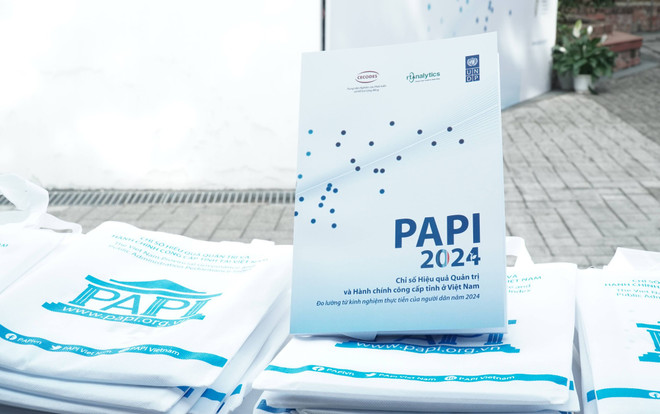
The 16th edition of the Provincial Governance and Public Administration Performance Index (PAPI) report, capturing citizen perceptions of local governance, shows positive progress in the provision of public services to citizens in 2024.
The 2024 PAPI report, launched in Hanoi on April 15, reflects the opinions of 18,894 randomly selected citizens nationwide. The results show that people rated the effectiveness of government activities on seven out of eight PAPI content indicators for 2024 higher than in 2023.
On this occasion, a reporter from VietnamPlus e-newspaper had an interview with Ramla Khalidi about the opportunities for reforming public governance in the upcoming period, particularly with the implementation of a two-level local administration model, as well as the reorganisation of administrative units at the provincial and commune levels.
Reporter: In your opinion, how can the current problems and limitations in public administration in Vietnam be addressed through the reorganisation of administrative units, particularly regarding strengthening capacity at the commune level?
UNDP Resident Representative in Vietnam Ramla Khalidi: Our newly released 2024 Provincial Governance and Public Administration Performance Index (PAPI) indicates that, in 2024, there were promising advancements across seven out of eight dimensions of local governance and public service delivery. Nevertheless, five key dimensions - Participation, Transparency, Vertical Accountability, Environmental Governance, and E-Governance - still exhibit low scores, demanding targeted reform efforts. Moreover, the PAPI underscores persistent demographic and geographic gaps in citizen satisfaction, with women, ethnic minorities, migrants, and those residing in rural and more remote regions consistently reporting lower levels of service.
Ongoing local government reforms present a crucial opportunity to address these bottlenecks. Provinces can learn from high-performing peers and adopt best practices from those they are merging with. Critically, investing in human resources at the commune and grassroots levels is essential, requiring increased civil servant salaries, clearly defined mandates and tasks, transparent recruitment processes, consistent on-the-job training, and robust mechanisms for retaining skilled personnel. This is particularly important in provinces that are lagging behind.
Reporter: Party General Secretary To Lam emphasised the reorganisation of administrative units at all levels as a way to "build a government closer to the people, more responsive to the people, and better able to serve the people." What do you think about this commitment?
UNDP Resident Representative in Vietnam Ramla Khalidi: We commend Vietnam's renewed commitment to realising the constitutional principle of "the State of the people, by the people, and for the people." We anticipate that the local government restructuring this year will lead to more citizen-centric governance and a stronger, more responsive public administration, ultimately providing tangible benefits for all Vietnamese citizens. There is a real opportunity to increase performance in terms of participation and vertical accountability, with government moving closer to the people.
We also hope that the reorganisation of administrative units will improve access to public services, both in person and online, particularly for those in remote and mountainous areas, ensuring inclusiveness in this important endeavour.
Reporter: The restructuring of governments at all levels will inevitably change the process of handling administrative procedures. What challenges do you foresee for local authorities in implementing these changes?
UNDP Resident Representative in Vietnam Ramla Khalidi: We understand the Government is undertaking significant reforms. Reportedly, over 1,100 central-level legal documents will require revision to reflect the changes in the state apparatus. Consequently, numerous existing administrative procedures will also need to be updated. For instance, land use rights certification currently is processed by district authorities. When district governments no longer exist, the service must be done at either the provincial or commune level.
This implies that local authorities may need to await the completion of administrative process reconfiguration, particularly the transfer of responsibilities from the district to the provincial or commune levels, potentially leading to temporary delays in administrative service delivery.
We trust, however, that central government authorities are addressing these challenges and anticipate that proactive public communication regarding the changes and potential delays is being planned.
Reporter: With the ongoing efforts to reform and reorganise administrative units, what benefits do you think people and businesses can expect to gain?
UNDP Resident Representative in Vietnam Ramla Khalidi: We believe the immediate benefit will be a simpler experience for citizens and businesses, with fewer governmental layers and more streamlined processes when handling procedures requiring engagement across different levels of government.
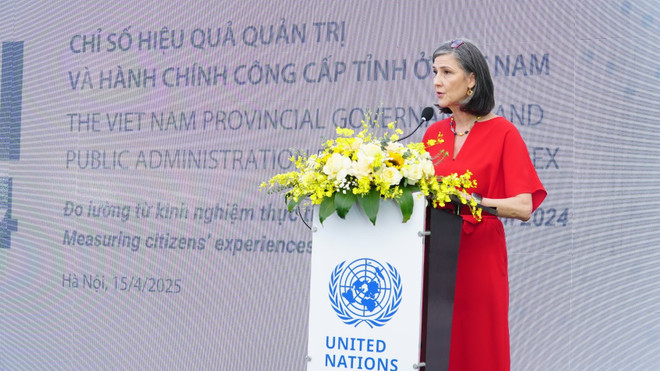
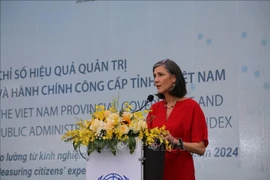
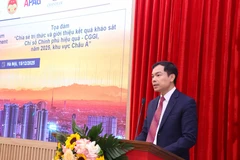
Ramla Khalidi, Resident Representative of UNDP in Vietnam, speaks at the launch of the 2024 PAPI Index. (Photo: VietnamPlus)
Reporter: How will the 2025 PAPI assessment plan be adjusted to reflect the changes brought about by the reorganisation of administrative units?
UNDP Resident Representative in Vietnam Ramla Khalidi: This is a great question. Following the launch, we will begin discussion with our national partners on the most effective approaches and potential methodological adjustments for future PAPI surveys to better capture the impact of government reforms. We hope that PAPI can continue to accompany these reform efforts by providing valuable data on citizens’ experiences of the reforms – data that can support both national and provincial leaders in their decision-making.
Reporter: Thank you very much!./.