Vietnam to tackle growing antibiotic overuse

The growing abuse of antibiotics is causing a resistance to the drug, the Ministry of Health has warned.

The growing abuse of antibiotics is causing a resistance to the drug, the Ministry of Health has warned.

The ministry established last week a special unit to study the problem and would soon propose solutions, said Luong Ngoc Khue, head of the ministry's Medical Examination and Treatment Department, who leads the unit.

The widespread sale of antibiotics without a doctor's prescription was blamed for the increasing resistance to the drug in Vietnam, Deputy Health Minister Nguyen Thi Xuyen said.

"New strains of virus have been found that resist many types of antibiotics, including new generations of antibiotics," Xuyen said.

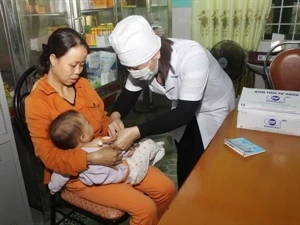
Many Vietnamese buy antibiotics over-the-counter and overuse them for minor illnesses.

"I often go to the nearest drug store to pick up antibiotics when my children or I have a cough," said Le Thi Bien, 47, a housewife in Long Bien district in Hanoi. "I don't think I need to visit a doctor for examination and take a prescription for treatment if it's only a cough."

A survey by the ministry conducted in 3,000 drug stores in the north region in 2010 found that 88 percent of antibiotics were sold without prescription. The survey also said that the three best selling antibiotics were Amoxicillin, Cephalexin and Azithromycin.

The World Health Organisation said in April that antimicrobial resistance was a major problem in South East Asia and that infections were a particular concern. The WHO said the main cause of resistance appeared to be inappropriate use of antimicrobial medicines, due to both their over-the-counter availability and the poor compliance of standards by health care workers.

A pharmacist in Hanoi's Long Bien district said she usually asked customers about prescriptions before selling antibiotics to them, but most of them didn't have one.

Previously, the ministry set up a committee for drug-resistance prevention in 2013.-VNA
VNA

See more

An ambulance from the pre-hospital emergency care service in Phu Quoc special zone in An Giang province. (Photo: VNA)

Pre-hospital emergency care system to be launched nationwide

From 2027, the national pre-hospital emergency management platform will be put into operation, connecting data with the 113, 114 and 115 emergency call systems to facilitate rapid emergency dispatch and improve public access to emergency services.

Foreign patients travel to Vietnam for robotic cancer surgery at one-tenth of US costs

Foreign patients travel to Vietnam for robotic cancer surgery at one-tenth of US costs

With robot-assisted surgery costing tens of thousands of dollars in the US and Singapore, a growing number of international patients are traveling to Vietnam for robotic cancer surgery, including procedures for prostate, gynecological and gastrointestinal cancers, using the US made da Vinci Xi system at costs starting from just 3,000 USD.

Under a phased rollout beginning in 2026, every resident in Ho Chi Minh City will receive at least one annual health check-up or health screening. (Photo: VNA)

Ho Chi Minh City develops integrated multi-tier healthcare system

Under the new model, healthcare is organised into interconnected levels based on people's needs rather than administrative boundaries. Patients can move seamlessly between levels while their electronic health records and treatment information remain connected through digital platforms, referral systems, telemedicine, electronic medical records, and integrated health databases.

Doctors conduct heart and lung examinations for workers. (Photo: VNA)

Draft policy encourages people to prepare for old age from middle age

A draft circular guiding the implementation of the National Target Programme on Health Care, Population and Development (2026-2035) marks a shift from focusing solely on elderly care to encouraging healthy and independent ageing through early preparation. It covers healthy lifestyles, regular health check-ups, financial planning, suitable employment and home-based elderly care skills.

The meeting between the Vietnam Military Medical University delegation and leaders of the Lao Ministry of National Defence in Vientiane (Photo: VNA)

Vietnam, Laos deepen military medical cooperation

Since 1954, Vietnam Military Medical University has trained 687 Lao military medical personnel, including 322 doctors, 67 master's degree holders, 10 doctorate holders, and dozens of specialist physicians, alongside hundreds of pharmacists and medical technicians.

Vietnam's first penis transplant from a brain-dead donor is successfully performed at Viet Duc University Hospital. (Photo published by VNA)

Vietnam reaches new milestone in reconstructive transplant surgery

As the first operation of its kind in Vietnam, the hospital spent months developing treatment protocols, studying international experience and assembling a multidisciplinary team that included experts in transplantation, andrology, microsurgery, anaesthesia, immunology and pathology.

Dr. Nguyen Thanh Xuan is performing brain surgery on a patient (Photo published by VNA)

National strategy aims to build advanced medical ecosystem

Vietnam's adjusted healthcare network master plan for 2021–2030, with a vision to 2050, also outlines a regional structure covering the country's six socio-economic regions. It envisages 17 provincial general hospitals serving regional functions, at least one highly specialised hospital in each region, and at least one advanced medical facility in every province and city.