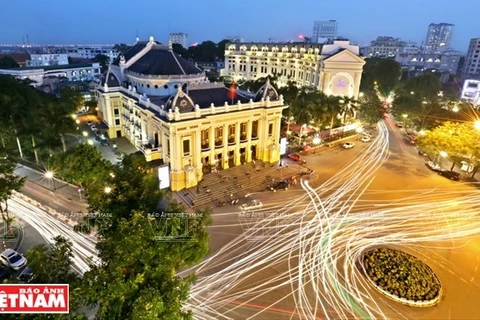
Illustrative image (Photo: VNA)
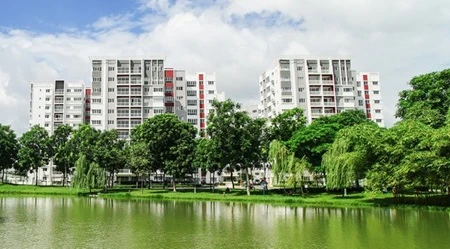
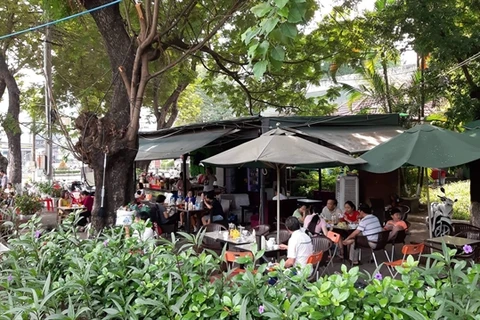
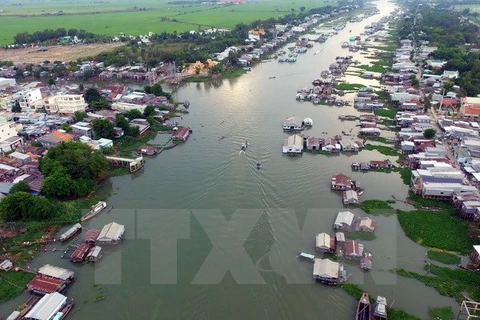
 HCM City (VNA) - Many provinces and cities across the country plan to expand green urban areas in their localities, aiming to create green spaces thus improving the environment and enhancing the quality of life for locals.
According to the Technical Infrastructure Agency of the Ministry of Construction, the ratio of trees in urban areas of Vietnam is only about 2-3sq.m per person, while the targeted rate in modern cities in the world is 20-25sq.m per person.
According to the National Standard TCVN 9257:2012(Greenery planning for public utilities in urban areas. - Design standards), the density of public trees for special urban areas such Ho Chi Minh City is 15 sq.m per person. However, the per capita density of public trees in the southern hub is much lower, less than 1sq.m.
Dr. Dinh Quang Diep, former Head of the Department of Landscape and Garden Technology of HCM City University of Agriculture and Forestry, said that the city needs to build plans and invest in building green belts around the city in the context that the land fund for green area development in central urban areas is no longer available.
HCM City has a 10-year plan (2021-2030) for increasing public parks and the green coverage, under which it will add at least 150ha of public parks and 10ha of public green spaces by 2025.
By 2030 there will be one square metre of park per capita and 3-4 sq.m of overall green space per capita.
 HCM City city targets turning 10,300ha of land into green spaces. (Photo: VNA)
 A recent report by the General Department of Environment said the city targets turning 10,300ha of land into green spaces.
In Bien Hoa city of Dong Nai province, the land fund for public works is becoming increasingly limited, including land for planting trees.
According to the People's Committee of Bien Hoa city, the concentrated green area per capita in the city is only about 1 sq.m/person.
The municipal authority is focusing on completing the adjustment of the master plan of the city to 2030, with a vision to 2050.
According to insiders, to manage and develop green areas in urban areas, HCM City needs to tighten management of park areas that are being misused in order to return public space in parks.
Investors of residential and urban area projects must comply with commitments to build green parks in accordance with regulations.
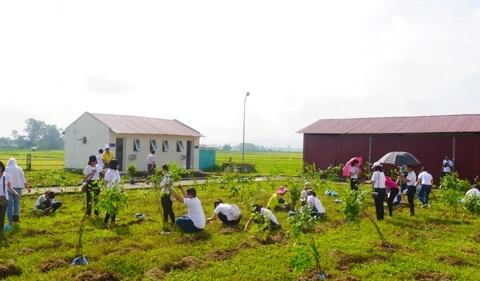
To achieve the target of per capita green tree area of 3 - 4sq.m by 2030, HCM City has launched a movement to encourage people to plant trees, as well as mobilise organisations and households to plant and protect trees.
The municipal authorities have been building mechanisms and policies to attract investors in developing green parks in the locality./.