Vietnamese teachers demonstrate outstanding digital transformation capabilities

Vietnam has recorded highly positive results in the 2024 cycle of the OECD’s Teaching and Learning International Survey (TALIS), with digital competence emerging as one of the most notable strengths among Vietnamese teachers.

giao-vien-1.jpg
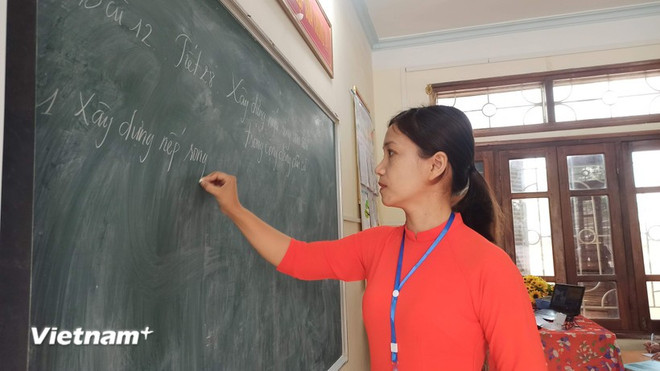
Vietnam records positive results in the teacher survey. (Photo: PM/Vietnam+)

According to the survey, as many as 64% of Vietnamese teachers have used artificial intelligence (AI) in their teaching activities, ranking fifth among participating countries and territories, and significantly above the OECD average of 36%. This reflects both the adaptability and strong willingness of Vietnamese teachers to embrace new technologies in education.

The Ministry of Education and Training (MoET) reported that the 2024 TALIS cycle included 55 countries and territories, and Vietnam was highlighted during the official announcement as a model for participation rate, data quality, and survey effectiveness. These results reinforce Vietnam’s continued commitment to educational improvement and international integration in learning and teaching standards.

High job satisfaction and strong professional commitment

The TALIS 2024 findings show that Vietnamese teachers are relatively young, with an average age of 42, compared to the OECD average of 45. Women account for 70% of the workforce, and 91% hold long-term contracts, reflecting both stability and long-term commitment to the profession. Overall, Vietnam’s teaching workforce is recognised as enthusiastic, professionally driven, increasingly competent in technology, and highly satisfied with their career choice.

A remarkable 92% of Vietnamese teachers believe that teaching is respected by society, the highest among all participating systems, whereas the OECD average stands at only 22%. Meanwhile, 87% feel that their voices are heard and valued by policymakers, an 8% increase compared to the 2018 cycle. This shows notable progress in teacher engagement, consultation mechanisms, and policy transparency.

Job satisfaction levels are also exceptionally high, with 97% of teachers expressing satisfaction with their work, compared to 89% in OECD countries. Vietnamese teachers report relatively low levels of intense stress (4%), although 54% acknowledge pressure related to student performance and curriculum changes.
thieu-giao-vien.jpg
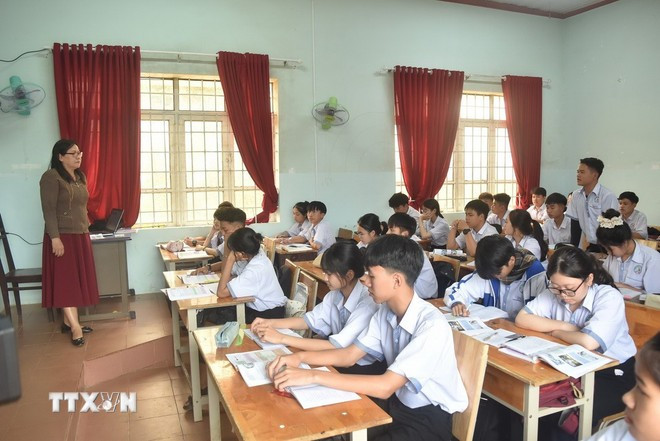
Illustrative photo. (Source: VNA)

Vietnam stands out for its proactive adoption of AI in education. The positive rate of AI use reflects improved digital readiness, open-mindedness towards innovation, and the ability to integrate emerging technologies into daily teaching practices.

However, 71% of teachers report insufficient infrastructure and digital tools, far higher than the OECD average of 37%. This gap highlights a pressing need to strengthen digital ecosystems in schools, particularly in under-resourced areas.

Towards a sustainable and future-oriented education system

Based on TALIS 2024 results, the Ministry proposes several key policy directions. These include developing digital competencies and AI application skills for teachers; issuing national digital competency standards; investing in educational technology infrastructure; and designing flexible, practical training programmes in digital skills, education technology, and data security.

The Ministry emphasises that the TALIS 2024 outcomes reinforce Vietnam’s strong regional standing, consistent with its performance in international assessments such as PISA 2022 and SEA-PLM 2024. However, the findings also underline the urgent need to prioritise digital capacity development, continuous professional growth, innovation management, and school-level governance reform.

In the coming period, the Ministry will direct in-depth analysis of TALIS 2024 data to support evidence-based policymaking and synchronised implementation at both central and local levels. The objective is to build a sustainable, modern, and innovation-driven education system aligned with the 2025–2035 strategic roadmap./.

See more

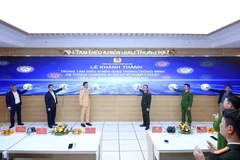
Delegates perform the inauguration protocol for the Hanoi smart traffic control centre in the capital on December 13. (Photo: VNA)

Hanoi officially launches smart traffic control centre

Equipped with 1,837 AI-powered cameras installed at 195 key intersections, the centre serves as the “brain” for real-time monitoring of traffic conditions and urban order. Through the system, police officers can observe traffic on major roads and junctions, promptly detect congestion, violations, accidents and incidents, and take timely response measures.

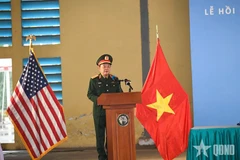
Vietnamese Deputy Minister of National Defence Sen. Lieut. Gen. Hoang Xuan Chien speaks at the event. (Photo: VNA)

Vietnam repatriates remains of US MIA servicemen

Vietnamese Deputy Minister of National Defence Sen. Lieut. Gen. Hoang Xuan Chien voiced his confidence that sustained goodwill and joint action would allow both sides to tackle lingering war consequences while broadening cooperation across other domains, which, he described as the best way to heal physical, emotional, and societal scars and fostering the stronger Vietnam - US relationship.

Law enforcement forces at sea in Ho Chi Minh City are working to raise awareness among fishermen about combating illegal, unreported, and unregulated (IUU) fishing (Photo: VNA)

HCM City tackles fishing violations at roots

As of December 9, all of the 4,475 fishing vessels in HCM City had registered and updated in the VNFishbase database, of them 4,268 licensed. The remainder, classified as ineligible, are strictly monitored and kept moored locally, with no permission to put to sea.

Vice Chairman of the municipal People’s Committee Hoang Nguyen Dinh addresses the event (Photo: VNA)

HCM City takes tough measures to curb IUU fishing violations

Ho Chi Minh City is mobilising its entire political system to intensify the fight against illegal, unreported and unregulated (IUU) fishing, aiming to join the national effort to have the European Commission’s “yellow card” removed.

Soldiers of Division 315 helping build a house for a flood-hit family in Dak Lak (Photo: VNA)

Dak Lak launches all-out, rapid “Quang Trung Campaign”

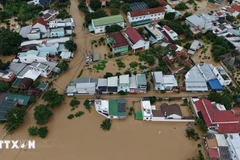
The central province of Dak Lak is mobilising all resources to swiftly rebuild and repair houses damaged by Storm Kalmaegi (Storm No. 13) and the historic floods in November, under the “Quang Trung Campaign” directed by the Prime Minister.

The chosen location for the construction of the Ninh Thuan 1 Nuclear Power Plant is Phuoc Dinh commune. (Photo: VNA)

Vietnam, IAEA comprehensively assess national nuclear power infrastructure

The delegation, led by Eric Mathet, Operational Lead, the IAEA’s Nuclear Infrastructure Development Section, evaluated the current status of Vietnam’s national nuclear infrastructure according to the assessment criteria outlined by the IAEA for Stage 2 – assessing the readiness of a country to invite bids or negotiate contracts for the construction of its first nuclear power plant.

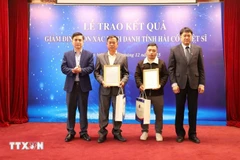
First-prize winners are honoured at the award ceremony on December 10 (Photo: VNA)

VNA wins first prize at National Press Awards on HIV/AIDS 2025

Alongside the medical staff providing direct care and treatment for HIV/AIDS patients, journalists also play a crucial role in shaping public awareness and attitudes toward HIV/AIDS, said Deputy Minister of Health Assoc. Prof. Dr. Nguyen Thi Lien Huong.