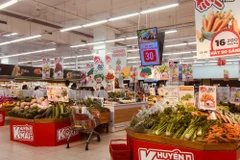
In the first eight months, wood, seafood, and coffee were the top export earners, while some products such as tea, rice, and fruits and vegetables saw a decline in export value, mainly due to lower average prices.
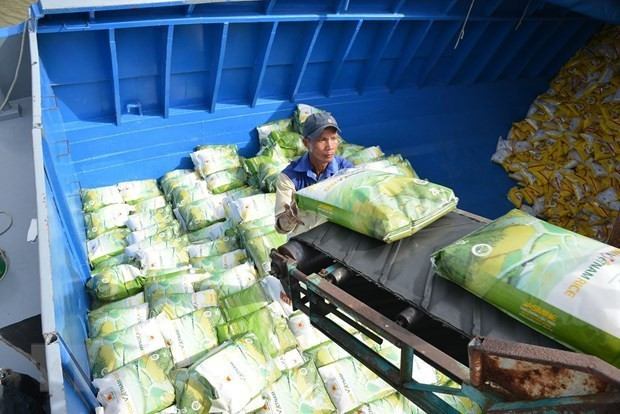
Vietnam’s agro-forestry-fishery exports continued to expand strongly in the first eight months of 2025, reaching 45.37 billion USD, up 12% year on year, according to a report from the Ministry of Agriculture and Environment.
In August alone, the export value of these commodities was estimated at 5.71 billion USD, representing a 3% decline compared with the same month of 2024.
Strong performance across key sectors
Agricultural produce contributed the largest share, bringing in 24.42 billion USD, an increase of 13.8%. Livestock products posted 410.7 million USD, rising 24.5%. Aquatic exports reached 7.03 billion USD, up 11.5%, while wood and forestry products brought in 11.9 billion USD, a 6.6% increase.
Among the most valuable commodities were wood products, seafood, and coffee. In contrast, several staples such as tea, rice, and fruit and vegetables recorded a decline in export value, largely due to falling average prices.
Key markets and regional distribution
Asia remained Vietnam’s largest export destination, accounting for 43.1% of total shipments. The Americas followed with 23.2%, and Europe with 14.6%. Smaller shares went to Africa (3.1%) and Oceania (1.3%).
By individual country, the United States was the top importer, taking 20.9% of Vietnam’s agro-forestry-fishery exports in the reviewed period. China ranked second with 19%, and Japan came third with 7.1%. Compared with the same period last year, export turnover rose 8.1% to the US, 2.6% to China, and 19.8% to Japan.
Commodities showing robust growth
Several products posted impressive growth in export earnings. Coffee led the way, surging 59.1% in value, buoyed by a 46.4% increase in average export prices. Pepper exports grew 26.9% in value despite a 9.8% drop in volume, while rubber climbed 10.2% in value thanks to a price rise of 11.5%.
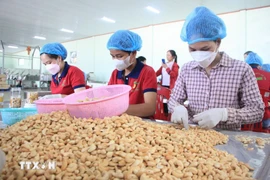
Cashew nuts also performed well, up 16.4% in value even though shipment volume slipped 1.2%, supported by a 17.8% increase in average prices. Livestock products surged 24.5%, driven particularly by meat and by-products, which jumped 30.4%. Seafood exports grew 11.5%, with China emerging as the fastest-growing market, up a striking 44.1%.
Commodities facing headwinds
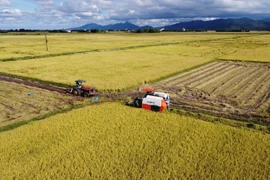
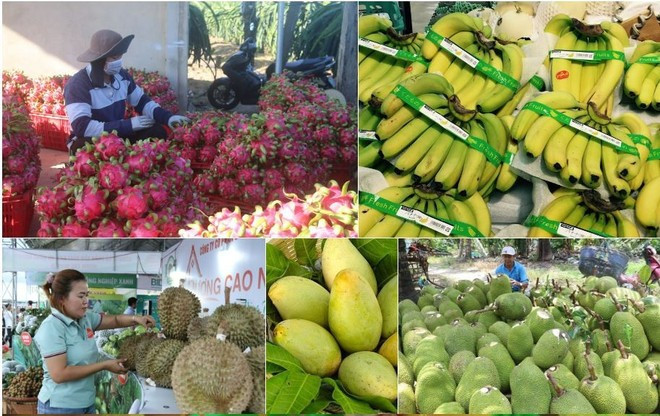
On the downside, fruit and vegetable exports dropped 2.2% in value, mainly due to a 15.1% decrease in shipments to China. Rice exports, while increasing 2.2% in volume, fell 17.5% in value as average prices slumped by 19.3%. Tea also declined, with both volume and value falling 7.9% and 11% respectively.
Export performance varied sharply across different markets. Coffee exports soared in Mexico, increasing more than 91 times compared with last year, but rose by only 11.7% in China. Rubber value surged 3.2 times in Malaysia, yet plunged 31.2% in India. Tea exports rose sharply in Iraq, up 82.5%, but dropped 46.5% in the UAE. Rice exports to Bangladesh skyrocketed by 188 times, while shipments to Malaysia tumbled 54.4%.
Challenges and outlook
Despite the overall upbeat performance, Vietnam’s agro-forestry-fishery sector continues to face challenges, particularly from global price volatility, shifting demand in major markets, and heightened competition from regional exporters. The significant drop in rice earnings, despite rising volume, underscores the vulnerability of key exports to price fluctuations.
Still, strong growth in high-value commodities such as coffee, seafood, and cashew nuts highlights Vietnam’s resilience and adaptability. With diversification across products and markets, coupled with efforts to enhance quality and sustainability, the country is well-positioned to maintain robust export performance in the months ahead./.