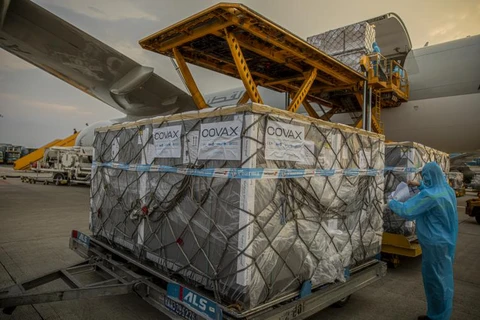
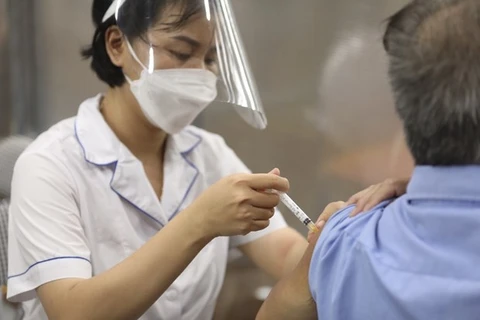
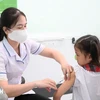
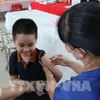
A vaccination site at the Trinh Hoai Duc stadium in Hanoi (Source: VNA)
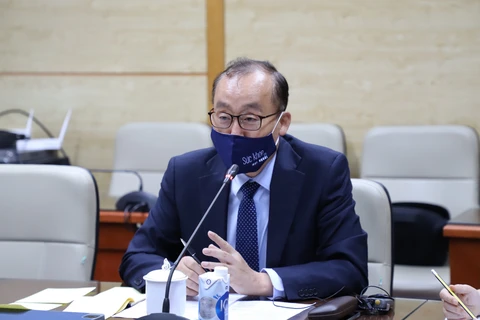
 Hanoi (VNA) – Dr Kidong Park, Representative of the World Health Organisation (WHO) in Vietnam, has made recommendations for Vietnam on COVID-19 prevention and control in the fourth wave of outbreaks, in which he emphasised vaccinations and affirmed that the organisation will accompany Vietnam.
Following is the text of Dr Park’s interview granted to Vietnamese media on August 6
1. What is efficacy of COVID-19 vaccines approved in WHO EUL for Delta variant?
To date, at least 17 vaccine products have been deployed of which seven vaccine products have been approved by WHO Emergency Use Listing (EUL) procedures.
These are vaccines developed by Pfizer/BioNTech, AstraZeneca/Oxford, AstraZeneca/Serum Institute India, Janssen, Moderna, Sinopharm/BBIP and Sinovac.
WHO is closely monitoring the effectiveness of these vaccines in the real world, including the impact of variants of concern on vaccine effectiveness.
Available data as of August 6, 2021 indicates that these vaccines are still effective in preventing severe COVID-19 against the Delta variant though effectiveness in preventing symptomatic disease seems reduced.
WHO message is clear that when it is your turn to get vaccinated, take the vaccine available to you. It protects you and the people around you. It also reduces the chance of further circulation of the Delta variant and emergence of other variants.
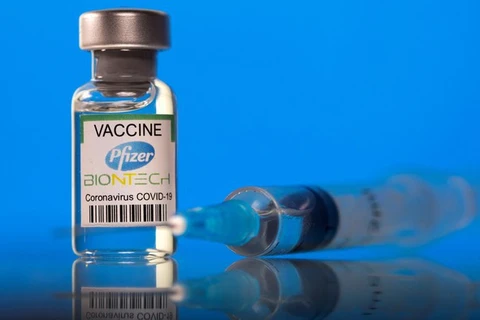
 Illustrative photo (Source: bioworld.com)
 2. What about Sinopharm vaccine, can it provide protection against Delta variant?
During the Emergency Use Listing process, WHO assessed the efficacy, safety and quality of the Sinopharm vaccine. A large multi-country phase 3 trial has shown two doses of Sinopharm vaccine administered at an interval of 21 days have an efficacy of 79 percent against symptomatic SARS-CoV-2 infection 14 or more days after the second dose.
WHO concluded that the known benefits of the Sinopharm vaccine outweigh the risks that are known or considered possible.
WHO currently recommends the use of the Sinopharm vaccine according to the WHO Prioritization Roadmap, even if variants are present in the country.
3. There are currently opinions about vaccines that are “better” and “more efficacious” compared to the others. What are WHO recommendations on this issue?
All the vaccines that have achieved WHO Emergency Use Listing have met criteria of efficacy, safety and quality set by WHO through extensive consultation of international experts. They are highly effective in preventing severe disease and hospitalization due to COVID-19.
WHO is closely monitoring the effectiveness of these vaccine in the real world including the impact of variants of concern on vaccine effectiveness; and we update our recommendation if needed.
WHO message is clear that when it is your turn to get vaccinated, take the vaccine available to you. It protects you and the people around you. It also reduces the chance of further circulation of the Delta variant and emergence of other variants.
4. Why should we be concerned about the Delta variant?
WHO is closely monitoring the emergence of new variants and its characteristics such as transmissibility and disease severity as well as its impact on diagnostics and vaccine.
The Delta variant is a variant of concern that WHO is tracking and monitoring around the world.
Available data as of 6 August 2021 indicates that the Delta variant shows increased transmissibility and increased risk of hospitalization. These are our concern. Delta variant is now reported in 135 countries, including Vietnam. It has become the dominant variant in many countries.
Good news is that the vaccine is still effective in preventing severe COVID-19 against the Delta variant though effectiveness in preventing symptomatic disease seems reduced.
There are ways to fight the Delta variant:
First, continue to practice 5K: wear mask consistently, be in ventilated spaces, practice hand hygiene and respiratory etiquette, avoid crowding and fill out health declaration.
Second, get vaccinated when it is your turn, with the vaccine available to you. Vaccines continue to be protective against severe disease and death when faced with the Delta variant.
5. What is WHO assessment about the implementation of vaccination in Vietnam? Is it effective? What’s more need to be done?
WHO commends the Government’s highest level commitment on the COVID-19 vaccination. WHO’s global targets are to vaccinate at least 10 percent of the population of every country by September 2021, at least 40 percent by the end of 2021, and 70% globally by the middle of 2022. These are the critical milestones we must reach together to end the pandemic.
Many countries are facing difficulty to secure sufficient vaccines, not only Vietnam. WHO acknowledges that the Government of Vietnam has made maximum effort day and night for supplying vaccines to save the citizens.
Now more vaccines are arriving in the country, which is a good news.
All the provinces, districts and communes should speed up its vaccination roll out activities so as to achieve the goal set by the Government and recommended by WHO.
WHO appreciates every single personnel working so hard for this unprecedented vaccination campaign. WHO recommends to give priority to health care workers, the frontline workers and people who are higher risk of severe diseases and deaths -- the elderly, and people with comorbidities.
There are several vaccine products available in the country. New type of vaccine will be available in the near future.
All the vaccines that have achieved WHO Emergency Use Listing have met the criteria of efficacy, safety and quality set by WHO through extensive consultation of international experts. They are highly effective in preventing severe disease and hospitalization due to COVID-19.
WHO message is clear that when it is your turn to get vaccinated, take the vaccine available to you. It protects you and the people around you. It also reduces the chance of further circulation of the Delta variant and emergence of other variants.
I want to remind you that safe and effective vaccines are critical to ending the COVID-19 pandemic but they are not a ‘silver bullet’. Vaccines alone won't stop the community transmission. We should continue to apply 5K -- use masks consistently, be in ventilated spaces, practice hand hygiene and respiratory etiquette, avoid crowding and fill out health declaration. These measures still continue to be extremely important, even if you are vaccinated, especially in provinces with ongoing community transmission.
6. WHO assessment about the outbreak prevention and control of Vietnam in this fourth wave? What should Vietnam focus on?
Just like many countries in the world, Vietnam is now facing a very complicated and concerning outbreak situation. We observe high numbers of daily recorded cases and deaths over the past weeks, especially from Ho Chi Minh City and neighboring provinces.
We also observe cases with unknown or unclear epidemiological links reported from many provinces besides Ho Chi Minh City. This trend is concerning as it indicates a very high risk of onwards community transmission.
A surge in number of severe cases and deaths is also expected given the increasing number of cases. Health care facilities in hotspot provinces are reported to be overwhelmed in responding to the current situation. So it is legitimate to say that the health system is currently under extreme pressure and the health workers are overstretched. However, we have also noted that the government is making all efforts to combat this battle for the better.
The task ahead is enormous and the battle against the pandemic will be long and would demand massive resources.
WHO remains confident in the Government’s whole-of-society approach that has been led by the National Steering Committee from the beginning of this pandemic.
We are all in this together. It is not only the role of the Government and the health system to control this outbreak, it is everybody’s responsibility to ensure Vietnam once again wins over the virus.
We remind the public that regardless of the variant, the same protective measures work. People need to continue to apply 5K – wear masks consistently, be in ventilated spaces, practice hand hygiene and respiratory etiquette, avoid crowding and fill out health declaration. And if it is your turn, get vaccinated with the vaccine offered to you. These measures remain extremely important./.
VNA