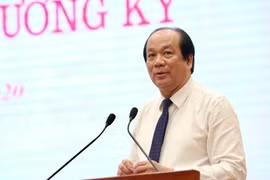
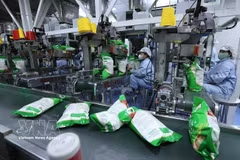
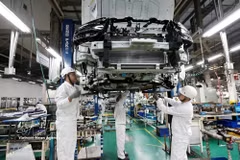
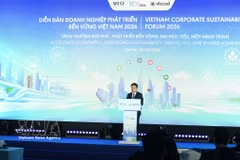
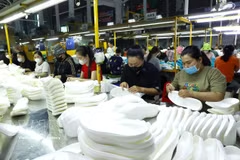
Vietnam has basically brought the COVID-19 pandemic under control and has now begun its economic recovery, CIEM Director Tran Thi Hong Minh has said (Photo: VNA)
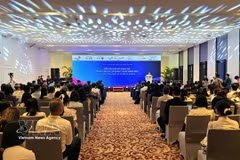
Hanoi (VNA) - The CentralInstitute for Economic Management (CIEM) held a workshop in Hanoi on June 1 tolook into bottlenecks in Vietnam’s development post-COVID-19.
CIEM Director Tran Thi Hong Minh said Vietnam’seconomy was greatly affected by the coronavirus outbreak in the opening monthsof 2020. The country has, however, basically brought the pandemic under controland has now begun its economic recovery.
Now is the time to focus on bottlenecks ineconomic development to identify solutions, she said, noting that such bottlenecksexisted prior to COVID-19 breaking out.
Nguyen Anh Duong, head of the CIEM’s divisionfor macro-economy, said international organisations have downgraded globalgrowth projections, including for Vietnam. Many forecast that the pandemic’simpact on the global economy could be even more serious than that of the globalfinancial crisis and may linger for some time.
He noted that Vietnam’s economic growth slowedin the first quarter compared to the same period in 2010-2019. Exports and thetrade balance remained positive in the opening months but will be hard tomaintain after April.
Efforts by domestic businesses are not sufficientin the current context, and it is necessary to adopt a friendly approach to FDI,he believes.
Looking at bottlenecks in post-COVID-19development, Duong pointed to those that are relevant to institutional quality,e-Government building, the use of public resources, and inclusive andsustainable growth.
He stressed matters relating to the treatment ofinvestors, noting that they are not simply eliminating unnecessary procedures.To effectively channel FDI into targeted sectors, Vietnam must issue standards oninvestment attraction.
Meanwhile, Dau Anh Tuan, Head of the LegalDepartment at the Vietnam Chamber of Commerce and Industry (VCCI), underlinedthe need to push ahead with substantive administrative reform.
He said the country has made great strides forwardin administrative reform but has also encountered more difficulties, such as indispute settlement and asset protection. Reform must therefore be carried outmore firmly and in a way that creates optimal conditions for businesses anddoes not simply tackle the difficulties they face./.
VNA