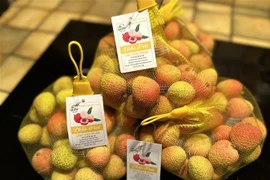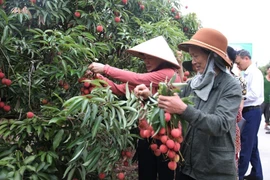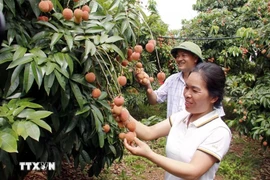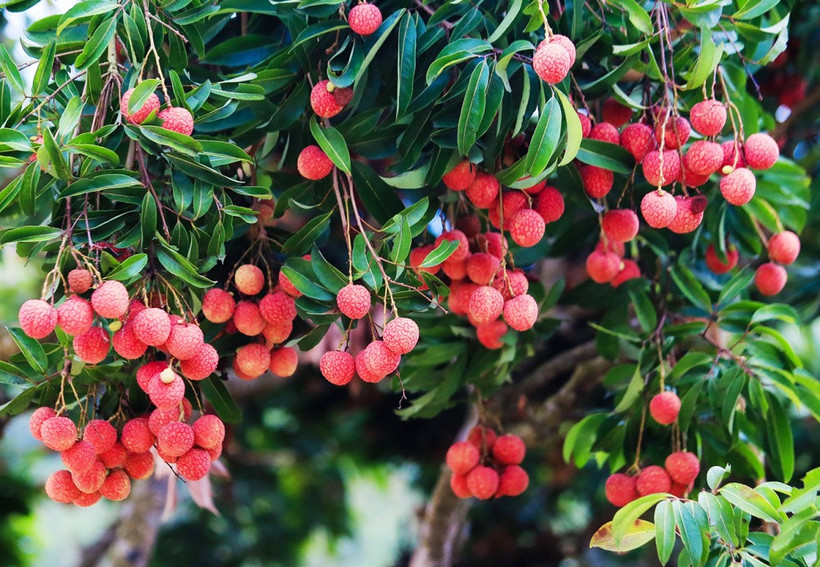
Hanoi (VNA) – As Vietnam gears up for a bumper lychee harvest in 2025, estimated to reach 303,000 tonnes, up 30% from 2024, the agricultural sector, in coordination with localities, is proactively deploying measures to enhance fruit quality, expand markets, and boost exports.
According to the Department of Crop Production and Plant Protection under the Ministry of Agriculture and Environment, Bac Giang remains the nation’s lychee stronghold with an anticipated yield of 165,000 tonnes. It is followed by Hai Duong (60,000 tonnes), Hung Yen and Lang Son (22,000 tonnes each), and Dak Lak (about 21,000 tonnes). The harvest will be concentrated in two main periods -early-season lychees from May 20 to June 10 and the main harvest from June 10 to July 25.
Provinces have made early preparations to ensure efficient harvesting, initial processing, and logistics. Nationwide, 469 planting area codes covering nearly 19,400 hectares and 55 export packing facility codes have been issued to serve international markets including China, Australia, Japan, the US, and Thailand.
Bac Giang leads with over 240 certified planting areas spanning 17,421 ha. Of this, over 16,000 ha meet VietGAP standards, 204 hectares are GlobalGAP certified, and 10 hectares are cultivated under organic farming practices.
Bui Quang Huy, Director of the Bac Giang provincial Department of Agriculture and Environment, noted that farmers have been trained in safe pesticide use, encouraged to adopt organic fertilisers, and required to document production processes to align with strict import standards from high-end markets like Japan, the US, the EU, and Australia.
Hai Duong, another key production zone, boasts 12 GlobalGAP and 56 VietGAP-certified lychee growing areas totaling 721 ha. The province holds 198 planting area codes and 16 packing facility codes for export.
Luong Thi Kiem, Deputy Director of the Hai Duong provincial Agriculture and Environment Department, highlighted that early training in cultivation techniques, pesticide residue management, and quarantine compliance has equipped growers with the knowledge needed to meet global requirements.
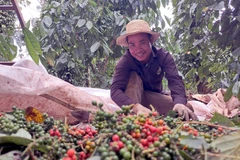
In Bac Giang’s Tan Yen district, farmer Ngo Van Cuong from Phuc Hoa commune reported that his two hectares of early-harvest lychees have been pre-contracted by businesses at a minimum price of 35,000 VND (USD 1.34) per kilogram, ensuring stable income for the season.
Ngo Thi Thu Hong, CEO of the Ameii Vietnam JSC, stressed that maintaining high-quality, traceable raw material zones is critical to accessing premium markets. She underscored the need for close coordination among businesses, local governments, and farmers, as well as strict adherence to technical protocols.
Hong also called on authorities to boost investment in research and development, particularly in preservation technologies, to support green and low-emission agriculture throughout the supply chain.
Minister of Agriculture and Environment Do Duc Duy urged provinces to remain vigilant against adverse weather and pest outbreaks, ensuring timely guidance for producers. He emphasised rigorous compliance with export standards and traceability regulations, particularly regarding pesticide residue levels, which remain a key determinant in market access.
The Minister advocated for dynamic marketing strategies responsive to real-time market trends. These include supporting cooperatives and enterprises in direct procurement from orchards and expanding sales through supermarkets, wholesale outlets, and e-commerce platforms to maximise both domestic and international consumption./.