Hanoi (VNA) - In a milestone year, 2025 marks the 30th anniversary of the normalisation of diplomatic relations between Vietnam and the US (July 12) and the second year since their ties were elevated to a Comprehensive Strategic Partnership in September 2023.
From past adversaries to trusted partners, Vietnam and the US now look toward a future of shared and long-term prosperity. This journey stands as a vivid testament to the enduring strength of peace, reconciliation, strategic foresight, and relentless efforts of both sides, which are built on mutual trust, political goodwill, and the spirit of putting aside the past, overcoming differences, upholding similarities and looking towards the future.
The signing of the Paris Peace Accords on January 27, 1973 was a pivotal step toward ending the war and restoring peace in Vietnam. Yet, it took Vietnam and the US over two decades of dialogue and perseverance to normalise their relations.
Aspiration for peace and reconciliation
On July 12, 1995 (Vietnam time), Prime Minister Vo Van Kiet officially announced the normalisation of diplomatic ties with the US, welcoming President Bill Clinton’s decision a day earlier and expressing Vietnam’s readiness to work with the US Government to establish a new framework for the bilateral ties, based on equality, mutual respect for independence, sovereignty, non-interference in each other's internal affairs, and adherence to international law.
The road to this historic declaration was paved by a shared desire for peace and reconciliation. Just two weeks after the signing of the Paris Peace Accords, Vietnam established the Vietnam Office for Seeking Missing Persons (VNOSMP) to address humanitarian efforts related to the search for US servicemen missing in action (MIA) during the war.
In his book titled “Imperfect Past: Peacemaking, Legitimacy, and Reconciliation in US-Vietnam Relations” published in 2023, author Edward Miller noted that just one week after the war ended, Prime Minister Pham Van Dong on May 7, 1975 conveyed Hanoi’s hope for fine relations and early normalisation of ties with the US. Yet, the path to that goal spanned nearly two decades, culminating in the US lifting its trade embargo in 1994 and formalising diplomatic ties in 1995.
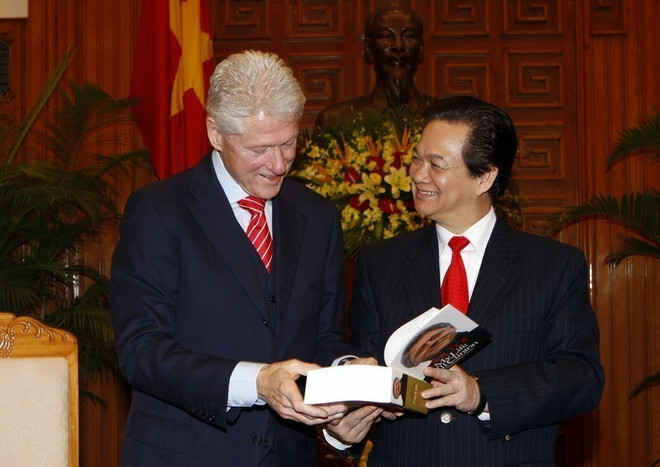
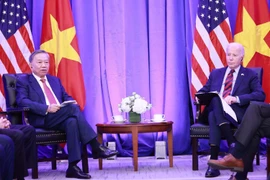
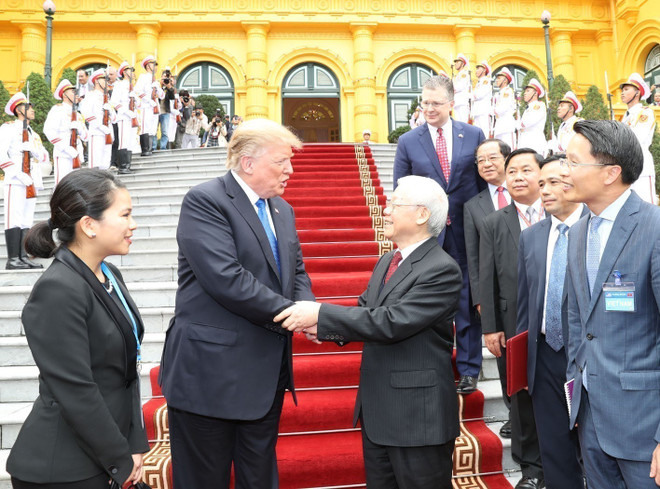
Since then, the bilateral ties have flourished. President Clinton’s visit to Vietnam in 2000, the first by a US President since the war, set the stage for a series of high-level exchanges, including visits by Presidents George W. Bush in 2006, Barack Obama in 2016, Donald Trump in 2017 and 2019, and Joe Biden in 2023. A historic moment came in July 2015 when Party General Secretary Nguyen Phu Trong became the first leader of the Communist Party of Vietnam to visit the US, sending a strong signal of political trust and frank dialogue.
Speaking to the press at the White House following his talks with President Obama, General Secretary Trong highlighted the once-fractured history between the two nations, saying that former enemies had become friends, partners, and comprehensive partners, predicting “an even brighter future ahead”.
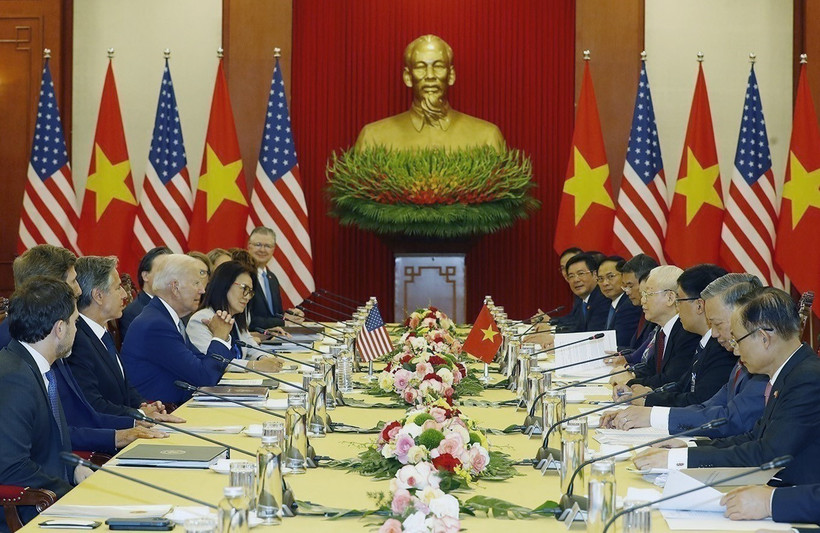
That vision came to fruition just eight years later. In September 2023, General Secretary Trọng and President Biden announced the elevation of Vietnam-US ties to a Comprehensive Strategic Partnership for Peace, Cooperation, and Sustainable Development.
This stride was made possible by a shared commitment to building bridges of friendship rooted in trust, strategic vision, and strong public support of both sides.
Critical foundations
Analysts and observers widely agreed that one of the most crucial foundations of bilateral trust has been active joint work to address the war’s lingering consequences, especially Agent Orange (AO)/dioxin, with a host of ongoing effective projects.
Since 2019, the Vietnamese Ministry of National Defence, through its National Action Centre for Toxic Chemicals and Environmental Treatment (NACCET), has collaborated with the US Agency for International Development (USAID) to improve the quality of life for dioxin victims in heavily affected areas, funded by 65 million USD in non-refundable aid from the US Government and 75 billion VND from the Vietnamese Government. The successful cleanup of dioxin-contaminated land at Da Nang Airport, completed in 2018, freed 32.4 ha for socio-economic development, exemplifying the tangible results of this cooperation.
The two nations also continue collaborating to assist those with disabilities in dioxin-hit areas through an agreed roadmap.
Over the past half-century, Vietnam has located and repatriated over 1,200 sets of remains of US servicemen, with 740 identified and returned to their families, reflecting painstaking efforts in information verification, site excavation, and return of personal artifacts.
During a working visit with the US Ambassador to Cop village in Huong Phung commune, Huong Hoa district, Quang Tri province in April 2025, to observe the search for the remains of missing US soldiers, Vietnamese Deputy Minister of Foreign Affairs Do Hung Viet reaffirmed Vietnam’s unwavering commitment to humanitarian cooperation. Vietnam has consistently honoured its commitments, not only through diplomatic efforts but also with a profound humanitarian spirit, said Viet.
The fact that Vietnam promptly began search operations for US soldiers missing in action following the signing of the Paris Peace Accords in 1973 reflects its goodwill and adherence to agreements with the US, he added.
US Ambassador to Vietnam Marc Knapper echoed these sentiments, describing the mission not just as a humanitarian task but as a symbol of reconciliation.
He further stated that the US would continue to partner with Vietnam to heal the wounds of war and build a peaceful and prosperous future together. For decades, the effort to locate, identify, and repatriate missing American servicemen has been a key pillar of the bilateral relationship.
In addition to addressing the consequences of war, US universities and archives have in recent years actively provided information to the Vietnamese side to support the search for the remains of Vietnamese martyrs.
Director of the US Defense POW/MIA Accounting Agency Kelly McKeague recalled that a few years ago, the US provided detailed information about a mass grave containing the remains of 35 Vietnamese soldiers. He had the honour of handing over the documents to then Vietnamese Ambassador to the US Ha Kim Ngoc.
McKeague said he would never forget the moment when Ngoc was moved to tears, saying he could never fully express how valuable the information was, especially for the 35 families who might now have answers about their loved ones.
Economic cooperation is another pillar of the bilateral ties. Trade between the two countries has increased more than 300-fold over the past three decades. Vietnam is now the US’s 8th largest trading partner, while the US is Vietnam’s largest export market. The US's investment in Vietnam has continued to rise, while Vietnamese investors are increasingly eyeing opportunities in the US.
Dr Nguyen Hong Hai, a Fulbright scholar based at American University, remarked that mutual investments by businesses from both countries are key to deepening ties.
Pham Quang Vinh, former Vietnamese Ambassador to the US and former Deputy Minister of Foreign Affairs, noted that the growing relationship has brought tangible benefits to both sides. “Our economies are complementary—what the US needs, Vietnam can provide, and vice versa. This dynamic has created strong momentum for trade growth,” he said.
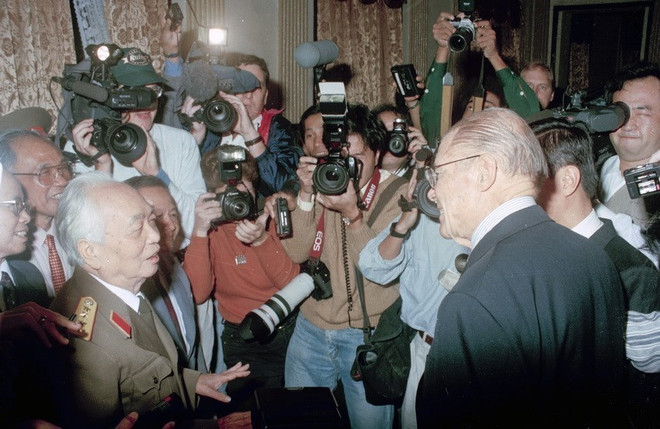
Trust has been a cornerstone of the Vietnam–US relationship. Many American veterans, such as Senators John Kerry, John McCain, Patrick Leahy, and Jim Webb, have played pivotal roles in lobbying for the normalisation of ties, serving as powerful bridges between former adversaries.
The Vietnamese community and Vietnamese students studying in the US have also contributed significantly to reconciliation and bilateral cooperation.
Knapper noted that, thanks to US Government-funded programmes and joint university initiatives, many young American students and professionals now have opportunities to study, teach, and work in Vietnam. The experiences and friendship they gain will help sustain the relationship between the two nations, he added.
Three decades have proven long enough to heal war wounds and to show that with trust and goodwill, any obstacle can be overcome./.