80th anniversary of National Day: A journey of turning the impossible into possible

Vietnam’s ambitious goal of becoming a developed nation in 2045 is viable as the country is doing and on track to achieve it given a stable political leadership and the implementation of major resolutions, including Resolution 68 on development of the private sector, said an Asia Weekly Correspondent in the UK.

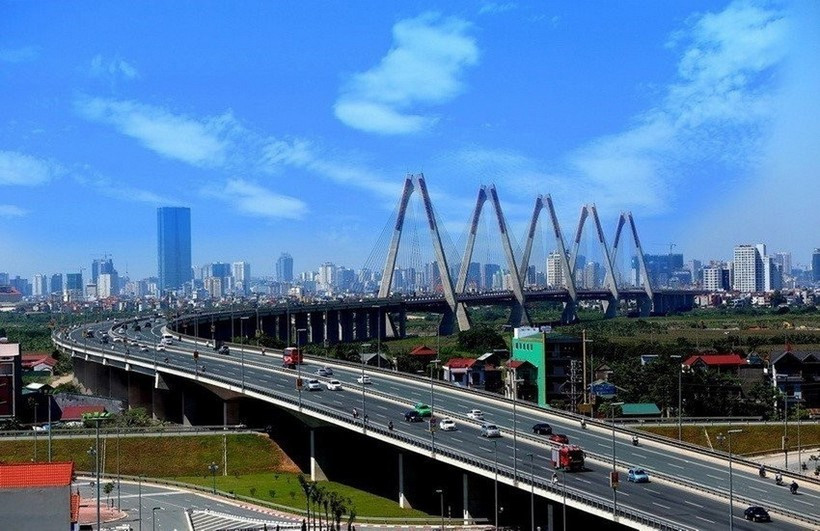
Nhat Tan Bridge in Hanoi. Vietnam expects an 8% growth rate this year and aims for double-digit growth next year. (Photo: VNA)

London (VNA) – Through 80 years of fighting for independence and building the country, Vietnam has proved the impossible to be possible as every time people thought that the country was not going to succeed, it managed to find a way to breakthrough it.

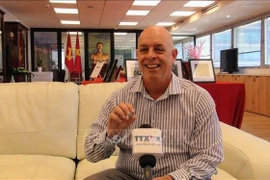
This is the view shared by Clement Ngu, Asia Weekly Correspondent in the UK ,in a recent interview with Vietnam News Agency correspondents in the UK ahead of the 80th anniversary of Vietnam’s National Day.

Clement said this could be seen in the Vietnamese leader, Ho Chi Minh, in the early 1940s and 1950s, in the American war later and in the post-war fight against poverty. It can also be seen today as the country expects an 8% growth rate this year and aims for double-digit growth next year after continuously exceeding expectations for socio-economic growth in the 1980s, 1990s, 2000s, 2010s and 2020s.

Clement pointed out that since Doi Moi (Renewal) in 1986, Vietnam’s GDP has increased 100 times while GDP per capita grew by more than six times from under 700 USD to nearly 4,500 USD in 2023.

The country has also lifted millions out of poverty, he said, citing the fall in poverty rate from 80% in the early 1990s to under 5% by 2020, halving poverty 12 years ahead of the United Nations’ Millennium Development Goals.

Vietnam also hit a symbolic milestone by the late 1980s when it transitioned from a food importing country to a major agricultural exporter thanks to the introduction of Contract 10, a mechanism that paved the way for agricultural development through decollectivising farming and giving autonomy to farmers.

In the 2000s, a wave of State-owned enterprise reforms and a boom in private enterprises made the private sector a vital driver of jobs and innovations.
clement-ngu.jpg
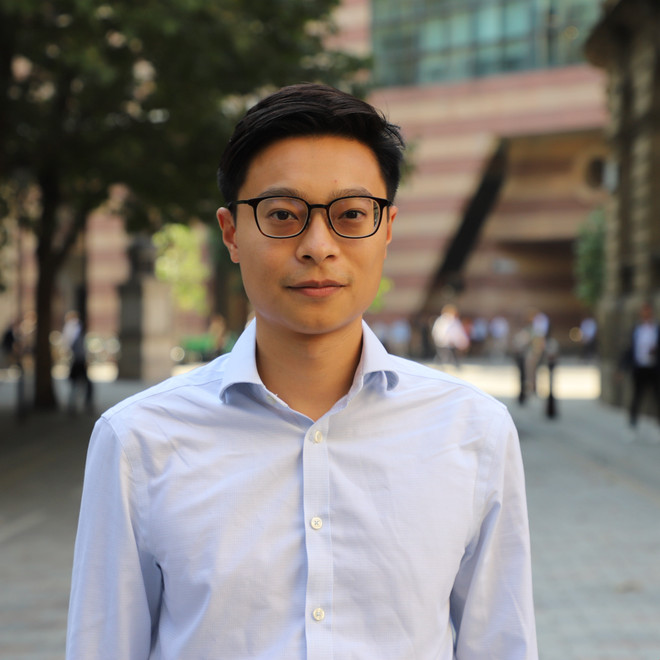
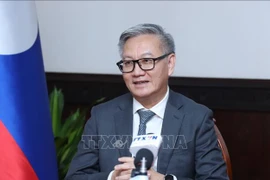
Clement Ngu, an Asian Weekly Correspondent in the UK (Photo: VNA)

Regarding foreign relations, Vietnam has been an active member of the international community, open to international collaboration and contributing to global peace processes, Clement said, citing the 2019 Summit between Presidents Kim and Trump in Hanoi or the recent visits by top leaders from China, Russia and the US within nine months as examples of Vietnam’s active role of a peace maker.

Clement believed these showed the unique position and strength of Vietnam in leveraging and working with different countries and dealing with competing powers in an era of great power competition, turning rivalries into win-win for Vietnam.

Meanwhile, socio-economic achievements prove the openness of the people and leaders at central and local levels to trade and the private sector, allowing and supporting the development of private enterprises while adopting mechanisms to attract international investors.

Clement believed Vietnam’s ambitious goal of becoming a developed nation in 2045 is viable as the country is doing and on track to achieve it given a stable political leadership and the implementation of major resolutions, including Resolution 68 on development of the private sector./.
VNA

See more

Prime Minister Pham Minh Chinh visits the operational system of the Nhon Trach 3 and 4 power plants (Photo: VNA)

Nhon Trach 3 and 4 thermal power plants reflect Vietnam’s determination, expertise: PM

The Nhon Trach 3 and 4 power thermal plants, invested by Petrovietnam Power Corporation, have a total investment of around 1.4 billion USD. With a combined capacity of 1,624 MW, the plants are expected to supply over 9 billion kWh annually once fully operational, adding substantial baseload power to the system, particularly in the southern region.

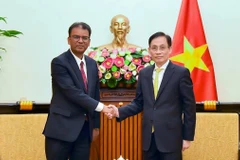
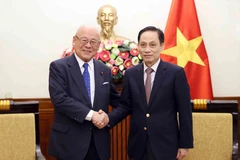
Minister of Foreign Affairs Le Hoai Trung receives Non-Resident Ambassador of Nepal to Vietnam Dhan Bahadur Oli in Hanoi on December 13, 2025. Photo courtesy of the Ministry of Foreign Affairs.

Vietnam, Nepal seek to promote deeper, substantive cooperation

Nepalese leaders attach great importance to relations with Vietnam and wish to learn from its experience and development models in socio-economic development and international integration, said Non-Resident Ambassador of Nepal to Vietnam Dhan Bahadur Oli.

Vietnamese Minister of Foreign Affairs Le Hoai Trung (Photo: VNA)

Vietnamese, Lao foreign ministers hold online talks

The two ministers agreed to maintain close coordination in the time ahead and to expand cooperation under the new framework and orientation, underscoring the significance of the two countries’ “great friendship, special solidarity, comprehensive cooperation, strategic cohesion”.

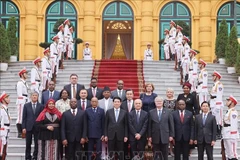
State President Luong Cuong (fourth from left, first row) and newly-appointed foreign ambassadors in Hanoi on December 12, 2025. (Photo: VNA)

State President receives newly-appointed foreign ambassadors

Receiving Egyptian Ambassador Hany Mostafa Mohamed Mostafa Hassan, President Cuong affirmed that Vietnam highly evaluates Egypt’s role, position, and contributions to regional peace and stability. He also congratulated the African country on its achievements in implementing the 2030 Vision.

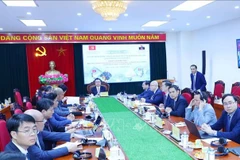
An overview of the seminar on the Party’s leadership in ensuring macroeconomic stability, renewing the growth model, restructuring the economy and promoting international integration (Photo: VNA)

Vietnam, Cuba exchange theoretical views on Party’s leadership in macroeconomic stability

The two sides explored in depth the Party’s role in leadership, orientation, oversight and strategic coordination in economic management; approaches to implementing economic restructuring programmes alongside the renewal of the growth model; measures to respond to global economic volatility, inflationary pressures and shifts in global trade; and the building of effective strategic advisory bodies to ensure the Party’s comprehensive leadership in a changing context.

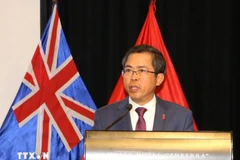
Vietnam’s Ambassador to Australia Pham Hung Tam (Photo: VNA)

Australia–Vietnam Policy Institute serves as bridge for bilateral relations

Established in 2022, AVPI serves as a forum for exchanging ideas among businesses, government agencies, non-profits, universities, and scholars in Australia on Vietnam. The institute acts as a platform for policy dialogue, focusing on research and insights on strategic relations and bilateral economic ties.