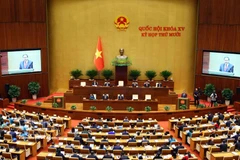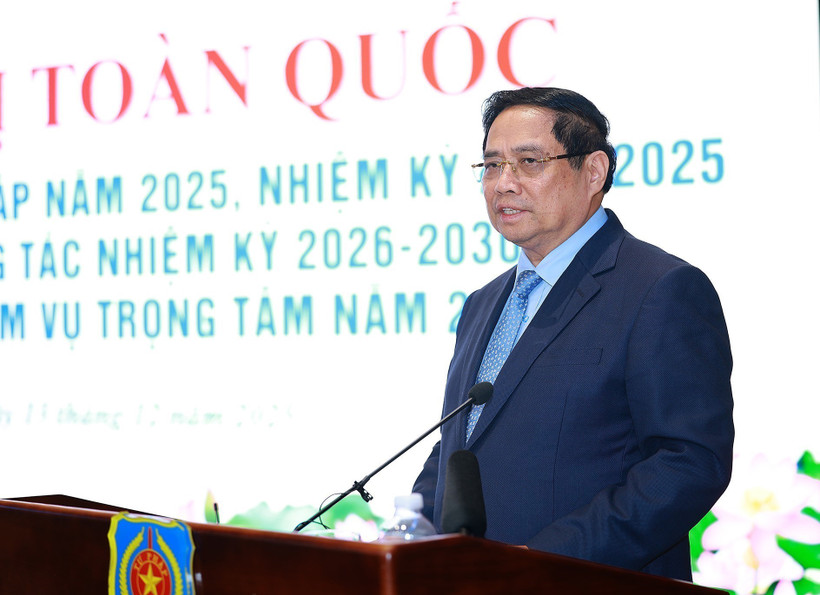
Hanoi (VNA) - Prime Minister Pham Minh Chinh laid out three strategic orientations and six key tasks for the Ministry of Justice while chairing a nationwide hybrid conference in Hanoi on December 13 to review its performance in 2025 and the 2021-2025 term, chart a course for the 2026-2030 tenure and launch tasks for 2026.
Addressing the event linking with all 34 provinces and centrally-run cities, PM Chinh praised the justice sector and its units across ministries and local authorities for their dedication and achievements, which, he said, have supported socio-economic development, national defence, security, social safety and order.
With 2026 set to be a pivotal year hosting the 14th National Party Congress and launching the 2026-2030 five-year plan and the new resolutions of the 14th National Party Congress and Party Congresses at all levels, he called for renewed mindset, positioning legal and institutional frameworks as engines of development. The building of the legal and institutional frameworks must place people and businesses at the centre, toward turning it into a source of national competitiveness.
Outlining the three strateguc orientations, he urged upholding the ministry’s core role in advising on institutional building, while prioritising better law enforcement and ensuring tighter coordination between lawmaking and enforcement, particularly in the building and perfection of a socialist rule-of-law state of the people, by the people and for the people, under the Party’s leadership.
Priority should be given to the synchronous institutional development centred on the legal system, shifting from “governance by law” to “institutional building for development”, eliminating the mindset of “managing without understanding” and “banning what cannot be managed”; and pairing decentralisation and delegation of authority with resource allocation and stronger enforcement capacity at the grassroots level, he said.
Sweeping digital transformation should be a must, with widespread use of information technology, artificial intelligence and big data, particularly in drafting and promulgating legal documents and enforcement, along with building a system to measure the quality of law enforcement based on the satisfaction of people and businesses, PM Chinh added.
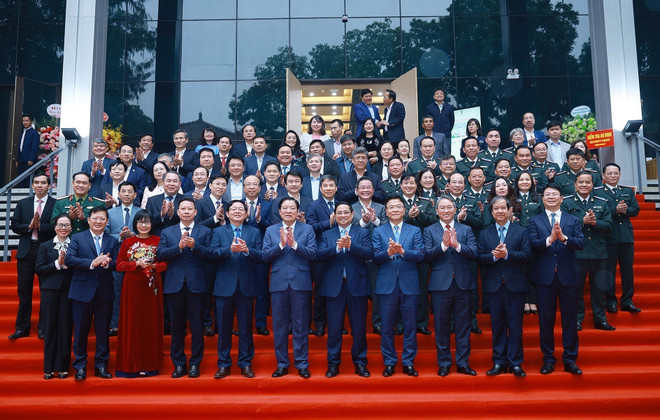
Separately, he highlighted the need for a quality workforce with strong ethics, firm political resolve, professional expertise, international law knowledge and tech skills; deeper global integration through legal and judicial cooperation, and enhanced capabilities to handle international disputes while maximising resources.
Turning to the six core tasks, the government leader directed strict adherence to the Politburo’s Resolution No. 66-NQ/TW, alongside intensified efforts to address institutional bottlenecks.
He specifically pushed for finalising key proposals on improving the structure of legal system in the new era, creating a public lawyer framework for the rule-of-law state, establishing a specialised body for the settlement of international investment disputes, and improving standards for legal development personnel.
The Ministry of Justice was assigned to continue working closely with ministries and agencies to advise the Government and the PM on legislative priorities for the 16th term of the National Assembly, based on the principle of ensuring full coverage of socio-economic areas, fully and promptly translating the Party’s policies and guidelines into specific laws, particularly those from the 14th National Party Congress and the Politburo’s strategic resolutions./.