Antibiotic overuse worsens digestive diseases: experts

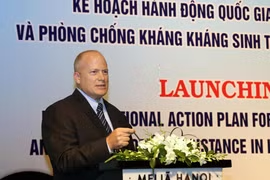
The over-prescription of antibiotics caused a common gastrointestinal bacteria to develop antibiotic resistance, experts said at a recent conference on digestion held by Bach Mai Hospital and the Japanese Nagoya University in Hanoi.
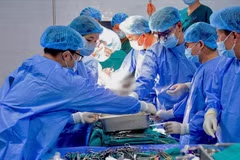
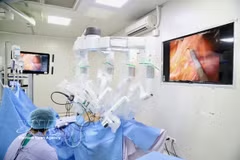
Antibiotic overuse worsens digestive diseases: experts ảnh 1Doctors at the Binh Dan Hospital in HCM City perform the first gastric cancer operation using robots on a 54-year-old male patient last March (Photo: VNA)

Hanoi (VNA)  - Theover-prescription of antibiotics caused a common gastrointestinal bacteria todevelop antibiotic resistance, experts said at a recent conference on digestionheld by Bach Mai Hospital and the Japanese Nagoya University in Hanoi.

Arecent study in Hanoi showed that about 70 percent of Vietnamese are infectedwith H. pylori (Helicobacter pylori), a type ofbacteria that can increase the risk of cancer, especially gastric cancer. Thebacteria were also found in 90 percent of patients with gastritis in Ho Chi MinhCity, according to research.

Atthe conference, experts said it is essential to eliminate the bacteria inpatients with stomach and duodenum ulcers to reduce the risks of medicalcomplications, such as gastrointestinal bleeding and perforation and gastriccancer.

Theyalso noted that it is a relatively common type of bacteria that can be found in50 percent of the world’s total population, and only 1 to 3 percent of thoseinfected will have cancer, depending on their genes and the bacteria’s toxins.

Althoughinfection with H. pylori is not life-threatening, treating itin Vietnam has become more difficult due to patients’ overuse of antibioticsand non-compliance with prescribed antibiotic instructions, said Dr Vu TruongKhanh, head of the Department of Digestion at Bach Mai Hospital.

“Theirimproper use of antibiotics has led to high rates of antibiotic resistance,” hesaid. “Some types of antibiotics that worked on 90 percent of H. pylori patients in somecountries are only effective to 50 to 60 percent  of those patients in Vietnam.”

Stressand imbalanced diets create changes in the human body that facilitate theactivities of these bacteria, leading to the secretion of substances that cancause gastric mucosal congestion, he said.

H.pylori infected patients should avoid eatingsour, spicy foods and raw vegetables—these can create favourable livingenvironments for the bacteria—use turmeric products for their anticancereffects and only drink purified water, he said.

Anaverage of 3,000 cirrhosis patients receive inpatient treatment at the Bach MaiHospital due to excessive consumption of alcohol each year, which is analarming change from a decade ago when cirrhosis was mostly caused by viralinfections, Khanh said.

Livercancer is the second-most common type of cancer in both genders in Vietnam,after lung cancer, according to official statistics, and the death rate is 23.7percent.

Liverfailure is another pressing issue, caused by excessive alcohol consumption,smoking, and continuous use of medications such as paracetamol (used to treat pain and fever), halothane (a general anesthetic), and nonsteroidalanti-inflammatory drugs, according to statistics. An average of 50 to 90 percentof patients with acute liver failure die if not treated properly and not receivingliver transplants.

Eatingvegetables, fresh fruits and herbs to provide vitamins and antioxidants for thebody is one way to protect the liver, doctors said.

Excessivealcohol consumption, smoking and processed foods should be avoided, while dailyphysical exercises and periodical medical examination are encouraged, theysaid.-VNA
VNA


See more

Male plastic surgery: Why masculine aesthetics require a different approach

Male plastic surgery: Why masculine aesthetics require a different approach

Plastic surgery has long been associated with procedures for women, but men also seek treatment for abdominal fat, enlarged breasts and age-related changes around the eyes and face. The American Society of Plastic Surgeons (ASPS) includes liposuction, gynecomastia surgery and eyelid surgery among procedures performed on male patients.

A speaker delivers presentations at the conference (Photo published by VNA)

Vietnam, Denmark expand cooperation in high-tech healthcare

Ambassador Nguyen Le Thanh called on Vietnamese and Danish partners to identify priority areas and promote research and training programmes, knowledge transfer and technology application in line with Politburo's Resolution No. 57-NQ/TW on breakthroughs in science – technology development, innovation and national digital transformation.

Ho Chi Minh City has favourable conditions for developing the ecosystem, including a large population, diverse healthcare needs and an extensive public and private medical network. (Illustrative photo: VNA)

Ho Chi Minh City develops multi-tier elderly care network amid population ageing

Dr. Huynh Minh Chin, Deputy Director of the department, said rising elderly care needs are putting pressure on traditional family-based care, as older people increasingly face multiple chronic illnesses, mobility problems, malnutrition, dementia and depression, requiring continuous support and closer coordination among hospitals, grassroots healthcare facilities, families and social support institutions.

Local residents in Mondulkiri province, Cambodia, receive free medical check-ups and health consultation. (Photo: VNA)

Free medical examinations provided to remote communities in Cambodia

Vietnamese Ambassador Nguyen Minh Vu said the programme has been jointly organised by the embassy and the hospital annually in various Cambodian localities to provide healthcare support to disadvantaged households and contribute to the Cambodian Government’s efforts to improve public health. The initiative also reflects close cooperation in healthcare and the strong bonds between the people of Vietnam and Cambodia.

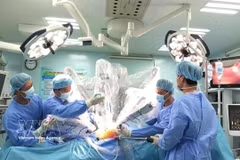
With the assistance of robotic-assisted laparoscopic surgery, doctors successfully perform a complex operation (Photo: VNA)

Vietnam advances towards high-quality, specialised healthcare

Recent developments in Hanoi and other localities highlight efforts to develop specialised treatment, standardise professional practices and apply artificial intelligence (AI) and advanced medical techniques, towards a more modern healthcare system.

Collecting a sample from a pediatric patient for influenza testing (Photo: VNA)

Ho Chi Minh City acute respiratory infections surge over 64%

According to the Ho Chi Minh City Centre for Disease Control (HCDC), influenza viruses are are among the fastest-rising pathogens, with 151 positive samples in a single week. Influenza A is the dominant strain, with A/H1N1pdm09 in 116 samples, or nearly 77%.