Apartments gain in popularity in capital

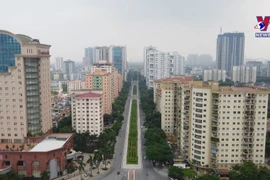
Apartments in the capital city Hanoi have gained in popularity in recent years, as a source of rental income and a reliable safe haven.

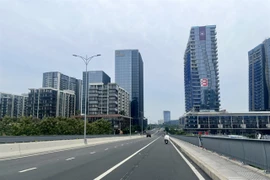
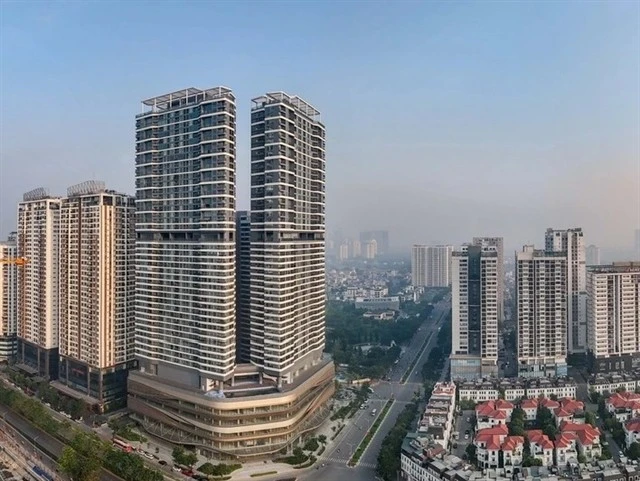
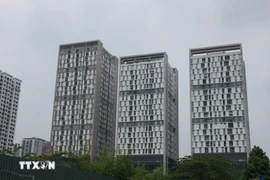
A shopping and residential complex in Hanoi's Nam Tu Liem district. (Photo: VNA)

Hanoi (VNS/VNA) - Apartments in the capital city Hanoi have gained in popularity in recent years, as a source of rental income and a reliable safe haven for people who seek shelter from inflation, said property experts and industry insiders.

Senior Director of the Consulting and Research Department at Savills Hanoi, Do Thu Hang, said apartments offer dual investment returns: rental income and value growth. As prices for other products such as shophouses and villas have seen significant gains in recent years, people have been turning to apartments as an affordable alternative.

The shift aligns with Vietnam’s broader real estate outlook, she said. After a strong recovery in 2024, Hanoi’s market is set to enter a new development cycle in 2025, characterised by increased quality and sustainability. Hang said that each cycle builds on the previous one with the top priority being sustainable growth, bolstered by robust legal frameworks and a strong macroeconomic foundation.

Several key legislative advancements have laid the groundwork for the market including important laws such as the Law on Real Estate Business, the Land Law and the Housing Law, which were approved ahead of schedule in 2024. Additionally, the city’s master plan for 2021-2030, with a vision to 2050, offers more detailed guidelines for urban development, allowing people to better navigate the market.

Another pivotal change was the revised land prices, which replaced fixed price caps with market-driven mechanisms. This shift is expected to influence property values significantly and impact all market stakeholders, from landowners to developers. New land prices, published at the end of 2024, provide developers with a clearer roadmap for the city’s development in the future.

Experts said the coming phase will bring fierce competition, forcing developers to demonstrate credibility, experience and financial robustness.

Foreign players have started playing a more active role in the market after a period of observation, their partnerships, formed with Vietnamese established businesses, will likely elevate the market standards and quality. On the other hand, smaller businesses and independent investors may experience additional hurdles to join the market.

They said as the market evolves, distinct product lines will emerge, tailored to meet diverse customer needs. Developers must prioritise customer needs by offering mid-range apartments or social housing units.

In addition, Hanoi’s 2024 Capital Law and urban planning initiatives aim to create a 'Civilised, Modern, and Culturally Rich Capital'. Businesses must align with these goals to enhance the city’s urban landscape and quality of life. These policies also focus on housing development targets and increasing the average housing area per capita.

Supply forecasts for 2025 suggest that mid-range apartments will continue to dominate Hanoi’s market. The social housing segment was also expected to see improved supply. Most new housing projects will be developed in suburban megacities beyond Hanoi’s ring roads, adhering to stringent standards, offering high-quality amenities and meeting sustainability criteria. As property prices in both inner-city and peripheral areas reach high thresholds, new affordable options will emerge in nearby regions.

In 2024, Hanoi’s apartment market saw unprecedented growth with nearly 38,000 new units in 2024. The supply of newly launched apartments tripled compared to 2023, exceeding 30,900 units, the highest annual figure since 2020, according to a recent report by CBRE.

Head of Residential Marketing at CBRE Vietnam, Vo Huynh Tuan Kiet, said the capital city’s apartment supply in 2024 was six times higher than HCM City. By Q4 2024, apartment prices in Hanoi averaged 72 million VND (2,870 USD) per square metre (excluding VAT and maintenance fees). Primary sale prices surged by 36% year-on-year and 12% compared to Q3 2024, marking the steepest increase in the past eight years. /.
VNA

See more

Engineers and workers carry out construction activities at sea. (Photo: VNA)

Hon Khoai transport project gathers pace despite rainy season challenges

Together with the Ca Mau – Cai Nuoc and Cai Nuoc – Dat Mui expressway projects, the Hon Khoai route forms part of a trio of key infrastructure developments expected to strengthen regional connectivity, boost economic growth and reinforce the safeguarding of Vietnam’s southwestern maritime frontier once completed.

Prime Minister Le Minh Hung (right) and S. Kudryashov, General Director of Zarubezhneft (Photo: VNA)

Prime Minister meets leaders of major Russian enterprises

During his meeting with Rosatom Director General Alexey Likhachev, PM Hung expressed his sincere thanks for the cooperation, support, and significant contributions of Rosatom and the Russian side to the development of Vietnam's atomic energy sector over the past four decades.

Delegates at the seminar in Bangkok on June 17. (Photo: VNA)

Thanh Hoa seeks stronger cooperation with Thai businesses

Mai Xuan Liem, Permanent Vice Chairman of the Thanh Hoa People’s Committee, said Thailand is one of the province’s important export markets, with export turnover reaching more than 12 million USD in the first five months of 2026.

Delegates press the button to officially launch the Doan Hung Industrial Park – AMATA City Phu Tho project at the conference. (Photo: VNA)

Vietnam, Thailand strengthen investment ties, smart city cooperation

Thailand is currently Vietnam's largest trading partner within ASEAN, while Vietnam ranks as Thailand's sixth-largest trading partner globally. Bilateral trade reached 22.07 billion USD in 2025, with both sides aiming to increase the figure to 25 billion USD in the coming years. Thailand also has 805 valid investment projects in Vietnam with a combined registered capital of 15.4 billion USD.

Deputy Prime Minister Nguyen Van Thang speaks at the meeting with ministries and sectors in Hanoi on June 17 to review public investment disbursement and address bottlenecks affecting ODA projects. (Photo: VNA)

Deputy PM requests faster disbursement of ODA-funded projects

As of June 15, the disbursement rate for public investment funded by external sources had reached only 9.99% of the assigned plan. Although the figure was higher than in the same period last year, it remained well below the national average. Notably, one out of eight ministries and central agencies and 13 localities had yet to disburse any allocated capital.

Sorting green-skinned pomelos for export at the processing facility of Vina T&T Group in Vinh Long province. (Photo: VNA)

Vietnamese fruits strengthen foothold in China

The expansion of fruit trade has been supported by the implementation of the Regional Comprehensive Economic Partnership (RCEP) and ongoing efforts to upgrade the China – ASEAN Free Trade Area.

Production line for camera modules and electronic components at the factory of the Korean-invested MCNEX VINA Co., Ltd, located in Phuc Son Industrial Park, Ninh Binh province. (Photo: VNA)

High-tech FDI attraction set as strategic priority: official

The resolution sets out a number of specific targets for foreign investment attraction during the 2026–2030 period. Annual registered FDI is targeted at between 40 billion USD and 50 billion USD, while realised capital is expected to reach approximately 30–40 billion USD per year.

Production of electronic components at DBG Technology Vietnam Co., Ltd. in Yen Binh Industrial Park, Thai Nguyen province. (Photo: VNA)

Vietnam’s trade surplus with EU expands amid economic headwinds

Trade between Vietnam and the EU maintained momentum during the January–May period, supported by the EU – Vietnam Free Trade Agreement (EVFTA) and sustained demand for key Vietnamese exports, even as the EU grappled with inflationary pressures and sluggish consumer spending.