Hanoi (VNS/VNA) - Vietnam expects to attract more foreign direct investment (FDI) with the establishment of an investment support fund which offers large incentives to large tech firms.
The Vietnamese Government has signed a decree which will establish the fund, expecting to attract major investors with subsidies which it hopes will be particularly attractive to the foreign tech sector.
On 31 December 2024, Decree No 182/2024/ND-CP on the establishment, management and usage of the Investment Support Fund was officially issued by the Government. The Decree establishes the framework for the fund, providing cash grants and subsidies to companies which qualify.
Under the decree, the qualification criteria for project eligibility have been meticulously defined, ensuring alignment with economic development priorities.
The fund will be founded by the Government, along with the Ministry of Planning and Investment who are mandated to operate the fund, which will be financed from the State budget.
There are two main types of subsidy under the fund, known as an annual expenses subsidy and an initial investment subsidy.
For the first type, the fund is directed at providing annual financial support for enterprises and investment projects in the high tech arena and in research and development, while the second type would be available for enterprises having R&D centres in semiconductors and AI.
Types of expenses for subsidy include training and human resource development expenses, R&D expenses, cost of newly invested fixed assets, manufacturing expenses of high-tech products, social infrastructure construction expenses and other expenses, as determined by the Government.
The decree is expected to encourage development of high-tech industries, particularly in the semiconductor and artificial intelligence (AI) sectors. Accordingly, enterprises investing in research and development projects in these two sectors will be eligible for financial support of up to 50 % of their initial investment costs.
This initiative is designed to also create favourable conditions for Vietnamese businesses to seize opportunities in the global value chain.
The decree will be active from fiscal year (FY) 2024, and the specified timeline for annual applications for subsidy is before 10 July of the year following the subsidised FY.
Minister of Planning and Investment Nguyen Chi Dung stressed that the fund will play a key role in establishing Vietnam as the leading AI research and development centre in Asia.
For the first time ever, Vietnam has rolled out this new groundbreaking incentive scheme, marking a significant milestone in the country's efforts to attract world-class high-tech businesses to further invest in Vietnam, said Deputy General Director of Tax and Legal Advisory Services, Deloitte Vietnam Bui Ngoc Tuan.
This strategic initiative underscores the Government's commitment to fostering innovation and establishing Vietnam as a hub for cutting-edge technology.
With the decree being effective from FY 2024, enterprises are being encouraged to start their assessment and relevant preparation as quickly as possible, to ensure that they are in a position to get support from the fund, as well as to be ready for the first application to be submitted in July 2025, where applicable, according to Deloitte Vietnam.
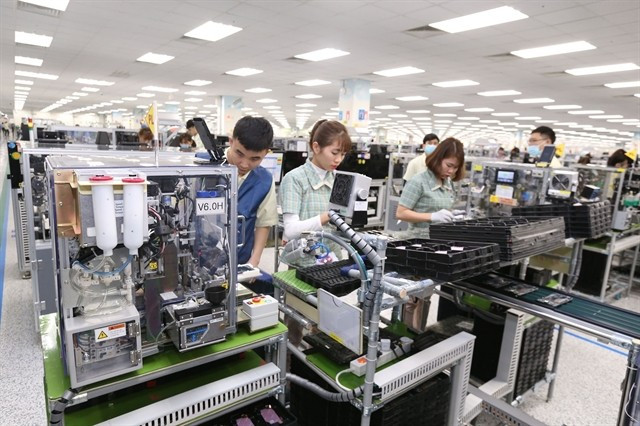
The Foreign Investment Agency, Ministry of Planning and Investment, said that in 2024, a number of notable projects of large companies expanded their operations in the country including a capital increase of Samsung Display, the semiconductor manufacturer Amkor and LG Display. In addition, there are many projects underway managed by tech firms such as Foxconn, Goertek and Luxshare.
According to the agency, foreign investment to Vietnam has continued to grow in recent years, but the number of large-scale investment projects with high tech content continues to be modest.
Currently, Vietnam has 110 existing foreign investment projects with a capital of over 500 million USD per each, of which only 27 projects are in the high-tech sector.
Meanwhile, the global minimum tax applied from 2024 also affects Vietnam's competitiveness. Some businesses have considered new investment and expansion plans in Vietnam.
Therefore, the decree on establishing this fund with many supportive policies for investors contributes significantly to increasing the attractiveness of the investment environment in Vietnam, thereby attracting more large-scale projects, especially in the fields of semiconductors and AI.
FDI disbursement in 2024
Vietnam’s foreign direct investment (FDI) disbursement reached an all-time high of about 25.4 billion USD last year, an annual increase of 9.4%, according to the Foreign Investment Agency (FIA).
A total of 3,375 new projects worth 19.7 billion USD were approved, up 1.8% and down 7.6% year-on-year, respectively. FDI inflows targeted 18 of Vietnam’s 21 economic sectors, with the manufacturing and processing industry taking the lead with 25.6 billion USD, followed by real estate with 6.3 billion USD.
In terms of investors, 114 countries and territories poured capital into the country. Singapore topped the list with 10.2 billion USD, followed by the Republic of Korea, China, Hong Kong (China), and Japan.
Bac Ninh emerged as the top destination for FDI, attracting 5.1 billion USD, 2.8 times higher than the 2023 figure. Hai Phong and Ho Chi Minh City secured the second and third spots, attracting 4.9 billion USD and about 3 billion USD, respectively.
The FIA said foreign capital continues to play a pivotal role in Vietnam’s economic development. The implementation of major projects in semiconductors, energy and high-tech industries have bolstered the local economic transformation.
By the end of 2024, Vietnam had attracted a cumulative 502.8 billion USD in FDI across 42,002 valid projects. The manufacturing and processing industry dominated with 308.8 billion USD, followed by real estate (73.2 billion USD) and power production and distribution (41.9 billion USD).
The RoK was the top investor with over 92 billion USD, followed by Singapore, Japan, Taiwan (China) and Hong Kong (China). HCM City led in FDI attraction with nearly 59 billion USD, followed by Binh Duong (42.5 billion USD) and Hanoi (42.3 billion USD)./.