Hanoi (VNS/VNA) — Applying green standards to exports will improve Vietnamese footwear companies brand value and competitiveness in the global market.
Nguyen Duc Thuan, chairman of TBS Group, said Vietnam's leather, footwear and handbag industry has many opportunities to develop further, but they need to go green.
One company already aiming for changes is Catlongs Co, Ltd, whose chairman Kieu Thi Tam Anh said that in a drive towards green exports, they have been using recycled materials, including soles made from rice husks and peanut shells for products heading to Europe.
The footwear companies are facing great pressure from green transformation, because their industries cause high levels of environmental pollution.
The greening trend in the world sets increasingly strict standards for enterprises, especially exporting ones.
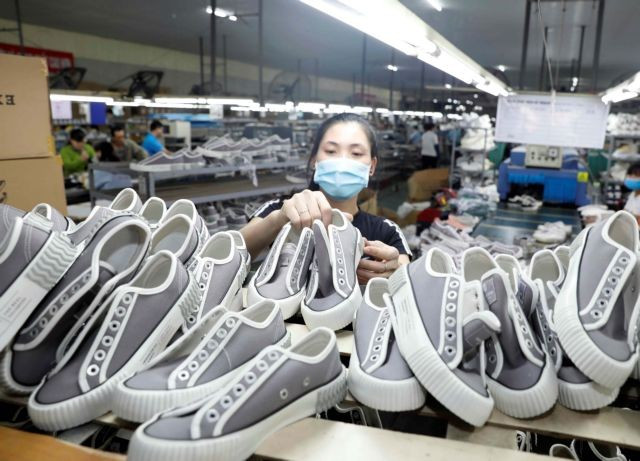
Therefore, the footwear enterprises will be forced to apply automated production lines, artificial intelligence (AI) and green development if they do not want to be eliminated from the global supply chain.
Phan Thi Thanh Xuan, Vice Chairwoman and General Secretary of the Vietnam Leather, Footwear and Handbag Association (LEFASO), emphasised that the implementation of green production has become imperative to maintain export turnover growth.
The domestic footwear and handbag industry faces significant challenges, particularly with new sustainability standards set by major importing countries. These include sustainable production practices and social and environmental responsibility.
For instance, the EU market now mandates sustainable designs and requires complete traceability and transparency across supply chains.
Meanwhile, the domestic footwear industry aims to increase its export value by 10% year-on-year, reaching approximately 29 billion USD this year.
By 2030, the total export value of footwear and handbags is projected to reach 38-40 billion USD.
The industry strives for sustainable development based on the circular economic model and aims to complete the domestic production value chain by 2035. Additionally, it seeks to effectively participate in the global value chain and develop several regional and world-class brands.
With those targets, Xuan recommends that enterprises ensure transparency in their product supply chains, beginning with the raw materials stage. Companies should adopt sustainable production practices aimed at achieving a circular economy and uphold their responsibilities to society and the environment.
Xuan emphasised that increasing the localisation rate of raw materials is a crucial solution for the development of footwear companies. Therefore, Vietnam should establish and develop a raw material trading centre.
Currently, stringent requirements on the origin of raw materials are increasingly being enforced in major export markets such as the EU and the US. To thrive, Vietnamese footwear companies must meet these standards.
According to LEFASO, Vietnam is the world’s third largest footwear producer, trailing China and India, and the second biggest exporter, after China. The footwear industry is responsible for contributing around 8% of the country's GDP overall.
In 2024, the leather, footwear and handbag industry achieved a total export turnover of 27 billion USD, an increase of 11.5%, including 23.2 billion USD from footwear, up by 13.2%, and 3.8 billion USD from suitcases, bags and briefcases, up by 9.7% year-on-year./.