Automobile sector enters new competition phase

2026 should cement trends toward greener mobility, diversified sourcing and value-driven competition, with consumers being the main winners of the transformation.

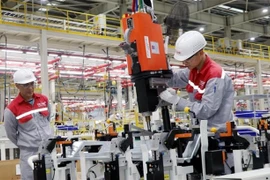
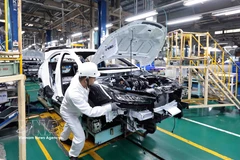
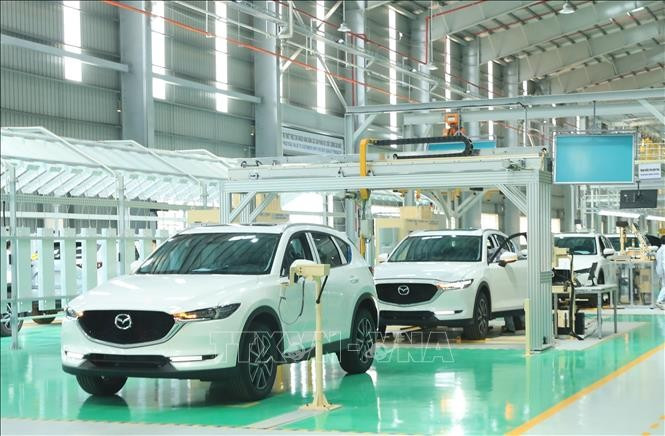
Inside the passenger car assembly factory of THACO in the Chu Lai Open Economic Zone in Da Nang city (Photo: VNA)

Hanoi (VNA) – Vietnam's automobile sector underwent a key shift in 2025, with recovering consumer spending, robust electric vehicle (EV) demand and surging imports, especially from China, reshaping the industry.

Sales from the Vietnam Automobile Manufacturers' Association members, VinFast and TC Motor (Hyundai) totalled 522,644 units in the first 11 months, up remarkably from a year earlier. With seasonal strength expected in December, analysts project full-year volume of 580,000–600,000 units, implying 7%–10% growth.

The market saw an increase in imported vehicles. Locally assembled cars slipped about 3%, while completely built-up (CBU) imports jumped 17%, driven by buyers seeking greater variety in design, technology and origins. SUVs, crossovers and multi-purpose vehicles (MPVs) continued to dominate, well suited to family use and urban traffic conditions.

A standout trend was the deepening footprint of Chinese manufacturers. Many went beyond imports to outline multi-year plans, including local plants and expanded sales and after-sales networks, signalling intent for lasting market presence.

Omoda & Jaecoo Vietnam, a joint venture between local conglomerate Geleximco Group and China's Chery Group, drew notice with aggressive service pledges: warranties up to 1 million km, spare parts delivery within 48 hours and a 30-day full-value repurchase option.

Through November, Vietnam imported 191,142 CBUs worth roughly 4.23 billion USD, up 19% in volume and 30.6% in value year-over-year. Indonesia, Thailand and China were the top sources.
ht.jpg
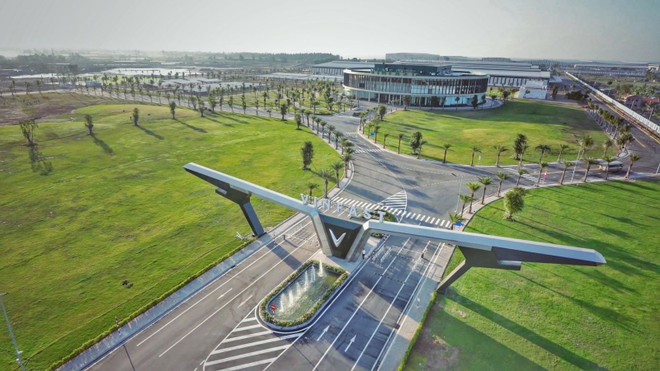
Overview of the VinFast Hai Phong factory (Photo: VNA)

For 2026, the market is seen expanding further but with greater selectivity and segmentation. Hybrids are poised to serve as a transitional option suited to existing infrastructure, while pure electrics gain share in major cities.

Chinese players, supported by long-term investment strategies, broad lineups and competitive service packages, are likely to intensify rivalry in compact SUVs, mid-size SUVs and EVs.

Experts view 2026 as a consolidation phase: brands with disciplined investment, long-term focus and strong local insight stand to gain most. Rivalry will shift from pure product competition to full customer experience and service ecosystem.

Overall, 2026 should cement trends toward greener mobility, diversified sourcing and value-driven competition, with consumers being the main winners of the transformation./.

VNA

See more

Vu Thi Thuy, Deputy Consul General and Head of the Vietnam Trade Office in Hong Kong Special Administrative Region (China). (Photo: VNA)

Hong Kong experience offers insights for Vietnam–Hong Kong trade cooperation

At this year’s Spring Fair, the Vietnam Trade Office in Hong Kong facilitated the participation of several Hong Kong enterprises in Vietnam to conduct market surveys, seek import sources and showcase their products. Notably, a company under the Hong Kong Productivity Council presented technological solutions for smart homes and smart manufacturing at the event.

People shop for Tet at a supermarket. (Photo: VNA)

Vietnamese goods dominate Tet market in Mekong Delta

In key retail hubs such as Can Tho, Long Xuyen and My Tho, high-quality Vietnamese goods account for 85–90% of Tet market share. Surveys at major supermarket chains and traditional markets show that consumers this year are prioritising locally-processed foods, confectionery and beverages.

Prime Minister Pham Minh Chinh strikes the gong to inaugurate the Vietnam International Financial Centre in Ho Chi Minh City. (Photo: VNA)

Int’l Financial Centre – A catalyst for Vietnam’s economic breakthrough: Deputy PM

Standing Deputy Prime Minister Nguyen Hoa Binh, who chairs the IFC’s Governing Council, said that the establishment of the centre in Ho Chi Minh City and Da Nang represented the initial realisation of a major task set out in the Resolution of the 13th National Party Congress. While characterising the launch as an early milestone rather than a final achievement, he underscored that it reflected meticulous, methodical and determined preparations at multiple levels of government.

Kobayashi Yosuke, Chief Representative of JICA Vietnam. (Photo: JICA Vietnam)

JICA hails milestones in Vietnam partnership amid green, digital push

In line with Vietnam’s development priorities and its goal of becoming a high-income country by 2045, JICA will continue to work with a wide range of partners in both Vietnam and Japan to mobilise technical and financial resources for more sustainable and inclusive cooperation

Vietnam International Trade Fair for Apparel, Textiles and Textile Technologies (VIATT 2026) is expected to expand its scale by 20% compared to last year's edition. (Photo: bnews.vn)

Int’l trade fair for apparel, textiles, textile technologies to open in Ho Chi Minh City

According to Vietrade, VIATT 2026 aims to promote the development of Vietnam’s textile and garment industry by enhancing production technologies, strengthening sustainability, and expanding technical textile segments. The event is expected to create opportunities for international businesses to tap into the growth potential of Vietnam and ASEAN, while enabling domestic enterprises to connect more effectively with global buyers.

Participants at a conference on digital assets in Hanoi on December 10. (Photo: VNA)

Finance ministry seeks public feedback on minimal tax on digital assets

Under the draft, the transfer and trading of crypto assets would not be subject to value-added tax. Individual investors, regardless of residency status, would be required to pay personal income tax at a rate of 0.1% on the gross value of each transfer. This approach mirrors the current tax method applied to securities transactions.

Steel products of Hoa Phat Group. (Photo: VNA)

Vietnam aims to meet 80–85% of domestic steel demand by 2030

Vietnam aims to meet 80–85% of domestic steel demand by 2030. Crude steel production is targeted at 25–26 million tonnes per year, with annual growth of 7–8%, while finished steel output is expected to reach 32–33 million tonnes per year, growing by 5.5–6.5% annually. Per capita steel consumption is projected at 270–280 kg per year.

One of the products granted Halal certification in 2026. (Photo: moit.gov.vn)

Spring Fair 2026 boosts momentum for Vietnam’s Halal sector

The fair’s greatest value for Halal products lies less in immediate revenue than in building trust and standardising business practices. In a market where certification determines entry, it highlights that expansion must begin with fundamentals, standards, raw materials, production processes and readiness.

Prime Minister Pham Minh Chinh speaks at the fifth meeting of the Steering Committee for Nuclear Power Plant Construction. (Photo: VNA)

PM calls for more vigorous implementation of nuclear power projects

Describing nuclear power plants as nationally significant, strategic projects with a century-long vision, PM Chinh called for urgent and responsible implementation of tasks within assigned authority, with any outstanding issues promptly reported to higher authorities.