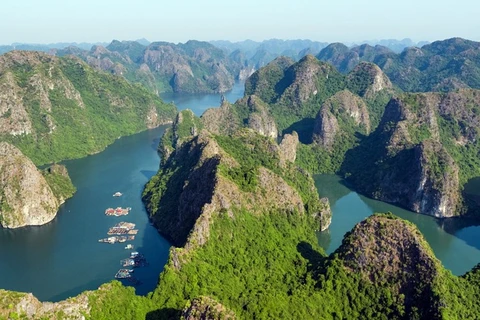
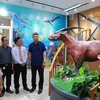
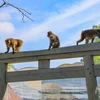
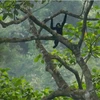
Kon Ha Nung Plateau is an extremely attractive eco-tourism site in Vietnam (Photo: VNA)
 Hanoi (VNA) – UNESCO has recognised Kon Ha Nung Plateau in the Central Highlands province of Gia Lai as a world biosphere reserve at the 33rd session of its International Coordinating Council of the Man and the Biosphere Programme (MAB-ICC) in Nigeria.
The recognition affirms efforts of Vietnam and Gia Lai province in particular in protecting biodiversity and ecosystem and promoting sustainable development.
It also helps boost eco-tourism and community livelihoods as well as attract international scientific research.
Biodiversity
Covering an area of 413,512 hectares, the Kon Ha Nung Biosphere Reserves comprise two core zones - Kon Ka Kinh National Park and Kon Chu Rang natural reserve on 57,493ha, and a 152,693ha buffer zone covering districts and communes of Dak Doa, Mang Yang, Kbang, Chu Pah, Dak Po and An Khe town.
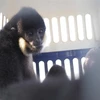
Kon Ha Nung is home to rare species such as the Gray-shanked douc (Pygathrix cinerea) - a rare and endemic primate species of Vietnam and classified as critically endangered, with only about 1,000 individuals in the wild.
The importance of the Kon Ha Nung Biosphere Reserve is reflected in the fact that it is home to many rare species, and a relatively large area of upper land rainforest in the Central Highlands.
The two core areas of the Kon Ha Nung Biosphere Reserve have relatively intact ecosystems with high biodiversity, which are typical for the area's forest ecosystem, flora and fauna of the Central Highlands region.
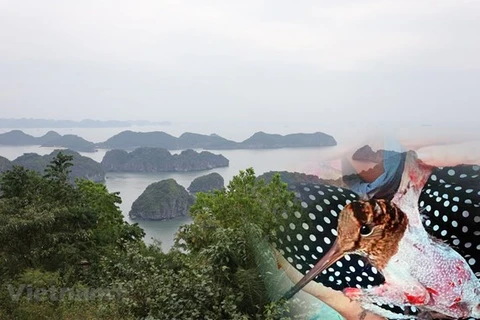
 Flora and fauna system in Kon Ha Nung Biosphere Reserve (Photo: VNA)
 This biosphere reserve plays an important role in socio-economic development and maintaining the ecological balance of not only the Central Highlands region but also the central and southeast regions of Vietnam.
The Biosphere Reserves is a title awarded by UNESCO for nature reserves with unique and diverse flora and fauna. Biosphere reserves must meet seven criteria: having ecosystems representing biogeographic regions, significance for biodiversity conservation, opportunities for sustainable development, and a large enough area. They are also required to fulfil three functions as prescribed by UNESCO, namely conservation, sustainable development and logistic support.
Meeting strict criteria, the Kon Ha Nung Biosphere Reserves affirms its core value. The Kon Ha Nung Biosphere Reserve is home to rare species such as the Gray-shanked douc (Pygathrix cinerea) - a rare and endemic primate species of Vietnam and classified as critically endangered, with only about 1,000 individuals in the wild.
According to Nguyen Hong Quan - Deputy Director of Kon Chu Rang Nature Reserve, the results of field investigations and surveys to 2018 identified 881 species and subspecies belonging to 547 genera, 162 plant families of 5 phylum of vascular plants.
Not only boasting diverse flora, fauna and ecosystem, the Kon Ha Nung Biosphere Reserve also contains a treasure of unique cultural heritage with many outstanding characters of tangible and intangible culture values of ethnic minority communities living here.
The Kon Ha Nung Biosphere Reserve plays a crucial role in preserving the landscape, ecosystem, species and genetic resources of Gia Lai through many programmes to preserve biodiversity in the two core zones.
The linking corridor between the two core zones will expand the conservation scope of natural forest ecosystems and biodiversity values.
At the regional scale, the biosphere reserve will create a biodiversity corridor that maintains the integrity and overall integrity of remaining tropical ecosystems of the Central Highlands in particular and the country in general.
Biodiversity conservation associated with economic development and environmental protection
According to Ambassador Le Thi Hong Van, Permanent Representative of Vietnam to UNESCO, the recognition offers opportunities to Vietnam to access, apply initiatives and share experience on natural resource management, sustainable socio-economic development.
It also demonstrates Vietnam's commitment to preserving nature and biodiversity, restoring ecosystems and responding to climate change, contributing to the expansion of the World Network of Biosphere Reserves, and promoting Vietnam’s image of country, people, nature and culture of Vietnam.
The biosphere reserve is managed in line with the traditional knowledge of local communities including indigenous and folk knowledge about production and social organisation. The provincial People’s Committee formulates policies concerning land and forest allocations to households, payment for forest ecosystem services and the development of sustainable ecotourism./.