Bleak outlook predicted for Thailand’s rice export in H2

Thailand's rice export is facing an unpromising outlook in the second half of 2020 amid sluggish global demand caused by the coronavirus crisis.
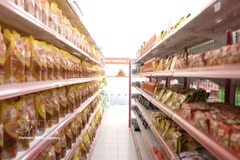
Bleak outlook predicted for Thailand’s rice export in H2 ảnh 1Rice bags offered for sale at a supermarket in Bangkok, Thailand (Photo: VNA)

Bangkok (VNA) - Thailand's rice export is facing anunpromising outlook in the second half of 2020 amid sluggish global demandcaused by the coronavirus crisis.

Local media cited Charoen Laothammatas, Presidentof the Thai Rice Exporters Association (TREA), as saying that overall Thai riceexport activity is relatively quiet in July after the pandemic resulted in thecollapse of Phoenix Commodities, one of the world's biggest commodity traders.

Phoenix Commodities' collapse affects almost allrice exporters in Thailand, Charoen said, noting that it was a trading partnerof many Thai rice exporters, particularly those who ship rice to Africa.

This UAE-based company, trading in grains, coal,metals and other commodities, is estimated to owe 1 billion THB (31.7 millionUSD) to Thai exporters who sell rice on credit to it.

According to Charoen, the appreciation of theThai baht earlier this month and drastic foreign exchange swings have also ledalmost all exporters to baulk at rice shipments.

In the first five months, Thailand exported 2.57million tonnes of rice worth 54.16 billion THB, down 31.9 percent and 13.2percent from the same period last year, respectively.

Its biggest rice importers during the periodwere the US, South Africa, Angola, China, and Japan.

The TREA set a full-year rice export target of7.5 million tonnes but is scheduled to adjust the target on July 22.

Thailand shipped 7.58 million tonnes of riceworth 131 billion THB in 2019, down 32 percent in volume and 25 percent invalue year on year./.
VNA

See more

Kyodo News publishes an article titled “Sculptures by Japanese, Vietnamese artists on display in Yokohama,” (Screenshot photo)

Japanese media widely cover top Vietnamese leader ’s visit

Japanese media have continued extensive coverage of General Secretary of the Communist Party of Vietnam (CPV) Central Committee and President To Lam’s activities in Japan, highlighting his meetings with representatives of leading financial institutions at the Tokyo Stock Exchange, witnessing of cooperation agreement signing and participation in cultural exchanges.

Thailand pushes for establishment of ASEAN emergency public health centre

Thailand pushes for establishment of ASEAN emergency public health centre

The draft agreement stipulates that ACPHEED will comprise three specialised centres based in three ASEAN member states. Vietnam will oversee the centre for prevention and preparedness; Indonesia will host the centre for detection and risk assessment; and Thailand will be responsible for the centre for response and risk communication.

Indonesia designates 31 mln ha of waters as conservation areas

Indonesia designates 31 mln ha of waters as conservation areas

Head of the Convention and Marine Resource Balance working team at the ministry’s Directorate of Ecosystem Conservation Ahmad Sofiullah said this week that it is a strategic effort to ensure the sustainability of Indonesia’s marine ecosystems.

Thai Deputy Prime Minister and Minister of Foreign Affairs Sihasak Phuangketkeow (R) takes part in the Q&A session at the 41st ASEAN Roundtable. (Photo: VNA)

Thailand calls on ASEAN to proactively address polycrisis

Thai Deputy Prime Minister and Minister of Foreign Affairs Sihasak Phuangketkeow noted that no single member state could tackle challenges ranging from major-power competition and economic fragmentation to climate change and energy and food security on its own. Regional cooperation is therefore a strategic imperative, enabling ASEAN not only to overcome crises but also to sustain its development momentum.

Palm oil and palm oil-based products are among Indonesia’s promising export commodities. (Photo: VNA)

Indonesia to launch commodity export monitoring platform next year

DSI will draw on data from customs authorities, trade activities and the financial system, alongside contracts and documents uploaded by exporting companies. The platform will monitor the volume, quality, prices and destination markets of various commodities, as well as transactions between related parties.