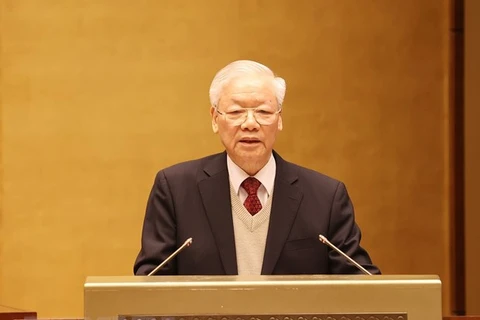
Vietnam has been elected to the United Nations Human Rights Council for the 2023-2025 term. (Photo: VNA)
 The remark was made by Kyril Whittaker, a researcher of Vietnamese politics and history and member of the Communist Party of Great Britain (CPB) in an interview with Vietnam News Agency correspondents in London.
According to Whittaker, the foreign policy of the current day is based upon flexibility and strength, that is Vietnam consistently develops its foreign policy based upon mutual respect in the context of independence and territorial integrity and maintains and develops increasing relationships with all countries.
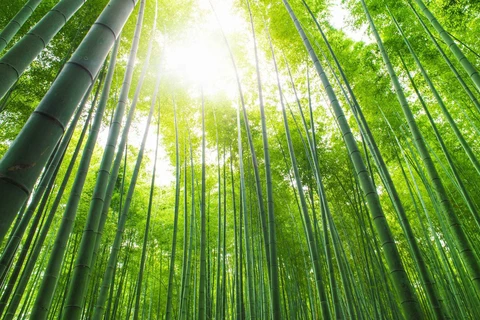
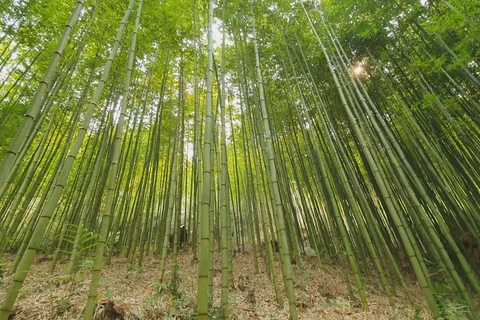
The strength of Vietnam’s bamboo diplomacy lies in its non-abandonment of principles whilst simultaneously being flexible and adaptive to a changing world, seeking to create new relationships and increase existing ones.
He said it is most certainly a policy of ‘strong roots’ and ‘flexible branches’ as it is resilient and strong, yet open, pointing to such small aspects of cooperation as the cooperation between the Ho Chi Minh Communist Youth Union and the Lao People’s Revolutionary Youth Union in exchanging skills and engaging in projects together.
This can also be seen in bigger ways with Vietnam’s involvement in more than 70 international organisations and forums, which can be seen most clearly exemplified by the chairmanship of ASEAN in 2020 and Vietnams chairmanship of the UN Security Council for the 2020-2021 tenure.
During the COVID-19 pandemic, Vietnam’s internationalism was seen in its provision of face masks and other aid to states in need. The British researcher pointed out bamboo diplomacy is based upon the qualities present in Vietnamese history and present-day material conditions and emphasises particular qualities which are represented in bamboo, such as resilience, flexibility, utility, and the qualities often stressed by Uncle Ho, which are industriousness, thrift, uprightness and strength in unity.
Whittaker stressed that bamboo diplomacy means Vietnam has an opening and welcoming foreign policy which is adaptable to the changing climate and can weather tough situations. It is a policy underlined by fixed principles such as respect for independence, peace and non-interference whilst advocating an openness and flexibility and an ever-increasing effort for improved international relationships and involvement in all arenas.
He said historically Ho Chi Minh’s diplomatic style was also characterised by its openness, internationalism and a strong voice on the international stage, pointing out that Vietnam’s foreign policy encapsulates this and further continues to develop a course of foreign policy which seeks to give Vietnamese culture and the nation a strong voice, defending its independence and territorial integrity whilst simultaneously being a welcoming nation with an increasing role in international affairs, ever escalating its peaceful cooperation and friendship with nations around the world.
Speaking about Vietnams achievements in international integration, Whittaker said these achievements are well known. At a basic day-to-day level, Vietnam is well known as a friendly country which is safe and provides visitors with unique cultural experiences. The country is known to be one which has long lasting and developed relationships with many nations, whilst simultaneously defending the rights of nations to independence and freedom for their citizens to enjoy peaceful development.
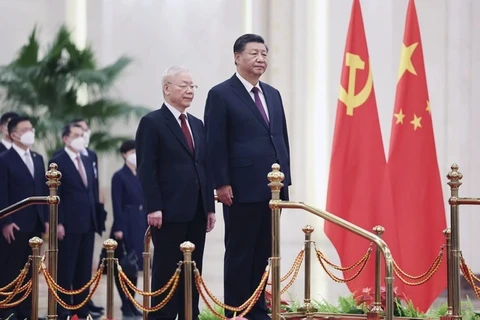
He pointed out that the recent visits by Prime Minister Pham Minh Chinh to China, head of the Party's Commission for External Relations Le Hoai Trung to Cuba, Deputy Prime Minister Tran Luu Quang to Japan and others have resulted in enhancing the friendship and cooperation between Vietnam and other countries.
 The Prime Minister Pham Minh Chinh (L) and Party General Secretary and President of China Xi Jinping. (Photo: VNA)
 He noted that the development of the socialist-oriented market economy under Doi Moi has led to a flourishing economy with deep international ties whilst simultaneously maintaining and developing national industry. Whilst people’s standard of living continuously improves and environmental protections are strengthened amongst a backdrop of strong workers’ rights, Vietnamese craft villages are sharing with the world their handicrafts, and the agricultural sector being able to boast of having rice and coffee crops which are renowned worldwide for their exceptional taste and quality. With Vietnam’s diplomacy this is only increasing as can be seen in the recent discussions of increased export of fruit to the British market.
Commenting about General Secretary Nguyen Phu Trong’s leadership and his diplomacy style, Whittaker said the Vietnamese General Secretary has ensured an increased development of international relations, with Vietnam’s increased international presence and the further development of international ties.
He stressed that General Secretary Nguyen Phu Trong has provided immense contributions to the theoretical analysis of socialist construction for a worldwide audience, notably with his popular work ‘Some Theoretical and Practical Issues on Socialism and the Path towards Socialism in Vietnam’ as an exceptional work which highlighted the contradictions of capitalism in the modern era and highlighted Vietnam’s path to socialism.
This article was published worldwide in many countries, and it is unsurprising that this was the case, he said, pointing out the article not only clarified important questions and gave an analysis of the development of neoliberal capitalism highlighting the current issues of the day and how the path to socialism helps to deal with these issues, but it also presents view on Vietnam’s foreign policy, which is “the foreign policy of independence, self-reliance, multilateralization and diversification for peace, friendship, cooperation and development and actively engage in international integration.”
The article also talks about learning from international integration and states that whilst culture is an ‘engine of development’, this culture is one which whilst maintaining and developing its unique features also ‘learns from humanity at large’.
He pointed out these are thoughts, which have been clearly expressed in the diplomatic style and in the writings of Uncle Ho and the Communist Party of Vietnam throughout its history, show not only the increasing development and exercise of these concepts in Vietnamese foreign policy but also the firm ideological foundation of the party under the leadership of the Vietnamese people.
 President Vo Van Thuong (R) and King Charles III (Photo: VNA)
 Whittaker believed the current bilateral relations, told to be in ‘the most flourishing period, will heighten to new levels in the current era this friendship and cooperation. He also said Vietnam’s positive example will provide the UK with much to learn from, especially in the areas of worker’s rights, foreign policy, economic development and environmental protections./.
VNA