Hanoi (VNA) – Land border gates along the Vietnam–China frontier are no longer merely tourism gateways but have become vital hubs for bilateral trade. Upgrading these crossings into smart border gates is expected to significantly improve competitiveness, facilitate trade flows, and support sustainable growth.
Quang Ninh province holds a particularly strategic position, with extensive land and maritime borders and a diverse system of border gates and crossings. It serves as a key trade gateway between Vietnam and China. Amid rising demands for faster, more transparent and better-connected customs clearance, traditional management methods are being overhauled.
The province has stepped up synchronous investment in technical infrastructure at border gate areas while accelerating the application of digital technologies in management and operations. Automated systems for surveillance, vehicle recognition, cargo flow management and entry-exit control have been deployed with real-time data connectivity. Many inspection, supervision and customs clearance procedures are being digitalised, reducing reliance on paper documentation, shortening processing times, easing congestion, and improving coordination among competent forces.
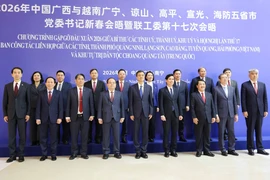
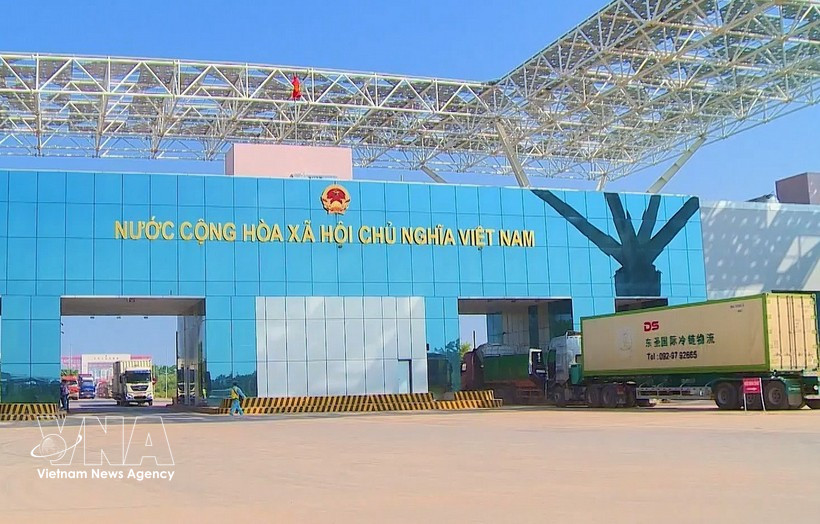
To date, Quang Ninh province and the Party Committee of the China’s Guangxi Zhuang Autonomous Region have signed a framework agreement to pilot the construction of a smart border gate at the Mong Cai–Dongxing crossing. The two sides agreed to develop a modern model featuring separate operational flows: Bac Luan I Bridge dedicated to passenger and tourism traffic, and Bac Luan II Bridge for cargo transportation.
The project is expected to enhance customs clearance efficiency, reduce bottlenecks and improve transparency in trade activities, becoming a model of cross-border digital cooperation in Southeast Asia.
At the Bac Luan I and II areas, modern technology systems have already been introduced, strengthening border management and control while reducing time and costs for trade activities. The Mong Cai International Border Gate has also been connected to Dongxing city’s smart border gate system, further boosting bilateral cooperation and exchanges.
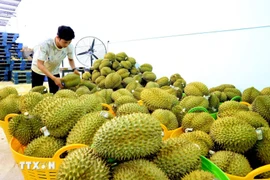
At Bac Luan II Bridge, Tan Dai Duong International Import-Export JSC and Guangxi Co., Ltd.,'s Dongxing branch (China) have jointly invested in a laboratory for quality testing of agricultural, forestry and aquatic products. The facility helps Vietnamese exports to China undergo inspection more quickly, cutting both testing time and related costs.
Nguyen Van Thanh, Chairman of the Board of Directors of Tan Dai Duong International Import-Export JSC, said the laboratory has contributed to promoting cross-border trade in agricultural, forestry and aquatic products. It has helped reduce customs clearance time, lower testing and traceability expenses, and boost Vietnam’s export turnover to the Chinese market.
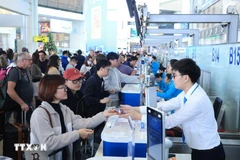
In 2025, Quang Ninh recorded total import-export cargo volume exceeding 3 million tonnes, with trade turnover reaching 6.46 billion USD. The Mong Cai branch alone contributed 6.29 billion USD, up 27% year-on-year. Cross-border travel also surged, with more than 8.5 million passenger entries and exits recorded during the year, including over 8 million via Mong Cai International Border Gate, a 10.5% increase compared to 2024.
The Mong Cai–Dongxing border gate pair plays a particularly important role in northern border trade, serving as a strategic connection between Vietnam and southern China. In the context of deepening international integration and rapid digital transformation, building a smart border gate model here is both a practical necessity and a strategic imperative.
The smart border gate is designed to integrate core Industry 4.0 technologies such as artificial intelligence (AI), big data, the Internet of Things (IoT), biometric identification and intelligent camera systems. These technologies enable automated control of people, vehicles and goods, while providing real-time risk forecasting, fraud detection and abnormal behaviour identification. As a result, border procedures are significantly shortened, enhancing transparency and management efficiency.
Quang Ninh authorities have proposed that the Government soon approve the pilot project for the Mong Cai–Dongxing smart border gate and the establishment of a cross-border economic cooperation zone. The model is expected to operate under a “single-window, single-stop” mechanism, requiring close coordination with Dongxing authorities to unify technical standards and smart import-export procedures.
Deputy Prime Minister Bui Thanh Son recently stressed that developing the Mong Cai–Dongxing smart border gate and forming a cross-border economic cooperation zone will not only drive Quang Ninh’s development but also contribute directly to improving national competitiveness, promoting import-export activities and accelerating economic growth.
With plans to build the Mong Cai–Ha Long–Hai Phong railway alongside the smart border gate and economic cooperation zone, Quang Ninh is positioning itself as a new growth pole in northern Vietnam and a key gateway for economic cooperation between Vietnam, ASEAN and China./.