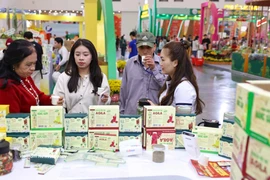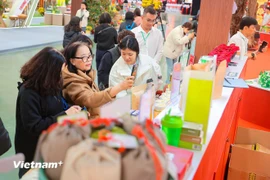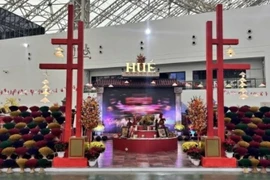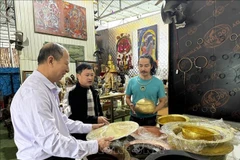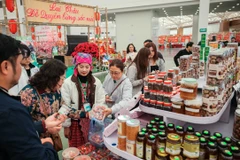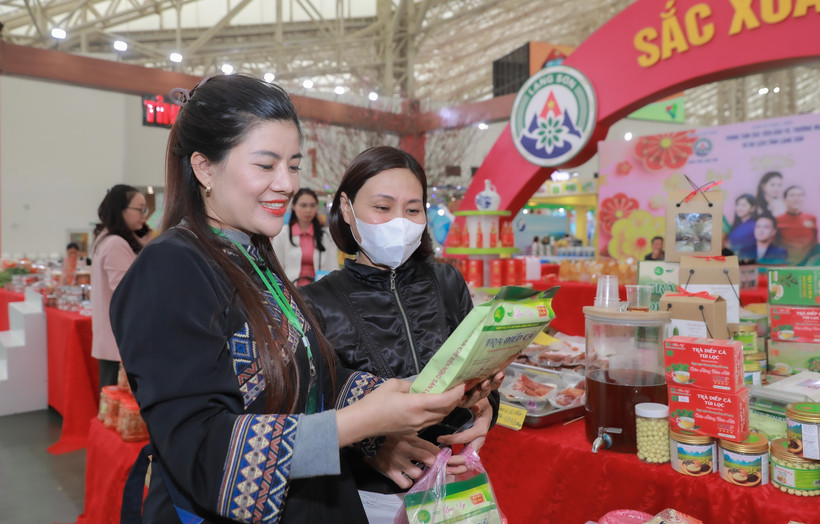
Hanoi (VNA) – The Glorious Spring Fair 2026, underway at the National Exposition Centre in Dong Anh commune, Hanoi, is not only a shopping and cultural venue but also a showcase for ethnic products and regional specialties from across the country. Each booth reflects local cultural identity and the efforts of communities and enterprises to preserve traditional crafts while promoting economic development.
From handwoven brocade textiles to traditional ethnic costumes, the fair presents vivid cultural colours and highlights how local producers are introducing heritage products to the modern market, expanding consumer reach, building brands, and strengthening trade links.
Cultural imprints through traditional products
At the Dien Bien province booth, traditional brocade products have attracted strong interest from visitors. Brightly coloured, fully handwoven fabrics are displayed alongside looms, allowing artisans to demonstrate the weaving process on site. Many visitors stopped to observe, learn, and even try weaving themselves, gaining a deeper understanding of the meticulous craftsmanship behind brocade products that have been preserved through generations.
Lo Thi Van, an ethnic Lao ethnic woman and Director of the Pa Thom Brocade Weaving Cooperative in Thanh Yen commune, said the cooperative brought a wide range of products to the fair, including clothing, scarves, bags, blankets, and household textiles closely associated with local life.
According to Van, weaving is deeply embedded in the customs and traditions of the Lao community in Dien Bien. In the past, handmade textiles were essential household items and also held cultural significance in marriage traditions.
She expressed her hope that the fair would help traditional products from remote areas reach a wider market. Van noted that all items are handmade, from raw material production to weaving, without machinery.
Spreading Tay culture from the fair space
Among the ethnic booths, the “Chao Pi Noong” display themed “I Love Tay Culture” has drawn attention for its in-depth cultural content and creative approach by young people.
Tran Trong Giap, an ethnic Tay from Thai Nguyen province, said he joined the fair to introduce Tay cultural heritage to the public and promote understanding of Vietnam’s ethnic diversity. Growing up in a Tay cultural environment, he said he has come to appreciate the richness of Tay heritage, including the Nom Tay script, Nom Tay verse narratives, and Then singing, which has been recognised by UNESCO as an Intangible Cultural Heritage of Humanity.
Concerned that some traditional values are fading in modern life, Giap said cultural revival must begin within communities and daily spaces. From that idea, he developed the “Tay Collection” project, which seeks to spread authentic Tay cultural values through creative products and services, while supporting Tay-owned businesses and communities in integrating culture into production and trade.
At the fair, the “Chao Pi Noong” booth introduces the Nom Tay script and Nom Tay verse narratives, along with live Then singing performances, recreating traditional cultural life in a contemporary setting. It also presents creatively adapted traditional costumes that retain original patterns and materials, aiming to bring Tay attire closer to everyday use.
Beyond fashion, the booth features products incorporating Tay cultural elements, as well as publications from other northern mountainous ethnic groups, highlighting cultural exchange and diversity.
The participation of ethnic enterprises and cooperatives at the fair reflects a growing trend of linking economic development with cultural preservation. The event serves not only as a trade platform but also as a space to promote regional identities, raise public awareness of traditional values, and underscore the importance of safeguarding Vietnam’s diverse cultural heritage./.