Chinese electric vehicles drive back into Vietnamese market

About a decade ago, Chinese car brands like Zotye Z8, Beijing X7, and Brilliance V7 entered the Vietnamese market to limited success. But a new fleet of modern Chinese vehicles began to gain traction in the Vietnam market last year.

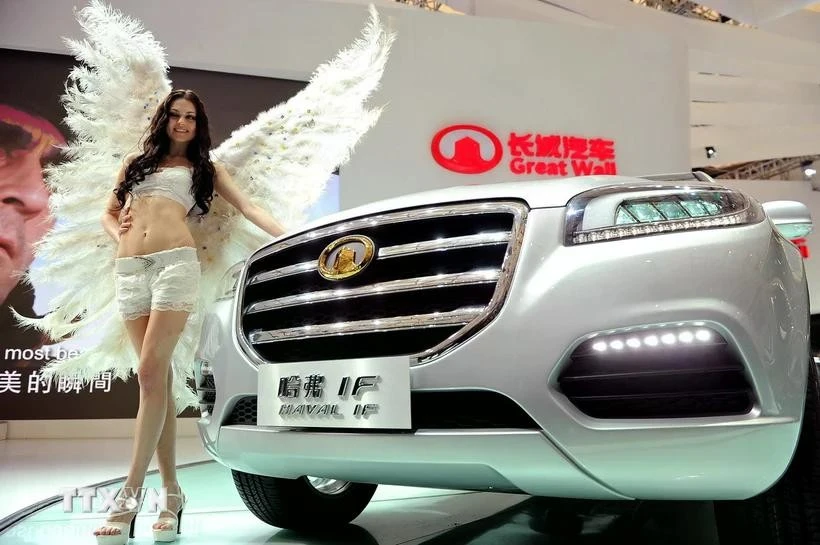
At an automotive exhibition in Shanghai, China. (Photo: AFP/VNA)

Hanoi (VNA) – Chinese electric cars are returning Vietnam under a strategy to enter the market as affordable vehicles built with the latest in technology.

According to the Oto.com.vn market research team under Nextgen Vietnam Joint Stock Company, about a decade ago, Chinese car brands like Zotye Z8, Beijing X7, and Brilliance V7 entered the Vietnamese market to limited success. But a new fleet of modern Chinese vehicles began to gain traction in the Vietnam market last year.

Brands like Wuling, BYD, and Chery are quickly capturing consumer attention. Statistics show that more than 10 Chinese car brands are now distributing products in Vietnam.

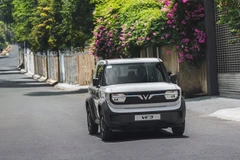
When the Wuling Bingo was launched in November 2024, it garnered 18,000 searches on Google. Alongside this, searches for Chinese car prices surged at the end of 2024, especially as numerous models offered significant discounts. For example, the MG5 was reduced to 300 million VND, a shocking price in the C-segment sedan category.

Previously, Chinese cars were mainly viewed as backup options, but they have shifted into becoming sought after recreational units now. In the list of the 15 most inquired new models in 2024, alongside popular vehicles like Mitsubishi Xpander, Toyota Vios, and Mazda CX-5, two Chinese models - the MG5 and MG ZS, appeared with 4,207 and 3,849 inquiries, respectively.

Low prices, modern designs, and a wealth of technology are driving these vehicles into the limelight recently. Additionally, deep discounts of hundreds of millions of VND serve as a significant lever.

Despite the increasing attraction, Chinese cars still face significant hurdles regarding resale value. For example, MG - the most popular Chinese car brand in Vietnam, depreciates the fastest among its competitors. By the end of 2024, the MG HS model made in 2022 had depreciated by 33% from its original price, while the Hyundai Tucson depreciated by only 17% after two years.

The primary reason for the rapid depreciation of Chinese cars is the continuous discounting of new models, which also affects the prices of used cars. When the new MG ZS STD dropped by up to 120 million VND, it naturally pulled down the prices of used models, leading to faster depreciation compared to other brands.

In Vietnam, Chinese cars drive their way into the market encumbered with the stigma of low quality. Therefore, in buy-sell transactions, the time taken to successfully sell a Chinese car is often longer than for other models in the same segment.

Statistics indicated that used car showrooms needed an average of 23-29 days to sell an MG, whereas popular models like the Hyundai Creta, Kia K3, and Hyundai Tucson took only 16-20 days during the busy market of 2023.

However, in 2024, as the used car market slowed down, this gap narrowed to just two or three days, showing that Chinese cars are gradually shifting into a better position in the market./.

VNA

See more

New Zealand apples on sale at a supermarket in Vietnam (Photo: VNA)

Vietnamese consumers develop taste for Australian, New Zealand fruit

According to statistics from the Department of Customs, in the first six months of 2026, Vietnam imported 102.8 million USD worth of fruit, vegetables and flowers from Australia, up 55.7% from the same period last year. Australia's share of total imports rose from 5.5% to 6.51%, highlighting the growing position of the market as a supplier. Imports from New Zealand reached 78.04 million USD, up 20.4% year-on-year.

Semiconductor products, chips and components displayed at a ceremony to launch a national centre for semiconductor chip pilot production support in Hanoi on June 26. (Photo: VNA)

US semiconductor push offers Vietnam opportunities, policy challenges

The Vietnam-US semiconductor partnership is therefore not simply a “golden opportunity” arising from geopolitical shifts, but also a long-term test of Vietnam’s institutional reform and implementation capacity. If domestic capacity cannot keep pace, adjusting targets toward quality and execution, rather than simply expanding the number of projects, will be essential.

Workers process fruit for export at the Chanh Thu factory in Cho Lach commune, Vinh Long province. (Photo: VNA)

Vietnam works to maintain edge in key agricultural market

According to Le Hang, Deputy Secretary-General of the Vietnam Association of Seafood Exporters and Producers (VASEP), China and Hong Kong (China) remained bright spots for Vietnam’s aquatic exports in July, with revenue exceeding 267 million USD, up 24.7% year-on-year.

An estimated 6,300 workers are needed by the semiconductor industry in Bac Giang province during the 2025-2030 period. (Photo: VNA)

India's semiconductor strategy complementary to Vietnam's chip sector: expert

Sudhanshu Mittal, Director of Engineering Solutions at the National Association of Software and Service Companies (Nasscom) of India, noted that during the state visit to India by General Secretary of the Communist Party of Vietnam Central Committee and President To Lam in May, the two countries signed a number of cooperation agreements, with semiconductors identified as a priority area alongside artificial intelligence (AI), cybersecurity, and advanced technologies.

At the working session between Vietnamese Minister of Finance Ngo Van Tuan (right) and RMIT University’s Vice-Chancellor and President Professor Alec Cameron in Sydney on August 10 (Photo: tapchikinhtetaichinh.vn)

Vietnam, Australia seek to expand investment in rice value chain

During General Secretary of the Communist Party of Vietnam Central Committee and President To Lam’s state visit to Australia from August 9-12, Vietnamese Minister of Finance Ngo Van Tuan, authorised by the General Secretary and President, held working sessions with SunRice Group CEO Paul Serra and RMIT University’s Vice-Chancellor and President Professor Alec Cameron in Sydney on August 10.

Students practice microcontroller programming at the Vietnam-Korea College of Technology in Bac Ninh province (Photo: VNA)

Vietnam – one of most attractive destinations for leading US semiconductor companies: expert

Vietnam has built a solid semiconductor and electronics industry before joining ITSI, attracting major US semiconductor companies. Intel Products Vietnam is one of Intel's largest assembly and testing facilities worldwide, while chip design companies such as Synopsys, Cadence, Marvell and Qualcomm have established engineering and research centres in the Southeast Asian country.

Lawmakers on August 9 discuss a draft law amending and supplementing a number of articles of the Law on the State Bank of Vietnam, the Law on Anti-Money Laundering and the Law on Credit Institutions. (Photo: VNA)

Lawmakers discuss measures to ensure banking system safety, support digital economy

The draft law sets out provisions to control conflicts of interest when commercial banks act as agents managing collateral for corporate bonds. In this regard, Deputy Le Van The of Ninh Binh province said he supported the move, noting that it could provide a more professional approach to collateral management and help strengthen investor confidence if properly regulated.