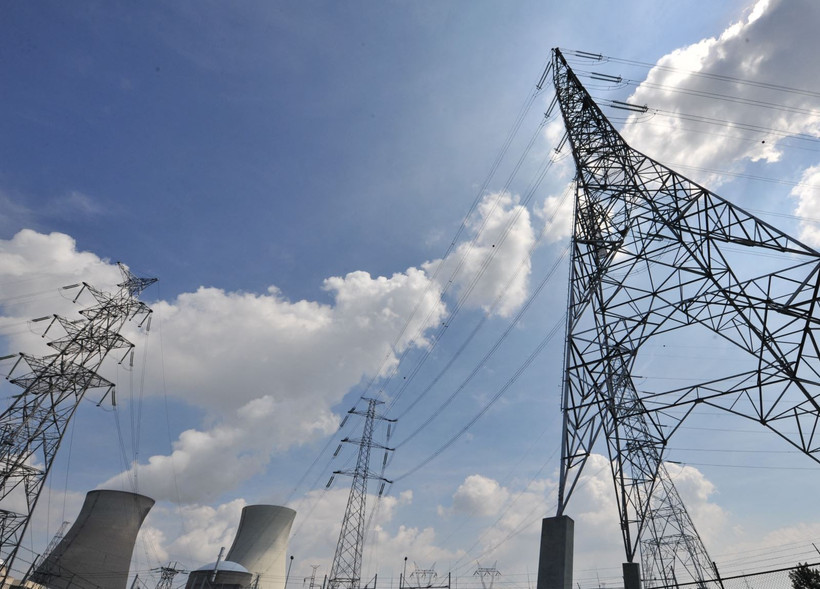
Master plan on atomic energy development, application approved

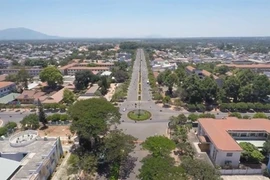
Efforts will be made to urgently complete and develop the national nuclear power infrastructure to support the implementation of the Ninh Thuan nuclear power project, while continuing to carry out the national nuclear power development programme.

Vietnam will complete and develop the national nuclear power infrastructure to support the implementation of the Ninh Thuan nuclear power project, (Illustrative photo: VNA)

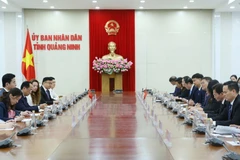
Hanoi (VNA) - Deputy Prime Minister Bui Thanh Son has signed Decision No. 245/QD-TTg approving a master plan on the development and application of atomic energy to 2030, with a vision to 2050.

Its overall goal by 2030 is to perfect the legal system, policies, and the state management agency on atomic energy in accordance with international practices.

Research, application, and training institutions in this field will be streamlined, and have technical infrastructure and human resources quality improved.

Radiation and radioactive isotope application activities will be widely and effectively implemented across various industries and sectors, contributing positively to promoting productivity, quality, and efficiency in production and business, improving public health, protecting the environment, and ensuring nuclear safety and security.

In addition, efforts will be made to urgently complete and develop the national nuclear power infrastructure to support the implementation of the Ninh Thuan nuclear power project, while continuing to carry out the national nuclear power development programme. Focus will also be put on building an orientation for the exploration, extraction, processing, and utilisation of radioactive ores in line with Vietnam's conditions.

The vision for 2050 is that radiation and radioactive isotope application along with nuclear power development will make significant and effective contributions to socio-economic development, energy security, food security, environmental protection, and sustainable development, and nuclear safety and security safeguarding.

The level of nuclear science and technology, as well as various fields of atomic energy application, will be on par with the average level of developed countries. Vietnam will master and gradually become self-reliant in advanced technologies and techniques, ensuring that atomic energy application makes meaningful contributions to various socio-economic sectors.

The master plan also aims to complete and develop a network of medical facilities specialised in radiology, nuclear medicine, and oncology - radiation therapy by 2030 to serve medical examination, treatment, scientific research, and training.

Regarding the development and application of radiation and isotopes in the natural resources and environment sector, the goal by 2030 is to develop nuclear technology applications for meteorological and hydrological monitoring and forecasting; basic surveys of water resources, geology, and minerals; environmental protection; and climate change adaptation. Another goal is to invest in infrastructure, equipment, and training to develop high-quality human resources for applying radiation and isotope technologies in this field.

In the field of agriculture, by 2030, research and implementation capabilities will be enhanced while the country will adopt and master advanced techniques in radiation and radioactive isotope application in areas such as: plant variety and microorganism development and selection; plant protection; agronomy and crop nutrition; animal farming, veterinary care; aquaculture; and post-harvest preservation and processing.

Regarding the development of nuclear science and technology capabilities, human resources training, and ensuring nuclear safety and security, the goal by 2030 is to restructure functions, upgrade technical infrastructure, and develop high-quality human resources for existing research and training institutions to meet practical requirements and standards in research, development, and application of nuclear science and technology across various sectors. Additionally, efforts will be made to enhance the technical support capacity for ensuring nuclear safety and security in the development and application of atomic energy, as well as in the implementation of the Ninh Thuan nuclear power project./.
VNA

See more

Vietnam aims to export 7 million tonnes of rice in 2026 (Photo: VNA)

Vietnam to proactively reduce rice exports from 2026

Do Ha Nam, Chairman of the Vietnam Food Association (VFA), said that 2026 presents numerous difficulties and challenges, and the global supply glut significantly impacts all exporters, including Vietnam.

Vietjet to operate nearly 1,800 additional flights for Lunar New Year peak (Photo: Vietjet Air)

Vietjet adds nearly 1,800 flights for peak Lunar New Year travel

Passengers planning to travel during the Tet peak period are advised to book tickets early to secure suitable flight schedules. They are also encouraged to complete online check-in within 24 hours prior to departure via Vietjet’s website at www.vietjetair.com, the Vietjet mobile application or the VNeID platform, in order to save time at airport check-in counters.

VinFast will provide each university with two electric cars, along with practical equipment and training materials on electric vehicle repair techniques that meet official standards (Photo: VNA)

VinFast collaborates with 30 colleges to standardise training for EV engineers

VinFast will work with leading institutions offering automotive engineering programmes, including the University of Transport and Communications, the Ho Chi Minh City University of Technology, the Hanoi University of Industry and the Hung Yen University of Technology and Education, to implement hands-on training aligned with industry needs.

Illustrative image (Photo: VNA)

E-commerce at turning point as new law sets higher standards in 2026

To propel the digital economy forward, experts said 2026 should be the year of foundational reforms, including standardised identification for sellers and marketers, real-time transparency in product details, enhanced logistics and financial infrastructure, and robust safeguards for authentic value creation.

Illustrative photo (Photo: VNA)

Billion-dollar capital seeks new opportunities in data centre real estate

Ho Chi Minh City is witnessing a strong investment wave in the data centre sector. The city has set up a dedicated task force to support investment procedures for a Hyperscale Data Centre serving AI development, with total investment estimated at around 2 billion USD. The investor consortium includes UAE-based technology company G42, Microsoft, FPT Corporation, VinaCapital, and Viet Thai Group.

Party General Secretary To Lam (C) and Prime Minister Pham Minh Chinh (third from left) and other delegates break ground Vietnam’s first semiconductor chip manufacturing plant (Photo: VNA)

Vietnam launches first semiconductor chip manufacturing plant

The plant, developed by Viettel Group in line with the mission assigned by the Ministry of Defence and based on the government’s resolution, is located on a 27-hectare site within the Hoa Lac High-Tech Park and is expected to serve national industries such as aerospace, telecommunications, Internet of Things (IoT), automotive manufacturing, medical equipment, and automation.

Vietnam’s cashew exports in 2025 are estimated at 766,600 tonnes, generating more than 5.2 billion USD (Photo: VNA)

Cashew sector faces economic efficiency challenge despite high export revenue

Vietnam’s cashew industry has faced a pressing challenge despite an export revenue of over 5 billion USD for the first time in 2025, as this impressive figure has yet to translate into commensurate economic efficiency for exporting enterprises, especially when the industry seeks to ensure that its position as the world’s leading cashew exporter is matched by sustainable profitability.