Chinese scholar proposes measures to boost substantive Vietnam - China ties

In the context of complex regional and international developments, Vietnam and China need to persist in maintaining the stable development of relations between the two Parties and two countries, while also enhancing multilateral coordination, said a leader of the Institute of Southeast Asian Studies under the Guangxi Academy of Social Sciences.

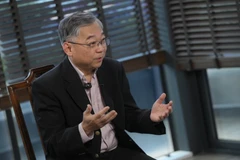
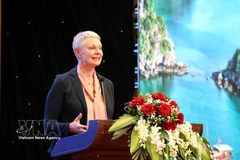
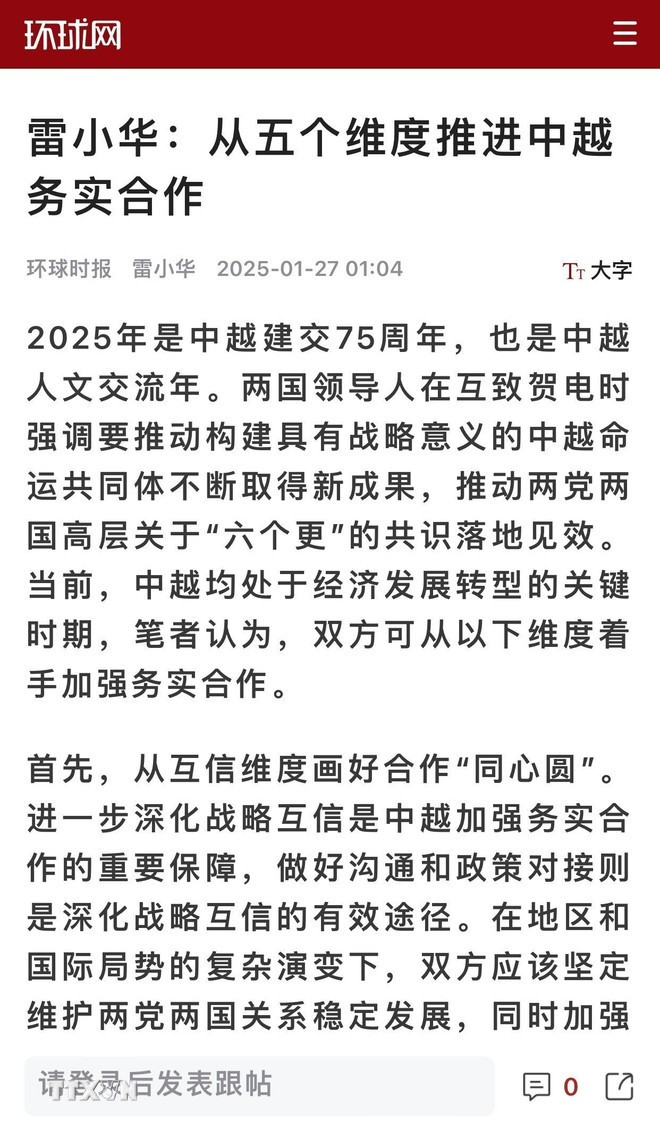
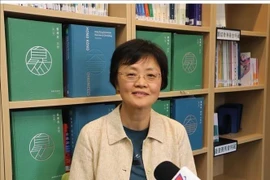
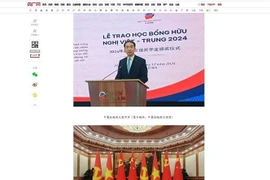
The article on Global Times by Lei Xiaohua, Deputy Director of the Institute of Southeast Asian Studies under the Guangxi Academy of Social Sciences. (Photo: VNA)

Beijing (VNA) – Lei Xiaohua, Deputy Director of the Institute of Southeast Asian Studies under the Guangxi Academy of Social Sciences, has made several proposals to help China and Vietnam promote practical cooperation as the two are celebrating the 75th anniversary of their diplomatic ties.

In an article on Global Times, a publication of the People's Daily – the organ of the Communist Party of China Central Committee, Lei firstly stressed the importance of creating a concentric circle of cooperation based on mutual trust, adding strengthening strategic trust is a crucial foundation for enhancing substantive cooperation, and that effective opinion exchanges and policy connection are useful to reinforcing their mutual strategic trust. In the context of complex regional and international developments, both sides need to persist in maintaining the stable development of relations between the two Parties and two countries, while also enhancing multilateral coordination. This includes jointly promoting the Regional Comprehensive Economic Partnership (RCEP), pushing for the early signing and implementation of the China-ASEAN Free Trade Area 3.0, and Vietnam actively supporting China’s accession to the Comprehensive and Progressive Agreement for Trans-Pacific Partnership (CPTPP).

Secondly, the scholar stressed the need to improve the effectiveness of collaboration in terms of connectivity, as infrastructure connectivity is crucial for enhancing substantive cooperation between the two countries.

In the future, they need to accelerate the construction of high-capacity railway lines, focusing on building cross-border standard-gauge railways, speeding up the building of transit facilities, developing smart border crossings, boosting hard connectivity, connecting their regulations and standards, developing smart customs, and increasing the level of soft connectivity.

Thirdly, promoting more effective and larger economic and trade links is essential. The scholar cited statistics from Vietnam Customs as showing that in 2024, bilateral trade reached 205.2 billion USD, setting a new record and making China Vietnam's first partner with a trade scale exceeding 200 billion USD.

The two sides need to continue fostering the balanced and sustainable development of bilateral trade, and increasing the proportion of high-tech products such as electronics, machinery and equipment, and new energy vehicles, Lei suggested.

Fourthly, the expert highlighted the role of the China-Vietnam Working Group on Financial and Monetary Cooperation to form guidelines for bilateral currency payment, support the expansion of the scope of payments in local currencies, and improve the cross-border payment network.

Last but not least, it is important to strengthen the social foundation of public opinion on cooperation from the perspective of responsibility. Chinese businesses in Vietnam need to actively fulfil their social responsibility, continuously improve the quality and efficiency of their products through technological innovation and business model changes, and build their own image based on high standards, he said./.
VNA

See more

Illustrative Image (Photo: Bangkokpost)

Thailand extracts bio-calcium from fish waste

Researchers at Rajamangala University of Technology, Thanyaburi (Thailand) developed a method to extract calcium from discarded parts of blackchin tilapia, including heads, bones, scales and tails - materials typically treated as waste and a source of pollution.

Philippines receives first Russian oil shipment in five years

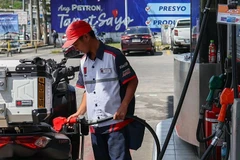
Philippines receives first Russian oil shipment in five years

On March 24, Philippine President Ferdinand Marcos Jr. declared a national energy emergency through an executive order, allowing the government to fast-track fuel procurement, make advance payments for fuel contracts, and ensure the availability of fuel and other essential goods amid rising prices.

Philippines declares energy emergency over Middle East tension (Photo: BBC)

Philippines declares energy emergency

The Philippine Government on March 24 announced an "imminent danger of a critically low energy supply" as tensions in the Middle East threaten fuel supplies and the stability of the country’s power system.

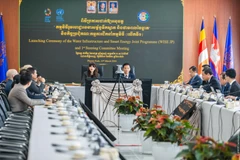
Delegates at the event (Photo: cambodia.un.org)

Cambodia accelerates access to climate-resilient water services

Funded by the UN Joint Sustainable Development Goals (SDG) Fund, the Water Infrastructure & Smart Energy Joint Programme (WISE JP) introduces a pioneering financial model that combines commercial and low-interest capital - a revolving blended‑finance facility - dedicated to ensuring climate‑smart water systems.

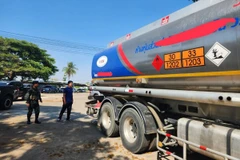
Officials inspect the 10-wheel tanker found smuggling fuel to Myanmar in Mae Sot border district on Sunday. (Photo:bangkokpost.com)

Thailand seizes 20,000 litres of diesel bound for Myanmar

Authorities of Thailand's Tak province have ordered intensified patrols and stricter inspections to prevent fuel stockpiling and illegal cross-border exports. They also called on local residents to report any suspicious signs related to fuel hoarding or smuggling.

Illustrative image (Photo: Internet)

Wildfires surge to 96 hotspots in Thailand

According to the provincial forest fire and haze prevention centre, satellite data from the Suomi NPP VIIRS system recorded the hotspots at 02:13. The fires were spread across multiple districts though firefighting teams have been working around the clock to contain the blazes.

In major cities such as Hanoi and Ho Chi Minh City, demand for pet-related services is surging. (Photo: VNA)

Vietnamese pet market attractive to RoK businesses

RoK pet food companies are increasingly targeting Vietnam as a key growth market, leveraging the country’s rapidly developing pet economy and rising demand for premium pet care products in Southeast Asia.

Residents refuel at a petrol station in Stung Treng province, north-eastern Cambodia. (Photo: VNA)

Cambodia introduces energy-saving measures amid Middle East conflict

Despite these challenges, the government noted that Cambodia’s fuel and electricity supply remains stable, supporting economic activities and public service delivery, based on assessments conducted with the Ministry of Mines and Energy, Electricité du Cambodge (EDC), and fuel import companies.