CPTPP drives Vietnam’s agro-fisheries exports

The 12-member CPTPP covering Australia, Brunei, Canada, Chile, Japan, Malaysia, Mexico, New Zealand, Peru, Singapore, the UK and Vietnam saw two-way trade with Vietnam reach 102.8 billion in the first 10 months of 2025, up 20.6% from a year earlier.

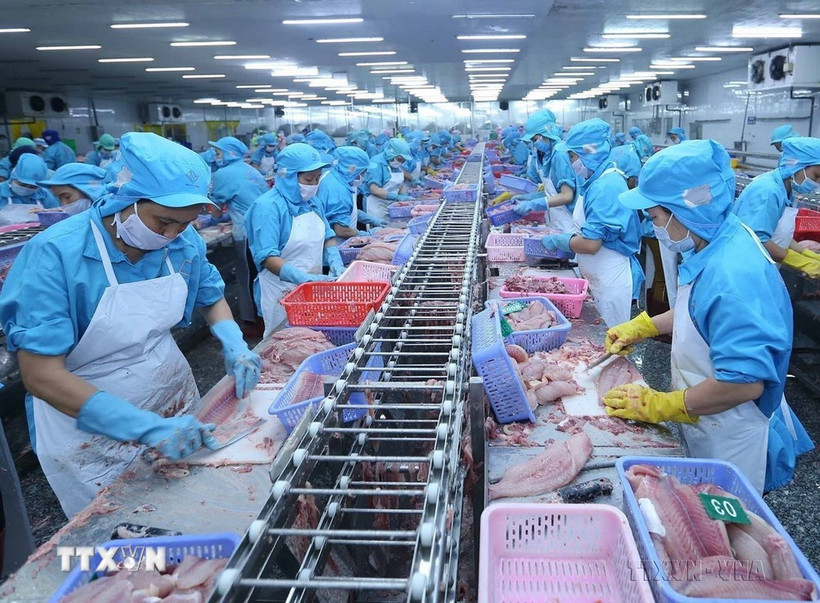
Across the CPTPP bloc, Vietnam’s tra fish exports soared 36% year-on-year to 305 million USD during January-October, representing 17% of its global tra fish sales. (Illustrative photo: VNA)

Hanoi (VNA) – More than six years after the Comprehensive and Progressive Agreement for Trans-Pacific Partnership (CPTPP) entered into force, the trade pact is driving robust export growth for Vietnamese agriculture, particularly aquatic products, rice and fruits, into the bloc’s high-value markets.

The 12-member CPTPP covering Australia, Brunei, Canada, Chile, Japan, Malaysia, Mexico, New Zealand, Peru, Singapore, the UK and Vietnam saw two-way trade with Vietnam reach 102.8 billion in the first 10 months of 2025, up 20.6% from a year earlier. Vietnamese exports to the group jumped 26% to 58.3 billion USD, with the UK included after the deal took effect there on December 15, 2024.

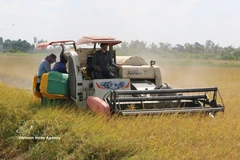
In Singapore, Vietnam has solidified its position as the city-state’s third largest rice supplier after India and Thailand, holding dominant shares in white and fragrant rice segments. A new bilateral rice trade agreement signed on October 30 is expected to further deepen ties under the two countries’ comprehensive strategic partnership, according to Vietnamese Trade Counsellor in Singapore Cao Xuan Thang.

Vietnamese products are also gaining ground in Australia, where cashew nuts now account for 90% of total imports and pepper nearly 30%. Shrimp, tra fish and processed seafood have become leading items, a Vietnam Trade Office representative in Canberra said.

Across the CPTPP bloc, Vietnam’s tra fish exports soared 36% year-on-year to 305 million USD during January-October, representing 17% of its global tra fish sales. Its shipment to Mexico totaled 63 million USD (up 1%), Japan 39 million USD (up 14%) and Malaysia recorded a 37% surge, underscoring rising regional demand.

The Vietnam Association of Seafood Exporters and Producers (VASEP) credited the sharp increase to CPTPP tariff preferences. Despite stringent requirements on quality and traceability, many exporters have complied, lifting average shipment values. VASEP forecasted a strong recovery and sustained growth for the sector in 2026 if companies continue to capitalise on the deal’s advantages.

In Canada, Vietnamese agricultural shipments are expanding across fruits, vegetables, pepper and coffee, with cashew exports rebounding in September after months of declines. Canada is importing more from Vietnam than any other ASEAN country, enabling Vietnamese agribusinesses to break through in this market, said Trade Counsellor Tran Thu Quynh.

Nguyen Dinh Tung, CEO of major fruit exporter Vina T&T Group, highlighted Canada’s rigorous food safety and phytosanitary rules, saying that it requires Global GAP, HACCP and SMETA certifications. He described the market as promising due to its purchasing power, diverse demand and role as an important gateway for deeper penetration into North America’s supply chain.

Vietnamese farm produce exports to CPTPP markets are maintaining strong momentum on improving competitiveness and stricter compliance with international standards. Beyond market access, the pact is pushing structural change, with greater traceability, deeper processing and brand building, creating both pressure and growth opportunities for companies able to upgrade processing capacity and integrate into global supply chains./.


VNA

See more

OCOP products are displayed at the Autumn Fair 2025 (Photo: VNA)

Domestic demand drives OCOP expansion

The domestic market has seen a shift in consumer awareness. While locally made goods were once viewed as secondary choices, improvements in quality and transparency have helped OCOP products become a preferred option in many households.

A Vietjet Air aircraft (Photo: VNA)

Vietjet remains among world’s safest airlines

Vietjet Air has consistently maintained AirlineRatings’ highest safety rating of seven out of seven stars since 2018, underscoring its sustained efforts to ensure safe and reliable journeys for passengers.

Illustrative photo (Photo: VNA)

Vietjet to transport apricot, peach blossoms on Lunar New Year occasion

Vietjet Air will transport apricot and peach blossoms on domestic flights from/to Ho Chi Minh City, Hanoi, Da Nang, Da Lat and Hai Phong from January 15 to February 28 on the occasion of the Lunar New Year (Tet) festival, at 450,000 VND (17.13 USD) per bundle (excluding taxes and fees).

The National Spring Fair 2026 will take place at the Vietnam Exposition Centre from February 2 to 8. (Photo: VNA)

National Spring Fair 2026 to boost trade, strengthen value chains

The proactive engagement of Vietnam’s trade offices overseas is also expected to contribute to the success of the fair. From mid-January, these offices have launched coordinated promotion and matchmaking efforts, inviting foreign partners to attend the fair as a gateway to Vietnam’s market, manufacturing capacity and investment environment.

The Song Khoai Industrial Park (Quang Ninh province) attracts numerous enterprises for investment and production, creating jobs for local workers. (Photo: VNA)

Quang Ninh removes bottlenecks to attract 3 billion USD in FDI

Chairman of the provincial People’s Committee Bui Van Khang said that Quang Ninh aims to draw 101 non-state budget domestic investment projects with total registered capital of nearly 569 trillion VND (21.6 billion USD), and 3 billion USD in FDI capital in 2026.

Average economic growth of 6.3% per year, together with an estimated 8.02% expansion in 2025, has placed Vietnam among the world’s most dynamic economies. (Photo: VNA)

Indonesian scholar praises Vietnam as model of sustainable, inclusive growth

These achievements so far stem from the consistent leadership of the Communist Party of Vietnam, the spirit of self-reliance and resilience, and strong national solidarity, laying a solid foundation for the country’s strategic development goals towards 2030 and the vision to 2045, according to a senior researcher at the Centre for Southeast Asian Studies.

Vietnam – India trade hit historic high of nearly 16.46 billion USD in 2025. (Illustrative photo: VNA)

Vietnam – India trade sets new record at nearly 16.5 billion USD

India supplies key inputs such as iron and steel, chemicals, pharmaceuticals, textiles and garments, animal feed and aquatic products, while Vietnam exports technology-intensive goods, electronics, textiles and garments, chemicals, wood products, footwear, spices, coffee and pepper.

Experts discuss at the event (Photo courtesy of the organiser)

Venture capital falls for fifth straight year in 2025

This downturn continues the trend of decline that began in 2021 amid tighter global liquidity and a structural reset in investor risk appetite, according to the 'Vietnam Tech & Venture Capital Outlook 2025' report published by VinVentures.

With many advantages, Vietnam has opportunities to integrate more deeply into the global technology value chain. (Photo: VNA)

Vietnam emerges as typical case of Asia’s FDI success

Vietnam stands out as a representative example. The article cites US technology group Intel as a case in point. Since establishing its testing and assembly facility at the Saigon Hi-Tech Park in 2010, Intel has expanded operations through total investments of 1.5 billion USD.

Vietnamese, Chinese enterprises exchange experience at the networking and exchange programme in Da Nang city on January 13, 2026 (Photo: VNA)

Da Nang promotes logistics cooperation with Chinese businesses

With the goodwill and active engagement of partners, particularly the Chinese business community, the cooperation is expected to generate concrete and long-term opportunities, contributing to the development, deeper integration and sustainability of Da Nang’s startup and innovation ecosystem, said Le Son Phong, Deputy Director of the municipal Department of Science and Technology.