Hanoi (VNA) – A spate of recent incidents involving damage to national treasures has once again raised alarms over the vulnerability of Vietnam’s cultural heritage protection system, prompting renewed calls for accountability, system reform, and stronger enforcement mechanisms.
Public concern intensified following two shocking incidents: the destruction of the armrest on the Nguyen Dynasty throne at Thai Hoa Palace in the Hue Imperial Citadel, and the illegal excavation of relics from the tomb of Emperor Le Tuc Tong in the Lam Kinh special relic complex in Thanh Hoa province. These acts have not only outraged experts and citizens but have also exposed weaknesses in heritage preservation.
Observers note that national heritage, long regarded as part of Vietnamese cultural identity, has become increasingly susceptible to theft, vandalism, and negligence. These are not mere acts of property damage; they are symbolic assaults on the living memory of the nation's historical continuity, embedded in relics that connect present generations with their cultural lineage.
The Nguyen Dynasty throne, the last known intact royal throne in Vietnam, was designated a national treasure in 2015. Its recent defacement, caused by an individual climbing onto and breaking the artifact, underscored the lack of professional security in heritage sites. While some have described the case as “isolated”, experts argue it points to deeper systemic lapses.
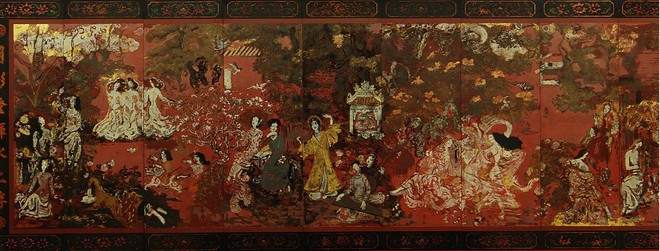
This is not the first time national treasures have suffered. The statue of Avalokiteshvara at Me So Pagoda in Hung Yen provincewas stolen; Nguyen Gia Tri’s lacquer masterpiece “Spring Garden of the North, Central, and South” was damaged during preservation, and the stone turtles at the Temple of Literature were misused as seating for writing practice. Most recently, foreign nationals were caught illicitly digging for artifacts at the Emperor Le Tuc Tong royal tomb.
Assoc. Prof. Dr. Bui Hoai Son, Permanent member of the National Assembly’s Committee for Cultural and Educational Affairs, held that responsibility must be shared across administrative levels, particularly local authorities who are directly tasked with safeguarding these sites. He criticised the weak enforcement of security measures, the absence of surveillance systems, and the lack of regular patrols at important monuments.
Assoc. Prof. Dr. Pham Ngoc Trung, a cultural expert who used to erngage in Hue relic preservation during 1981–1985, identified both direct and indirect failures. He blamed local heritage management units – in the Nguyen Dynasty throne case, the Hue Monuments Conservation Centre – for inadequate on-the-ground protection while the indirect responsibility belongs to the government agencies in charge of cultural heritage management who failed to enforce the Law on Cultural Heritage or properly direct the preservation and promotion of relic and heritage values.
Despite legal frameworks and specific directives from the Ministry of Culture, Sports and Tourism, implementation remains inconsistent. Trung stressed that individuals responsible for oversight, when found negligent, must be held accountable and subject to disciplinary or legal action.

From a legal standpoint, lawyer Vo Thi Tue Minh emphasised that destruction of a national treasure, especially if deliberate, constitutes a serious criminal offence. Under Article 178 of the Penal Code, offenders could face up to 20 years in prison, in addition to civil liability for the cost of restoration and preservation. If mental instability is proven, mandatory psychiatric treatment may apply under Vietnamese law.
Yet beyond legal consequences, cultural specialists stress that the irreplaceable spiritual and symbolic value of such artifacts cannot be measured in material terms. Once damaged, their authenticity may be lost forever, regardless of restoration attempts.
Experts have also highlighted a broader issue: while Vietnam aspires to develop its cultural industries, the current protective measures for core heritage assets remain outdated and fragile. In many cases, untrained guards, poor coordination between agencies, and a lack of modern monitoring tools have left even high-profile sites vulnerable.
In response, tourism and heritage professionals have proposed new models for site management. Bui Tri Nha, co-founder of DIDI Travel, pointed out that historical palaces in Europe and Asia often restrict interior access and maintain clear viewing perimeters. He suggested rerouting the visitor pathway at Thai Hoa Palace to prevent direct contact with key artifacts, and advocated installing motion sensors to deter intrusions.
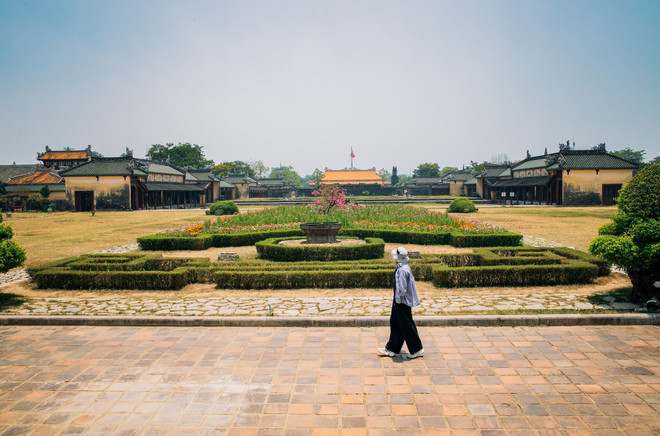
Vietnamese authorities have taken steps. On May 25, the Government Office issued a directive conveying Deputy Prime Minister Mai Van Chinh’s instructions. The directive demanded the Hue municipal People’s Committee to assess the damage to the throne, propose restoration plans, and identify those accountable. A report is to be submitted to the Ministry of Culture, Sports and Tourism and forwarded to the Prime Minister by June 1.
It also urged comprehensively reviewing security across Hue’s heritage sites, working out preventive measures, and early detecting and preventing similar incidents.
Though swift action followed the latest event, stakeholders warn against a reactive mindset. As Trung noted it is time to examine all national heritage assets and reinforce protection protocols where vulnerabilities persist.

Assoc. Prof. Dr. Bui Hoai Son argued that punitive measures alone are insufficient. What is needed is a cultural shift, stronger awareness among citizens and officials alike, along with tougher penalties for offenders.
Beyond punitive action, experts advocate a more integrated approach, including encouraging youth involvement, local stewardship, and wider community education to foster cultural connections to national heritage./.