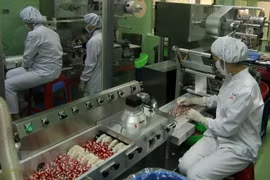
Illustrative image (Source: suckhoedoisong.vn)
Hanoi (VNS/VNA) - The growing production, import and trade ofdietary supplements should be managed to avoid potential threats to users,experts said.
Foodsupplements are very popular in Vietnam and can be found in drug stores, babystores and online. Whether it’s imported or locally made, they are increasinglypopular.
According to Nguyen Thanh Phong, head of Vietnam Food Administration (VFA)under the Ministry of Health, more than 70 percent of dietary supplements areproduced by domestic firms and the rest are imported ones.
Chairman of the Vietnam Association of Functional Food (VAFF) Tran Dang saidthe product had been one of the fastest growing sectors in the past decade.
While there were just 63 kinds of products provided by 13 importers in Vietnam in2000, 3,447 dietary supplements were available by the end of 2016 with 1,872producers and importers.
The number of people taking dietary supplements also increased remarkably,according to VAFF.
In 2000, it was estimated that only 500,000 or 0.5 percent of population usingthe product, most of them living in urban areas.
Nearly 20 million people or 21 percent of the population were reported to takedietary supplements by 2017.
While producers tend to advertise the effectiveness of their products a bit toomuch, people are often convinced by the advertising. Many are over-using thesupplements, leading to high number of people who have to go to the hospitalfor examinations and treatments.
Nguyen Trung Nguyen, who is in charge of the Poison Control Centre under the BachMai Hospital said there have been many cases of people hospitalised after usingsupplementary products for beauty, gain weight or weight loss.
He took the case of a female patient from Hanoi as an example.
The 32-year-old patient named N.T.H was sent to the hospital in a state ofnervous excitement. She was unable to sleep and had signs of mental disorder.
Nguyen attributed the above-mentioned problems to the fact that the patient hadused weight loss products.
“Producers tend to put too much caffeine into weight loss products to keep thespirit of the users active while they are less active, making the heart beatfaster and increase the blood pressure,” he said.
There were many weight loss products focusing on making the users lose theirappetite, which would affect the health of consumers, Nguyen said.
Since more and more people purchase supplementary, the number of enterprisesengaging in trading and producing the product is on the rise, too. Manyenterprises and individuals adopt e-commerce through websites or Facebook asnew ways to promote their products. Some take advantage of online purchases tosell substandard or fake products.
In the first six months of this year, the Market Watchdog nationwide discovered52,147 violations with 8.9 billion VND (383,000 USD) added to the State budgetthrough fines.
Of which, 4,663 cases were related to the trade and manufacture of unsafe food.
Statistics from VFA showed that 88 units have been fined between January andNovember with the total capital of over 5.5 billion VND (236,000 USD).
Deputy Minister of Health Nguyen Quoc Cuong said the emergence of a lot ofsupplementary products had helped diversified the market. However, itsavailability had also led to a number of violations relating to themanufacturing, trading and advertising of this kind of products. Businessesbroke the rule in advertising products which didn’t register or advertise theirsupplementary diets with unlawful content, he said.
Nguyen Van Loi from the Drug Administration of Vietnam said consumers should becareful while buying health products online as no one can assure its origin.
Tran Viet Nga, deputy head of VFA, agreed, saying it was illegal to sellforeign products imported by individuals in small quantities – whatVietnamese consumers call “hang xach tay.”
Nga advised consumers to select supplementary products that have beenregistered with authorised agencies.-VNS/VNA
VNA