Hanoi (VNA) – The Snake glides to the sixth position in the Vietnamese zodiac, but its cultural significance extends far beyond mere numerology. While the Dragon reigns as a symbol of imperial power, the Snake maintains a more intimate and protective connection with daily life, embodying both fortune and peril, blessing and trepidation.
Mascot shapes modern art and religious practices
According to Dr.Nguyen Van Doan, Director of the Vietnam National Museum of History, the Snake’s cultural significance manifests in multiple ancient civilians. Beyond its prevalent appearance as the divine Naga in Champa religious beliefs and culture, Snake images were discovered on the Ngoc Lu bronze drum from the Dong Son period, dating back some 2,000 years.
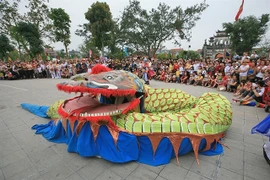
The drum, found in Ngoc Lu village, the northern province of Ha Nam, features a distinctive water snake with its mouth agape and body forming a boat-like shape, which is believed to be the earliest representation of the dragon boat. It was engraved with a bird rushing to its mouth, which, Doan said, symbolises the perfect harmony of yin and yang.
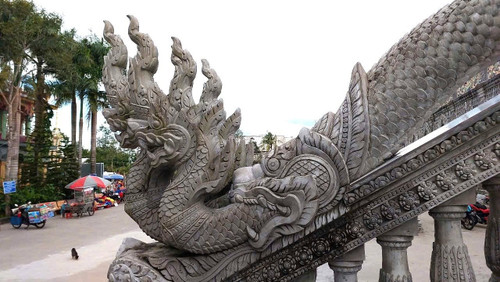
Painter Le Thiet Cuong highlighted the Snake’s connection with Buddhism, recounting the tale of Buddha’s meditation under the Mucalinda tree, where the Naga serpent king protected him from a downpour by creating a canopy with its seven heads. The serpent was then entrusted to protect “Kinh Bat Nha” (heart of perfect wisdom sutra).
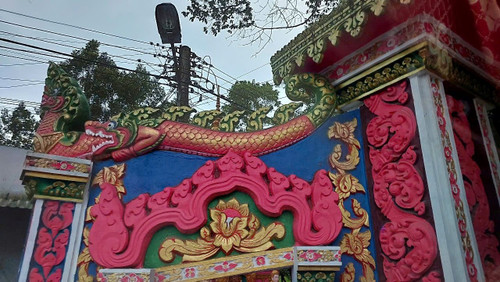
This sacred connection has influenced Buddhist architecture throughout Vietnam, particularly in Khmer Buddhist temples where Naga serpents feature prominently in decorative motifs.
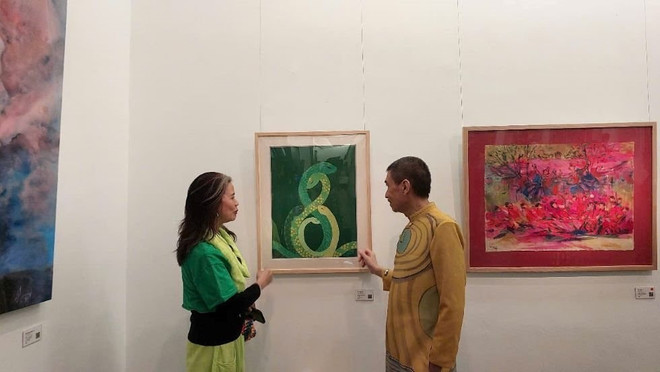
The Snake holds a crucial position in Vietnamese folk religion, particularly in Mother Goddess worship. Dr. Chu Xuan Giao of the Vietnam Academy of Social Sciences notes that every Mother Goddess temple features the Green and White Snakes as guardian deities. In the Red River Delta, generations have worshipped Ong Coc-Ong Dai, a pair of divine Snakes believed to protect the inhabitants of the riverine areas.
In Vietnamese art and culture, the Snake carries the symbolism of fertility and growth, inspired by its skin-shedding behaviour.
Giao said the Snake is an ancient mascot of the Vietnamese people, elaborating the older the relics and artifacts, the more likely it is to encounter the Snake imagery.
Contemporary artists reimagine ancient symbol
As Vietnam is ringing in the Year of the Snake, artists are finding fresh inspiration in this ancient symbol, creating art works that highlight traditional culture while showcasing the spirit of modernity and integration.
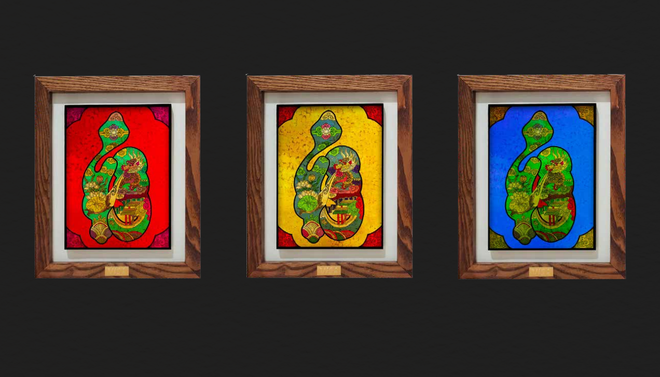
Artist Luong Minh Hoa and Latoa Indochine made “Ngu Phuc Lam Mon” (five blessings at the gate), a lacquer painting with traditional symbols like house, turtle, and bat that represent stability, longevity, and happiness arranged on a snake’s body curved to form the character for “Phuc” (blessing).
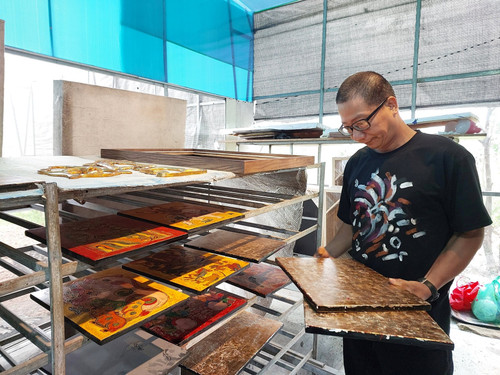
The Snake's natural ability to shed its skin symbolises renewal, flexibility, and adaptability, Hoa said, expressing his hope that the painting, with the symbolism of a blessing, will be a meaningful gift on the occasion of the Lunar New Year.
Having strong passions for traditional lacquer, artist Le Huy created the "TY." art work, featuring intertwined Snakes whose bodies evoke the form of bamboo – flexible yet unbreakable, symbolising Vietnam’s enduring strength and resilience. The bodies were carved and gilded with the four noble plants of plum blossoms, lotus, Chrysanthemums flowers, and cane, representing the four seasons and embodying deep philosophical values.
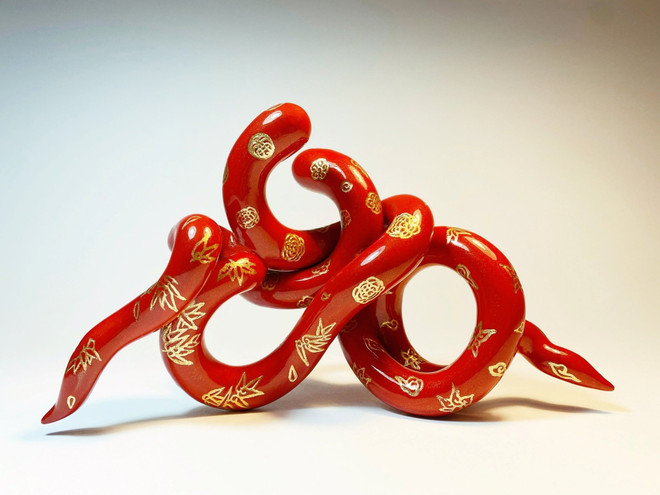
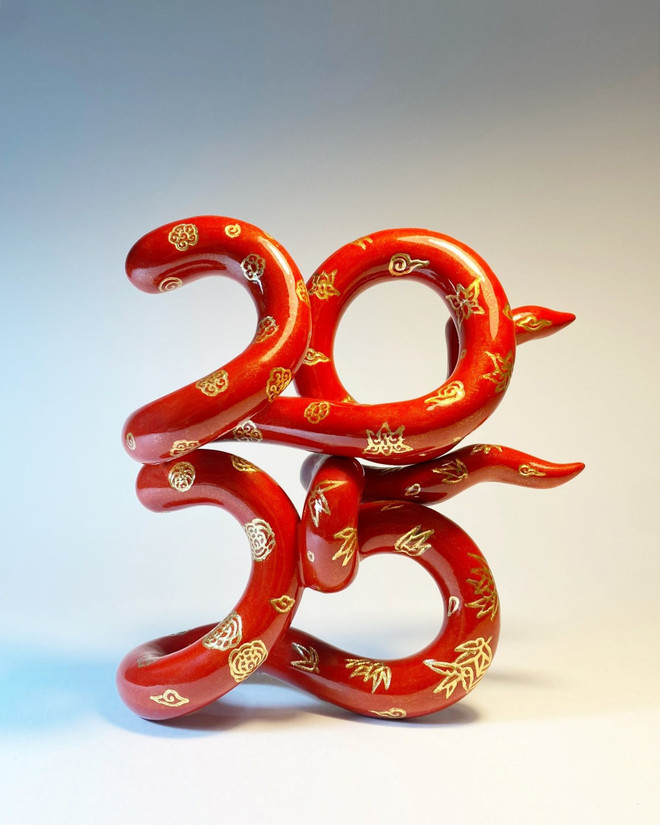
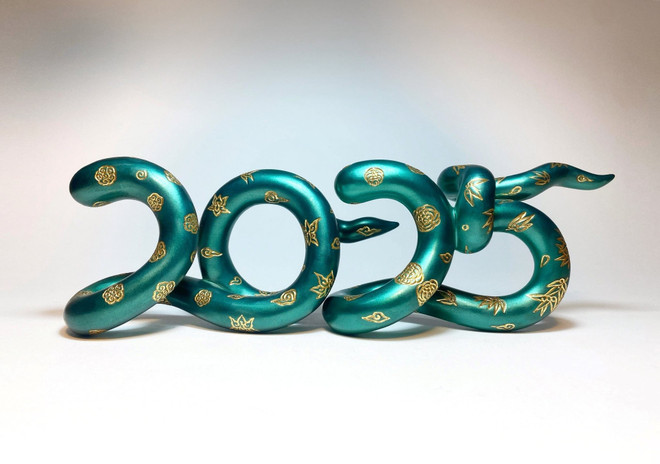
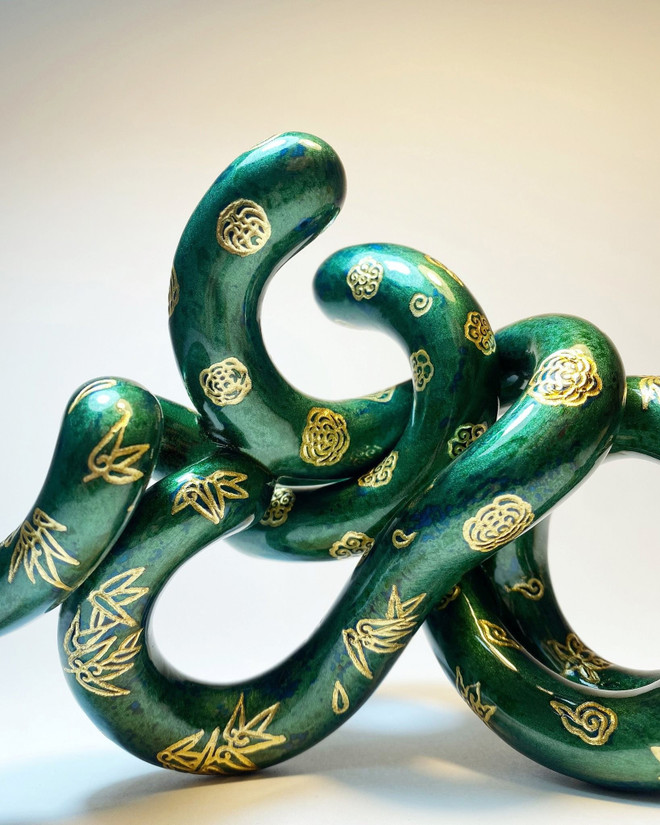
Huy said the art work is a greeting for a new year of fullness, prosperity, love, and happiness.
Director Vuong Duc, former Director of the Vietnam Feature Film Studio, observed that contemporary artists are using the Snake motif to promote positive values.
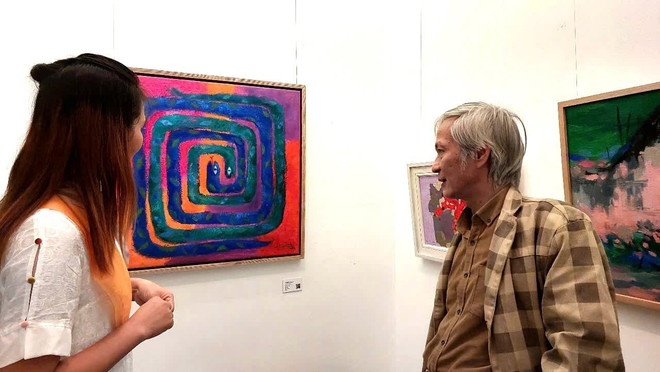
In the natural ecosystem, there are both benevolent and venomous snakes, just as there is good and evil in humanity. Artists are choosing to portray snakes with their benevolent aspect, reflecting humanity's aspirations toward goodness, he said./.