FAO assists Myanmar to improve food security

The UN’s Food and Agriculture Organisation (FAO) and the Myanmar government have signed a multi-year framework agreement to improve nutrition and food security in the country while safeguarding and sustainably managing the use of natural resources.
FAO assists Myanmar to improve food security ảnh 1A girl runs through deserted farmland in Myanmar's Sagaing region where floods buried valuable fertile soil under several feet of mud which later dried hard and cracked, making land preparations very difficult and expensive (Photo: news.un.org)

Hanoi (VNA) – The UN’s Food and AgricultureOrganisation (FAO) and the Myanmar government have signed a multi-yearframework agreement to improve nutrition and food security in the country whilesafeguarding and sustainably managing the use of natural resources.

At the signing ceremony in the country’s Nay PyiTaw capital on February 19, Kundhavi Kadiresan, FAO Assistant Director-Generaland Regional Representative for Asia and the Pacific, said the agriculturesector has a major role to play in addressing food insecurity and malnutritionthrough agricultural diversification and rural income generation.

This Country Programming Framework intends tohelp Myanmar achieve three primary goals, namely enhancing food security,nutrition and food safety; strengthening governance and sustainable managementof land, forests, water resources and ecosystems; and enhancing resilience oflocal communities and farming households to natural and humanitarian disasters,climate change and transboundary and emerging infectious disease risks.

Despite having reached a state ofself-sufficiency in staple foods, food insecurity, particularly seasonal foodinsecurity, remains a concern across the country, which risks being worseneddue to climate and weather-related shocks and social instability.

Myanmar has experienced a rapid decline inmalnutrition figures in just a few decades. The prevalence of stunting amongchildren below the age of five was reduced from 40 percent in the 1990’s toless than 30 percent in 2016, but the improvements have slowed.

Kadiresan said with nearly one child in threestunted, much work remains to be done for Myanmar to achieve the SustainableDevelopment Goal of Zero Hunger by 2030.-VNA
VN

See more

Thailand enters technical deflation: Expert

Thailand enters technical deflation: Expert

Associate Professor Thanavath Phonvichai, President of the University of the Thai Chamber of Commerce and Chairman of the Centre for Economic and Business Forecasting, attributed the current bout mainly to lower production costs, particularly cheaper fuel and persistently low agricultural prices.

Indonesia spots four Sumatran tigers at national park

Indonesia spots four Sumatran tigers at national park

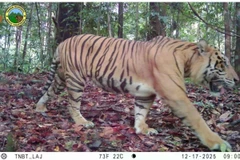
Camera traps installed in Bukit Tigapuluh National Park of Indonesia have recorded four individual Sumatran tigers (Panthera tigris sumatrae), providing strong evidence that the conservation area's ecosystem remains well preserved.

Deputy Prime Minister and Agriculture Minister of Thailand Thammanat Prompao (Photo: The Nation)

Agricultural envoys ordered to boost Thai crop exports

Deputy Prime Minister and Agriculture Minister of Thailand Thammanat Prompao said that the ministry is prioritising a “market-led, innovation-supported, higher income” strategy, built on three key pillars: strengthening confidence in core, established markets to protect Thailand’s market share; targeting high-potential products to open new opportunities, including dried seahorses, dried geckos, live crocodiles for consumption, and breeding crocodile parent stock for farming; and expanding networks by deepening cooperation with key trading partners, including China, and widening sales channels, such as digital platforms, so Thai products can reach consumers more directly.

Illustrative image (Photo: Internet)

Thailand maps out national semiconductor strategy

Under the strategy, Thailand will prioritise power, sensor, photonics, discrete and analog semiconductors, which are closely linked to the country’s established electronics manufacturing base and supply chains serving the automotive, energy, data centre and industrial sectors.

MDEC headquarters (Photo: nabalunews.com)

Malaysia’s digital exports surge

Malaysia's digital exports recorded 6.8 billion RM (1.67 billion USD) between 2024 and the first half of 2025, marking a milestone in the country’s development journey of digital economy.

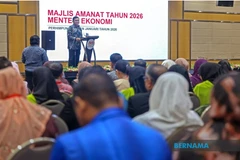
Malaysian Minister of Economy Akmal Nasrullah Nasir speaks at the Economy Minister Mandate 2026 on January 8. (Photo: Bernama)

Malaysia seeks to translate economic policies into practice

Malaysia enters the preparatory phase for the 13MP on the back of encouraging economic indicators in 2025. Gross domestic product (GDP) expanded by 5.2% in the third quarter of 2025, bringing average growth for the first nine months of the year to 4.7%.