Finance sector must take lead in renewing mindset, institutions: PM

PM Pham Minh Chinh stressed the need to turn institutions from a “bottleneck” into a national competitive advantage, and to shift from a “management” mindset to one of “creating and nurturing a development ecosystem.”

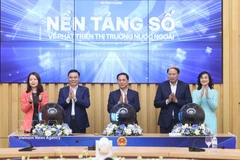
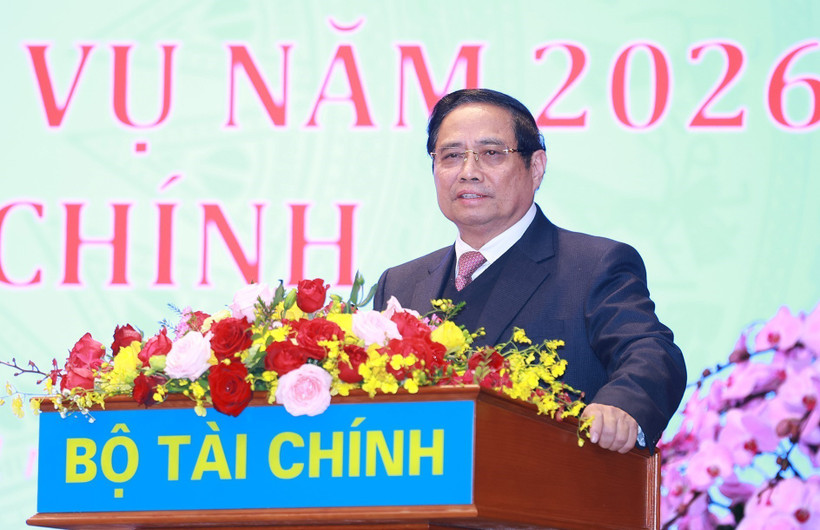
Prime Minister Pham Minh Chinh speaks at a conference reviewing the finance sector’s financial, budgetary, investment and socio-economic development efforts in 2025 and outlining tasks for 2026 held in Hanoi on January 6. (Photo: VNA)

Hanoi (VNA) – The Ministry of Finance and the finance sector must take the lead in renewing mindset and institutions this year, truly deserving their role as the Government’s key advisory and coordinating body for macroeconomic management, Prime Minister Pham Minh Chinh said on January 6.

The Government leader made the request while attending a Hanoi conference reviewing the sector’s financial, budgetary, investment and socio-economic development efforts in 2025 and outlining tasks for 2026. Addressing the event, PM Chinh affirmed that among the country’s overall achievements in the past year, the finance sector made particularly important contributions with many notable results.

He also pointed out a number of challenges the sector must overcome, including the disbursement of public investment capital, development of the private economy, restructuring of State-owned enterprises, and pressure in macroeconomic management.

The leader stressed the need to turn institutions from a “bottleneck” into a national competitive advantage, and to shift from a “management” mindset to one of “creating and nurturing a development ecosystem.”

He urged the sector to build policy mechanisms that enable household businesses to grow into enterprises, small businesses into large ones, and large enterprises into even bigger, multinational corporations. It was also tasked with accelerating the disbursement of public investment and strategic infrastructure capital, focusing resources on mega-projects such as the North–South high-speed railway, the Lao Cai–Hanoi–Hai Phong railway, and inter-regional expressway systems, under the principle of “capital waiting for projects, not projects waiting for capital.”
PM Chinh urged the ministry and the wider finance sector to play a key role in ensuring the smooth operation of the two-tier local government model, boost private-sector growth, and enhance the performance of state-owned enterprises. He emphasised the need to lead in digital transformation and innovation, push forward with international financial integration, and move quickly on launching a digital asset exchange and a national one-stop investment portal.
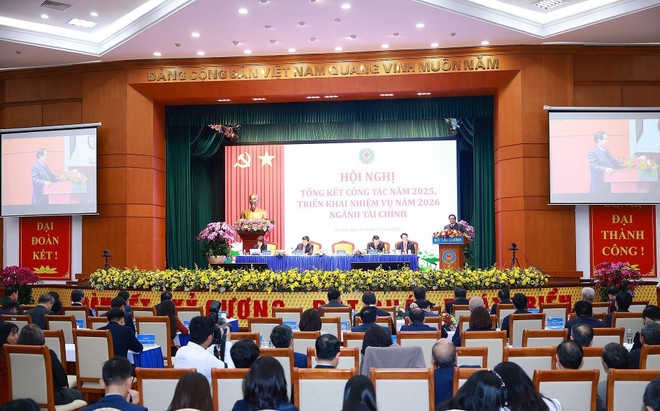
finance-conferecen-vna.jpg
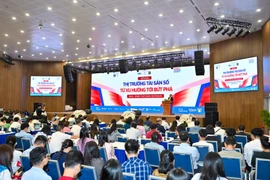
At the conference reviewing the finance sector’s financial, budgetary, investment and socio-economic development efforts in 2025 and outlining tasks for 2026 held in Hanoi on January 6. (Photo: VNA)

As heard at the conference, in 2025, the ministry was reorganised under a new model through the merger of the Ministry of Finance and the Ministry of Planning and Investment, the incorporation of Vietnam Social Security, and the transfer of functions and tasks from the Commission for Management of State Capital at Enterprises and the National Financial Supervisory Commission. This restructuring reduced around 3,600 internal units, equivalent to 37.7%, while significantly improving the quality of State management.

The finance sector took the lead in institutional development by advising the Politburo on the issuance of key strategic resolutions, including Resolutions No. 57-NQ/TW, 59-NQ/TW, 66-NQ/TW and 68-NQ/TW. The ministry also chaired the submission of 15 draft laws and resolutions to the National Assembly.

The sector contributed to Vietnam’s stock market being officially upgraded to a secondary emerging market. Notably, it also played a key role in implementing plans for an international financial centre in Vietnam, developing free trade zones, and piloting a sandbox for digital asset markets, laying an important foundation for Vietnam to keep pace with global financial and trade trends.

The ministry advised competent authorities to issue multiple resolutions that helped boost state budget expenditure to 2.4 quadrillion VND (91 million USD). Public investment disbursement saw a marked breakthrough, with the first 11 months of 2025 recording an increase of around 155 trillion VND compared to the same period in 2024, contributing to the near-1 quadrillion VND public investment disbursement target – the highest level ever achieved.

The ministry also proactively and promptly advised and implemented comprehensive fiscal and budgetary measures, allocating about 6.8 trillion VND to support provinces and cities in disaster prevention and response, recovery from natural disasters and epidemics, restoration of production, stabilisation of people’s livelihoods, and gradual socio-economic recovery./.
VNA

See more

Processing pangasius for export at Caseamex Joint Stock Company, Tra Noc Industrial Park, Can Tho city. (Photo: VNA)

Seafood sector targets 11.5 billion USD in exports in 2026

In 2026, the sector aims for total seafood output of more than 10 million tonnes, up 0.6% from 2025. Of the total, capture fisheries are expected to reach about 3.75 million tonnes, down 2.1%, while aquaculture output is projected at 6.25 million tonnes, up 2.2%. Seafood export turnover is targeted at around 11.5 billion USD.

Vietnam's GDP expands by more than 8% in 2025. (Photo: VNA)

International financial institutions optimistic about Vietnam’s 2026 growth

As Vietnam enters 2026 - the first year of the 2026–2030 socio-economic development plan, international organisations stress that maintaining macroeconomic stability, improving growth quality and staying the course on fundamental reforms will be crucial in turning positive assessments into tangible outcomes and shaping a more sustainable development cycle ahead.

The application of Israeli technology in melon cultivation has delivered high economic efficiency (Photo: VNA)

VIFTA provides impetus for Vietnamese exports to Israel

The greatest benefit generated by the VIFTA lies in the immediate removal or phased deep reduction of many tariffs, significantly improving the price competitiveness of Vietnamese goods. At the same time, clearer provisions on rules of origin, customs procedures and trade remedies are helping foster long-term business partnerships.

Vegetables with a green tick at a supermarket in Ho Chi Minh City. (Photo: VNA)

“Green tick” products ready for Tet holiday

Products bearing the city’s “green tick of responsibility” label, which indicates clear origin and verified quality, are increasingly visible on shelves and drawing strong consumer attention.

Imports and exports at Lach Huyen container port in Hai Phong city (Photo: VNA)

2026 Economic Census kicks off on January 7

The 2026 census aims to fully, comprehensively and objectively assess the current situation of economic establishments nationwide, including enterprises, public service units, associations, religious institutions and individual business households.​

A booth at the VietAGROS 2025 (Source: Organiser)

Int’l agricultural, environmental technology fair set for Can Tho

The organisers aim to strengthen links between suppliers of modern agricultural inputs and machinery and farmers, thereby helping producers access technologies in crop cultivation, livestock farming and aquaculture, adopt sustainable production processes and reduce greenhouse gas emissions.

At a supermarket in HCM City (Photo: VNA)

National retail strategy lays foundation for new growth phase

A key focus of the strategy is encouraging enterprises from all economic sectors to participate in retail development in forms and at scales suited to their capacity. It highlights the formation of a strong domestic distribution backbone through initial incentives in mechanisms, financial policies and land access, while gradually fostering large corporations and enterprises in the distribution sector.

Illustrative photo (Photo: VNA)

Vietnam, ASEAN emerge as major export markets for RoK

ASEAN, particularly Vietnam and Thailand, has also stood out. The RoK’s exports to ASEAN rose 12.5% over the period, reaching 122.4 billion USD in 2025, while exports to Vietnam climbed 10.8% to 62.8 billion USD.