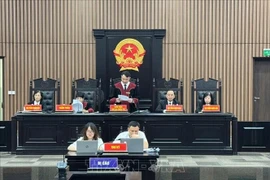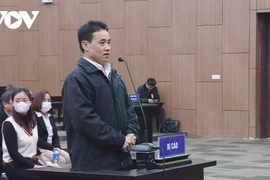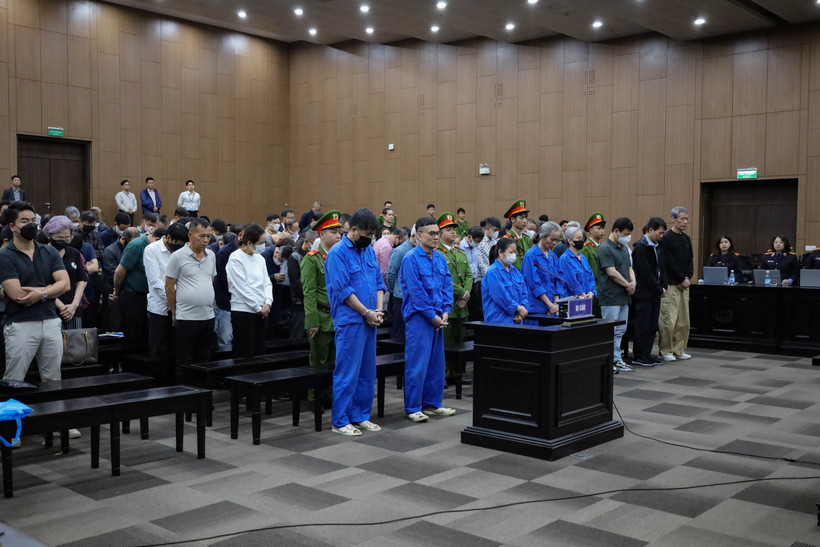
Hanoi (VNA) – The Hanoi People’s Court on November 12 sentenced former Vice Chairman of the Phu Tho provincial People’s Committee Ho Dai Dung to three years and six months in prison for his involvement in a large-scale gambling ring at the Pullman Hanoi Hotel.
The ruling followed 16 days of trial and deliberation involving 141 defendants.
Five individuals were convicted of “organising gambling” under Article 322 of the Penal Code. Among them, three Korean casino managers received prison sentences: Cho Choon Keun (four years), Choi Jin Bok (three years and six months), and Shim Hawn Hee (two years). Two Vietnamese nationals, Phan Truong Giang, Director of the Viet Kieu Business Club Branch (King Club) under Viet Hai Dang Company, and Nguyen Dinh Lam, Deputy General Director of the company, were sentenced to 30 months in prison and three years’ suspended sentence, respectively.
The remaining 136 defendants were found guilty of “gambling” under Article 321, with penalties ranging from fines of 50–100 million VND (1,900–3,800 USD) to prison terms between nine months (suspended) and four years and six months.
The first-instance verdict concluded that King Club, King Club, located at Pullman Hanoi Hotel and operated by Viet Hai Dang Investment Entertainment Services Co., Ltd., was licensed to provide prize-winning electronic games for foreigners only. However, Viet Hai Dang contracted the club’s management to HS Co., Ltd., led by Korean national Kim In Sung, who retained all profits while paying a monthly 100,000 USD operational fee and 60,000 USD business transfer fee.
To boost earnings, Kim directed casino managers Cho Choon Keun, Shim Hawn Hee, and Choi Jin Bok, along with Vietnamese executives Nguyen Dinh Lam and Phan Truong Giang, to organise illegal gambling sessions for Vietnamese nationals. Between February 4 and June 22, 2024, the group hosted games for 145 Vietnamese players, with total wagers exceeding 106 million USD. Kim personally gained more than 9.2 million USD.
The court described the case as “serious”, citing its extensive scale, the large number of participants, and the involvement of officials, civil servants, educators, healthcare workers, artists, lawyers, and businesspeople, which has caused significant public concern./.