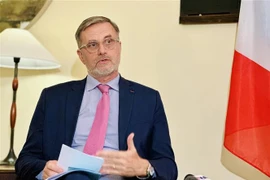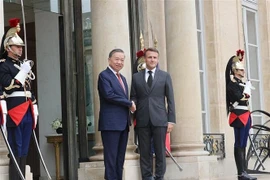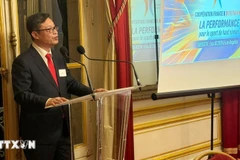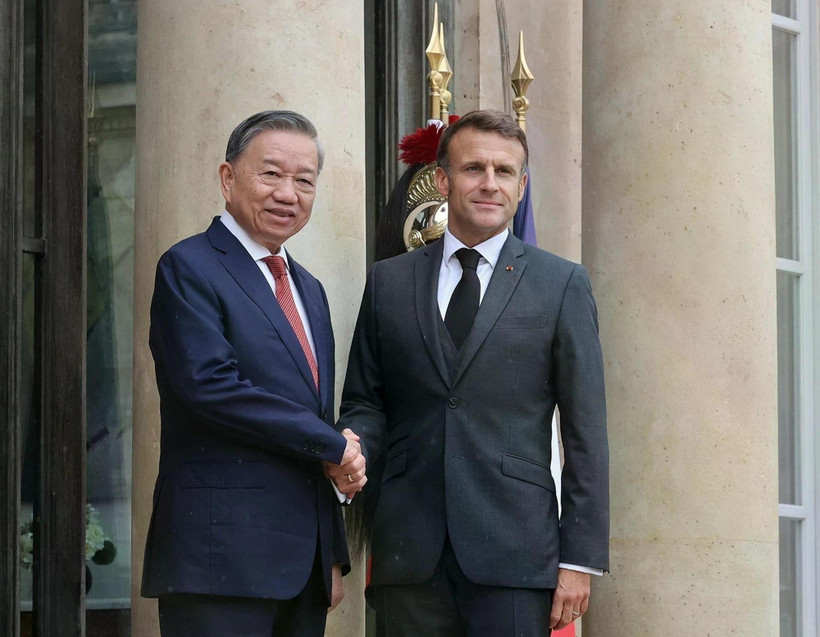
Hanoi (VNA) – The upcoming state visit to Vietnam by French President Emmanuel Macron from May 25 to 27 is a particularly significant event for bilateral relations, especially following the upgrade of the bilateral ties to a Comprehensive Strategic Partnership, according to Vietnamese Ambassador to France Dinh Toan Thang.
The fact that the French President has chosen Vietnam as the first destination on his regional tour clearly demonstrates the strategic priority and deep importance that France places on its bilateral relationship with Vietnam. Vietnam’s status as the first and only ASEAN partner to establish a Comprehensive Strategic Partnership with France further reinforces this. At the same time, this visit represents an important step in implementing France’s Indo-Pacific strategy, thereby affirming Vietnam’s key role in the country’s foreign policy in the region, said Thang.
Vietnam and France established their diplomatic relations at the ambassadorial level on April 12, 1973. However, the foundation for exchanges had been laid earlier, when France opened a representative mission in the Democratic Republic of Vietnam following the Geneva Accords of 1954.
On the political and diplomatic front, the ambassador noted a marked increase in exchanges and tightened cooperation, including the launch of new dialogue mechanisms such as the inaugural dialogue on ocean and maritime issues between the two foreign ministries. Amid a rapidly evolving global landscape, the two nations are intensifying coordination on international issues of shared concern.
He stressed that defence-security continues to serve as a strategic pillar of the partnership, reflecting the mutual trust between the two countries.
In terms of economic and trade cooperation, he highlighted growing interest from French businesses and institutions in Vietnam. The French Development Agency (AFD) is accelerating new projects related to clean energy and energy security. Several French business delegations and government officials have visited Vietnam to explore opportunities in major infrastructure and energy initiatives.
Bilateral trade in 2024 recorded an impressive 11% increase, reaching over 5.4 billion USD.
Healthcare collaboration is also emerging as a bright spot, with the recent partnership between Vietnam’s VNVC Vaccination Centre and French pharmaceutical giant Sanofi on vaccine production following the elevation of bilateral ties.
Locality-to-locality cooperation continues to flourish, with preparations underway for the 13th Vietnam–France Decentralised Cooperation Conference, expected to be held in France in 2026.
Ambassador Thang reaffirmed the enduring role of the Vietnamese community in France, whose long-standing presence and commitment to the homeland form a crucial bridge in bilateral relations. The community’s success is a testament to the close Vietnam–France connection and a key driver in deepening the comprehensive strategic partnership.
He also highlighted the critical contributions of overseas Vietnamese intellectuals, particularly in strategic sectors such as clean energy, nuclear power, semiconductors, quantum science, advanced transportation, and biomedical research - the fields where Vietnam is in need.
Analysing favourable conditions for bilateral growth, Ambassador Thang outlined four key factors. First, the upgrade to a comprehensive strategic partnership itself has unlocked wider, deeper cooperation in strategic and priority sectors aligned with the interests and capacities of both countries.
Second, France and Vietnam share a converging outlook on many global challenges, from fostering common prosperity and sustainable development to climate action, non-traditional security, and promotion of multilateralism, peace, and international law.
Third, the two nations possess complementary strengths: France’s global competitiveness in high-tech, aerospace, healthcare, infrastructure, and pharmaceuticals, and Vietnam’s dynamic domestic market, young workforce, and global integration.
Lastly, long-standing historical and cultural ties, mutual understanding, and the dynamic Vietnamese communities in France remain foundational to bilateral engagement.
The ambassador outlined four key proposals to advance bilateral ties between Vietnam and France in the coming period. Emphasising the importance of mutual understanding, he called for enhanced exchanges at all levels and the effective maintenance of bilateral dialogue mechanisms across a wide range of sectors, including diplomacy, defence, security, economy, science, and technology.
According to the diplomat, both sides should prioritise cooperation in areas where they share complementary strengths and pressing needs, particularly in key sectors with high growth potential such as high technology, clean and nuclear energy, digital transformation, health care, education, and strategic infrastructure.
He also highlighted the need to fully leverage available institutional and policy support. This includes improving Vietnam’s investment and business environment, addressing persistent bottlenecks, and enabling France to facilitate Vietnam's access to crucial international financial and technological resources.
Thang further stressed the importance of mobilising all stakeholders within the multi-layered Vietnam-France relationship. Beyond government ministries and agencies, he pointed to the active engagement of business communities, industry associations, the Vietnamese diaspora, and various local-level authorities in France as essential to advancing cooperation dynamically and inclusively.
Regarding the upcoming state visit by French President Emmanuel Macron, the ambassador noted that it presents an excellent opportunity for the leaders of both nations to align on concrete next steps for implementing the frameworks outlined in the Comprehensive Strategic Partnership. The signing of new cooperation agreements during the visit will serve as both a catalyst and a legal foundation for future collaboration in the years ahead, he added./.