Hai Phong records positive progress in combating IUU fishing

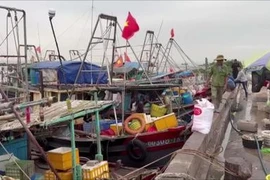
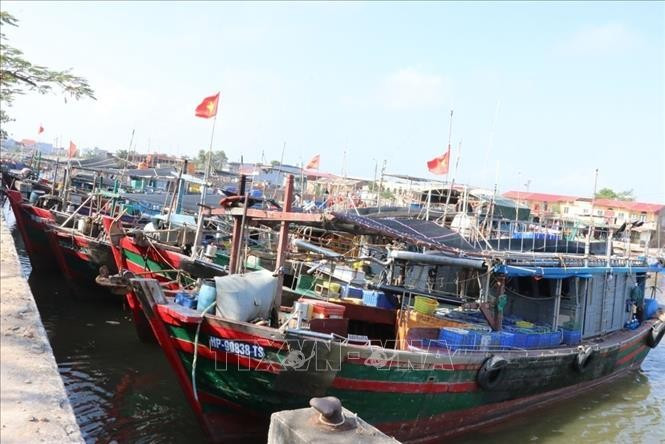
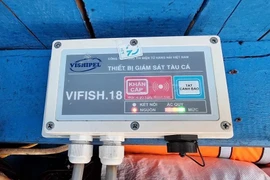
According to the Hai Phong municipal Department of Agriculture and Environment, the city currently has 788 fishing vessels. All vessels have been fully registered and licensed, with their data verified on VNeID and updated on the national fisheries management system VNFishbase. They have also been equipped with vessel monitoring system (VMS) devices, ensuring that no fishing vessels operating in the city fall short of regulatory requirements.

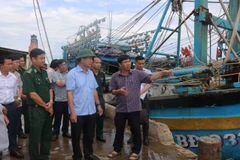
At present, all fishing vessels in Hai Phong have been registered and licensed for operation, with their data cleaned and cross-checked on VNeID, updated in the national fisheries management software system VNFishbase, and equipped with vessel monitoring system devices. (Photo: VNA)

Hai Phong (VNA) - With strong and consistent direction from municipal authorities and relevant agencies, Hai Phong has made positive progress in combating illegal, unreported and unregulated (IUU) fishing, contributing to Vietnam’s nationwide efforts to have the European Commission (EC)'s 'yellow card' warning on the country's seafood sector lifted, heard a recent press conference held in the city.

According to the Hai Phong municipal Department of Agriculture and Environment, the city currently has 788 fishing vessels. All vessels have been fully registered and licensed, with their data verified on VNeID and updated on the national fisheries management system VNFishbase. They have also been equipped with vessel monitoring system (VMS) devices, ensuring that no fishing vessels operating in the city fall short of regulatory requirements.

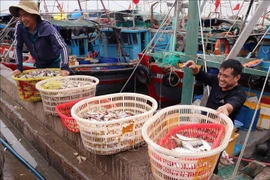
Deputy Director of the department Vu Ba Cong said that both the capacity of enforcement personnel and the awareness of fishermen have improved markedly. Fishermen have gradually changed their mindset and compliance behaviour, particularly in recording fishing logbooks while at sea, which had previously been neglected.

Alongside vessel management, communication and licensing efforts, enforcement and handling of violations have been strengthened through close coordination between functional forces and local authorities. From December 20, 2024 to December 9, 2025, authorities handled 183 administrative violation cases, imposing fines totalling more than 2.6 billion VND (99,000 USD). Most violations involved the loss of connection of VMS devices.

Vu Ba Cong said the deparment will continue coordinating with the municipal police, the Coast Guard and grassroots authorities to intensify communication on fisheries law and EC recommendations. The city will also strengthen vessel monitoring, increase patrols at sea, guide vessel owners in completing required documentation, urge timely renewal of vessel registration, and closely supervise seafood landings at ports and traceability through the electronic catch documentation and traceability system (eCDT).

The department has proposed that the municipal People’s Committee continue directing departments, sectors and local authorities to strictly implement assigned tasks in line with directions from the Government, the Prime Minister and the Ministry of Agriculture and Environment, as well as the city’s action plan against IUU fishing and for sustainable fisheries development.

The municipal Border Guard Command has been tasked with closely managing fishing vessels, coordinating with border guard forces in other coastal localities, preventing unqualified vessels from leaving port, and strictly handling deliberate IUU violations. Meanwhile, People’s Committees at the commune, ward and special-zone levels are responsible for promptly addressing cases of VMS signal loss, establishing “self-management groups for safe vessels,” and requiring vessel owners and captains to sign commitments to comply with IUU regulations.

In addition, the Hai Phong Department of Agriculture and Environment is actively advising the municipal People’s Committee on developing a scheme for sustainable fisheries exploitation. Together with ongoing support policies for fishermen, these efforts aim to encourage offshore fishing, improve livelihoods, ensure maritime security and safety, and promote the sustainable development of the city’s fisheries sector./.
VNA

See more

Chili peppers are on the list of essential goods in Indonesia (Photo: VNA)

Indonesia reduces imports of strategic food commodities

In 2026, Indonesia is expected to have approximately 12 million tonnes of rice carried over from the previous year, supported by annual production of around 34.7 million tonnes. With projected consumption of 31.1 million tonnes, national rice reserves could reach approximately 16 million tonnes by the end of the year.

Hanoi’s roadmap to implement low-emission zones from July is providing a strong boost to the electric two-wheeler market (Photo: VNA)

Low-emission zone roadmap drives electric two-wheeler boom in Hanoi

From July 1, Hanoi will introduce time-based or area-based restrictions on petrol-powered motorcycles within Ring Road 1, with plans to expand coverage across the entire zone by 2028 and extend to areas within Ring Road 3 by 2030. The policy is expected to reshape travel habits for millions of urban residents.

Delegates at the opening ceremony of the Made in Da Nang Expo 2026 (Photo: VNA)

Nearly 300 firms join Made in Da Nang Expo 2026

Speaking at the opening ceremony, Vice Chairman of the Da Nang People’s Committee Tran Chi Cuong said the exhibition is a large-scale trade promotion event aimed at showcasing products, connecting markets, and helping businesses enhance competitiveness while expanding domestic and export markets.

 Green production, standardised value chains key to fruit, vegetable sector growth

Green production, standardised value chains key to fruit, vegetable sector growth

Facing mounting pressure from increasingly stringent domestic and international standards, Vietnam’s fruit and vegetable sector is accelerating its shift toward green, safe, and sustainable production models. Beyond changing farming practices, localities and businesses are stepping up efforts to standardise value chains and build brands to achieve growth targets for 2026.

Hiep Phuoc Industrial Park in Ho Chi Minh City. (Photo: VNA)

Southern industrial real estate enters strategic growth phase

Key industrial hubs in the south, including Ho Chi Minh City, Dong Nai and Tay Ninh, are transitioning from a period driven largely by supply expansion and rising land prices to a more refined growth model. This new phase is shaped by infrastructure upgrades, supply chain restructuring, product improvement and greater emphasis on operational performance.