Handling surplus public assets: Difficult but crucial task

As of July 1, a two-tier local government model started in 34 provinces and cities, streamlining administration but creating a surplus of public properties. If not promptly addressed, these assets could become a financial burden.

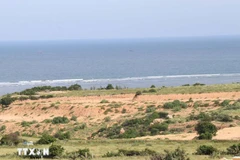
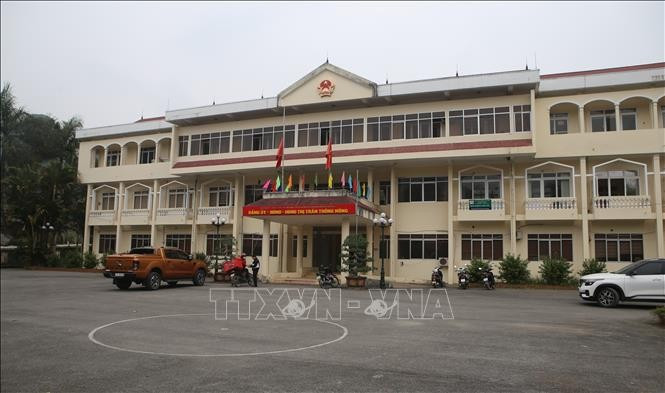
The headquarters of the People's Committee of former Thong Nong district in Cao Bang province has been assigned to another agency for use. (Photo: VNA)

Hanoi (VNA) - Following major administrative restructuring, thousands of government buildings and land sites have become vacant or underused, posing a serious challenge to public asset management, requiring decisive, transparent action to avoid the risk that this valuable resource is being wasted instead of driving local development.

As of July 1, a two-tier local government model started in 34 provinces and cities, streamlining administration but creating a surplus of public properties. If not promptly addressed, these assets could become a financial burden.

According to the Ministry of Finance (MoF), by the end of 2024, over 11,000 public buildings and land sites were poorly managed, many in disrepair or illegally occupied. The National Assembly Standing Committee reported that, of 38,000 public offices reviewed across 52 localities, 4,226 were identified as surplus.

Authorities have been directed to urgently review and formulate plans for these assets, in line with the Law on Management and Use of Public Assets. Many provinces and cities have made strong progress.

In Cao Bang province, 1,835 of 2,088 public assets remain in use, while 193 have been internally reallocated, mainly to education, health care, and public services. For the remaining 60 surplus properties, local officials propose auctioning those aligned with development plans and transferring others for managed use.

Similarly, in the former Hoa Binh province (now part of Phu Tho), a coordinated audit of buildings, land, and public vehicles is underway. Commune-level office spaces are being repurposed to optimise infrastructure and avoid unnecessary construction. As of June 2025, nearly 90% of surplus assets there have been addressed or are under review - many repurposed as administrative centres, nursery schools, or leased to generate local revenue.

However, in some areas, progress lags. Localities like Hai Phong are struggling with poor coordination, unclear asset ownership, and a lack of coordination with central agencies. In many cases, mismatches persist - areas with surplus properties often aren't those in need of facilities like schools or clinics.

Meanwhile, legal and administrative obstacles remain. These include overlapping regulations across the Land Law, State Budget Law, and Law on Management and Use of Public Assets; a shortage of specialised staff at the local level; and a reluctance to take responsibility for asset decisions.

Deputy Minister of Finance Bui Van Khang acknowledged the scale and complexity of the challenge, stressing that proper handling is essential to good governance and socio-economic development.

The ministry has called for detailed, legally sound asset management plans and stricter inspections to detect and correct delays or violations.

For assets reallocated but later found unsuitable, adjustments must be made to ensure effective public service delivery and working conditions for civil servants.

The MoF is also urging agencies to update and disseminate regulations at the commune level, and rely on existing decrees and decisions to determine norms and standards for the use of public assets, serving as the basis for investment, procurement, and management.

Nguyen Tan Thinh, Director of the MoF’s Department of Public Asset Management, emphasised that the top priority is ensuring the stable operation of local administrations. Asset sales are discouraged; instead, reallocation should prioritise education, healthcare, and culture, or transfers to local branches of central agencies.

The MoF will continue to support localities, helping resolve challenges and escalating unresolved issues to higher authorities when necessary./.

VNA
See more

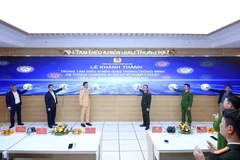
Delegates perform the inauguration protocol for the Hanoi smart traffic control centre in the capital on December 13. (Photo: VNA)

Hanoi officially launches smart traffic control centre

Equipped with 1,837 AI-powered cameras installed at 195 key intersections, the centre serves as the “brain” for real-time monitoring of traffic conditions and urban order. Through the system, police officers can observe traffic on major roads and junctions, promptly detect congestion, violations, accidents and incidents, and take timely response measures.

Vietnamese Deputy Minister of National Defence Sen. Lieut. Gen. Hoang Xuan Chien speaks at the event. (Photo: VNA)

Vietnam repatriates remains of US MIA servicemen

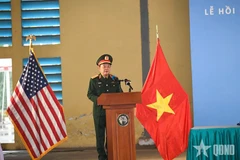
Vietnamese Deputy Minister of National Defence Sen. Lieut. Gen. Hoang Xuan Chien voiced his confidence that sustained goodwill and joint action would allow both sides to tackle lingering war consequences while broadening cooperation across other domains, which, he described as the best way to heal physical, emotional, and societal scars and fostering the stronger Vietnam - US relationship.

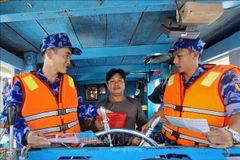
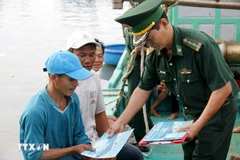
Law enforcement forces at sea in Ho Chi Minh City are working to raise awareness among fishermen about combating illegal, unreported, and unregulated (IUU) fishing (Photo: VNA)

HCM City tackles fishing violations at roots

As of December 9, all of the 4,475 fishing vessels in HCM City had registered and updated in the VNFishbase database, of them 4,268 licensed. The remainder, classified as ineligible, are strictly monitored and kept moored locally, with no permission to put to sea.

Vice Chairman of the municipal People’s Committee Hoang Nguyen Dinh addresses the event (Photo: VNA)

HCM City takes tough measures to curb IUU fishing violations

Ho Chi Minh City is mobilising its entire political system to intensify the fight against illegal, unreported and unregulated (IUU) fishing, aiming to join the national effort to have the European Commission’s “yellow card” removed.

Soldiers of Division 315 helping build a house for a flood-hit family in Dak Lak (Photo: VNA)

Dak Lak launches all-out, rapid “Quang Trung Campaign”

The central province of Dak Lak is mobilising all resources to swiftly rebuild and repair houses damaged by Storm Kalmaegi (Storm No. 13) and the historic floods in November, under the “Quang Trung Campaign” directed by the Prime Minister.

The chosen location for the construction of the Ninh Thuan 1 Nuclear Power Plant is Phuoc Dinh commune. (Photo: VNA)

Vietnam, IAEA comprehensively assess national nuclear power infrastructure

The delegation, led by Eric Mathet, Operational Lead, the IAEA’s Nuclear Infrastructure Development Section, evaluated the current status of Vietnam’s national nuclear infrastructure according to the assessment criteria outlined by the IAEA for Stage 2 – assessing the readiness of a country to invite bids or negotiate contracts for the construction of its first nuclear power plant.

First-prize winners are honoured at the award ceremony on December 10 (Photo: VNA)

VNA wins first prize at National Press Awards on HIV/AIDS 2025

Alongside the medical staff providing direct care and treatment for HIV/AIDS patients, journalists also play a crucial role in shaping public awareness and attitudes toward HIV/AIDS, said Deputy Minister of Health Assoc. Prof. Dr. Nguyen Thi Lien Huong.