Hanoi gives green light to Van Cao-Hoa Lac metro line

The main route starts at the Van Cao – Hoang Hoa Tham intersection and ends at Thach Binh Station (Hoa Lac), with a total length of approximately 39.6 km. Additionally, the project includes two branches connecting to Depot No. 1 (in Son Dong and Duong Hoa communes) and Depot No. 2 (in Hoa Lac commune), with a total branch length of about 4.8 km.

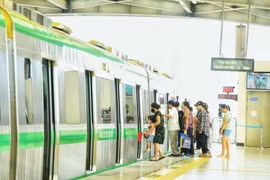
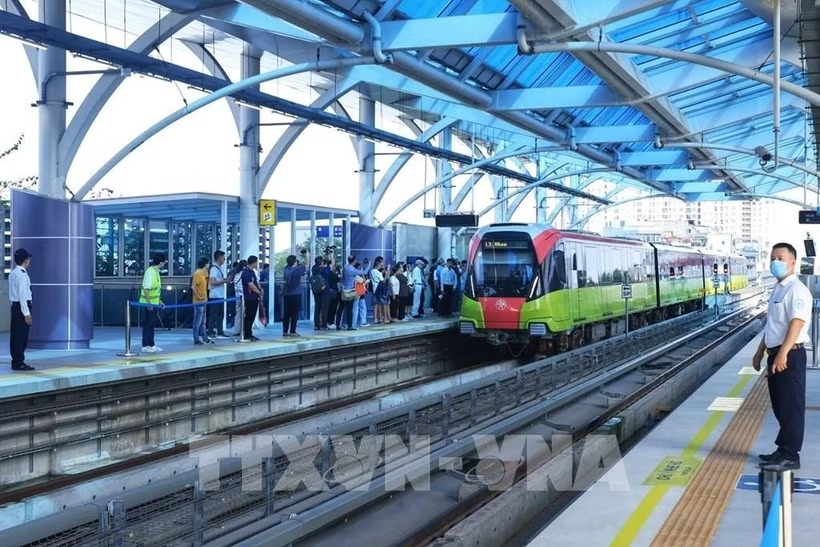
Nhon-Hanoi Station metro line - Metro line No.3 (Photo: VNA)

Hanoi (VNA) - Hanoi capital city has decided to approve a plan for Metro Line No. 5, connecting Van Cao with Hoa Lac.

Accordingly, the main route starts at the Van Cao – Hoang Hoa Tham intersection and ends at Thach Binh Station (Hoa Lac), with a total length of approximately 39.6 km. Additionally, the project includes two branches connecting to Depot No. 1 (in Son Dong and Duong Hoa communes) and Depot No. 2 (in Hoa Lac commune), with a total branch length of about 4.8 km.

The entire line consists of 20 stations, including six underground, three elevated and 11 at ground level. They are mainly located along the Thang Long Boulevard axis and the Hoa Lac – Hoa Binh Expressway. Notably, many stations will have direct connections to other metro lines, and Monorail M2, creating an integrated transportation network.

The line is designed to have a mixed structure, including 6.5 km underground, 2 km elevated, and nearly 30 km at ground level. The underground section extends from Van Cao through Lieu Giai, Nguyen Chi Thanh, to Tran Duy Hung, while the ground-level and elevated sections begin after the National Convention Centre and continue along Thang Long Boulevard to the end point at Hoa Lac.

The project has a total investment of 65.4 trillion VND (2.47 billion USD), funded by the Hanoi city budget./.
VNA

See more

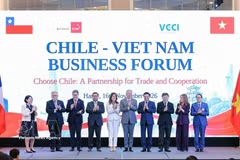
Delegates pose for a photo at the Chile-Vietnam Business Forum in Hanoi on November 16 (Photo: VNA)

Vietnam, Chile seek to expand trade ties

Chilean President José Antonio Kast pointed to potential for cooperation in agriculture and food, and called for stronger technical cooperation, better market access and closer links in innovation, technology, services and sustainable development.

Production of footwear for export at Lefaso Tra Vinh Industrial Investment and Production Joint Stock Company, Tra Cu commune, Vinh Long province (Illustrative image. Source: VNA)

VEFTA implementation requires exporters to restructure supply chains: Experts

Under VEFTA, tariff reductions to zero will be meaningless for Vietnam’s key export sectors, including textiles and garments, footwear, and agricultural and aquatic products, if goods are found to contain banned chemicals, violate rules of origin or lack transparency regarding their carbon footprints.

Deputy Prime Minister Nguyen Van Thang meets with Martin Sommer, head of the IMF’s Article IV consultation mission team to Vietnam, in Hanoi on November 13, 2026. (Photo: VNA)

IMF sees positive growth prospects for Vietnam, urges cautious monetary policy

Martin Sommer, head of the IMF’s Article IV consultation mission team to Vietnam, noted that inflation risks in Vietnam remain under control, but several factors could add to price pressures. He therefore called for cautious monetary policy management and readiness to respond promptly if inflationary pressures increased.

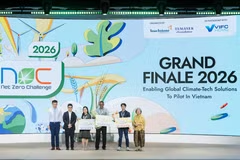
Representatives of the three first-prize-winning startups receive their awards at the event. (Photo: SGGP)

Seven green-tech startups secure 770,000 USD at Net Zero Challenge 2026

In its fourth year, the competition attracted more than 1,100 applications from 80 countries and territories, making it the most competitive edition since its launch in 2023. Nine finalists presented solutions in three categories, namely renewable energy and carbon removal; food systems and sustainable agriculture; and circular economy and waste management.

Vietnamese and Malaysian businesses connect at the event (Photo: VNA)

Vietnam, Malaysia connect businesses to boost bilateral trade cooperation

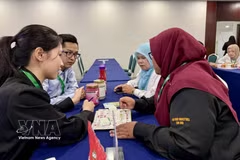
It centred on a business-to-business (B2B) matchmaking session, bringing Vietnamese and Malaysian companies together to discuss import-export needs, seek partners and explore cooperation. Vietnamese businesses aimed to connect with Malaysian importers, distributors and retailers, while expanding access for their products to Malaysia and other markets.