Hanoi shapes supporting-industry ecosystem for its 2035 vision

By 2030, Hanoi targets around 1,200 supporting-industry enterprises, with more than 40% meeting international standards and capable of joining global production networks. By 2035, this is projected to rise to around 1,400, with approximately 45% meeting international standards.

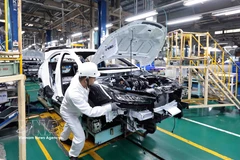
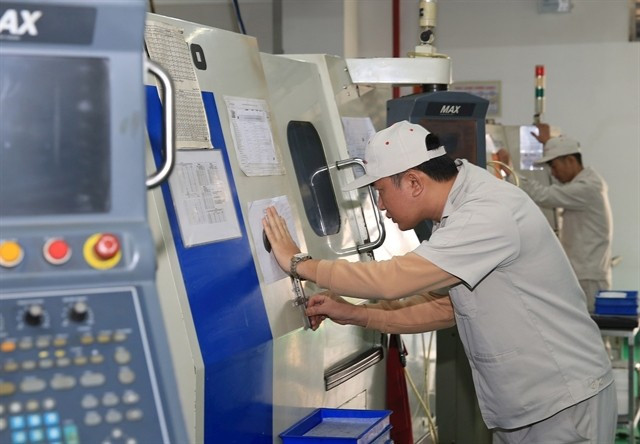
Hanoi targets around 1,200 supporting-industry enterprises. (Photo: thoibaonganhang.vn)

Hanoi (VNS/VNA) - Hanoi aims to develop a large network of supporting-industry enterprises capable of joining global supply chains and meeting the demands of modern industrial development. The programme builds on the capital’s strategic advantages and follows emerging technological trends and national industrial priorities.

Vice Chairman of the Hanoi People’s Committee Nguyen Manh Quyen has signed Decision No. 6126/QĐ-UBND approving the Hanoi Supporting Industry Development Programme for 2026–2030, with a vision to 2035.

Under this orientation, the city will prioritise supporting-industry sectors with high demand and competitive strengths, including textiles and garments, footwear, information technology, precision engineering, electronics, automation, electrical engineering equipment, artificial intelligence (AI), biotechnology, pharmaceuticals, premium cosmetics, agro-forestry-fishery processing and new materials.

Hanoi plans to form multi-tiered supply networks linked to FDI enterprises, multinational corporations and manufacturers and assemblers in the capital and nationwide.

The programme also promotes regional linkages in sectors with strong demand for supporting-industry products such as automobiles and motorcycles, mechanical engineering, mobile phones and electronic devices.

At the same time, the city will work to attract enterprises to the South Hanoi Supporting Industry Zone and other industrial parks, high-tech zones and clusters with completed infrastructure. It will accelerate key projects including the Hanoi IT Park, Hanoi Biotech High-Tech Industrial Park, Soc Son Clean Industrial Park, Dong Anh Industrial Park and the expansion of the South Hanoi Supporting Industry Zone.

Enterprises are encouraged to adopt high technology, innovate production processes and apply advances from the Fourth Industrial Revolution, particularly artificial intelligence and digital transformation.

By 2030, Hanoi targets around 1,200 supporting-industry enterprises, with more than 40% meeting international standards and capable of joining global production networks. By 2035, this is projected to rise to around 1,400, with approximately 45% meeting international standards.

Support measures include capacity building, supply-chain linkages, market promotion, adoption of global-standard management systems, workforce training, international cooperation, investment attraction, testing, certification, standards development, database expansion, information portals and assistance for IT application, digital transformation and smart-factory development.

Hanoi expects the programme to drive major breakthroughs in supporting-industry development, contributing to economic growth and enhancing the city’s competitiveness in the new era./.

VNA

See more

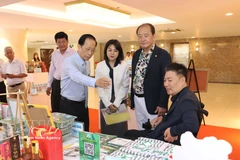
OCOP products are displayed at the Autumn Fair 2025 (Photo: VNA)

Domestic demand drives OCOP expansion

The domestic market has seen a shift in consumer awareness. While locally made goods were once viewed as secondary choices, improvements in quality and transparency have helped OCOP products become a preferred option in many households.

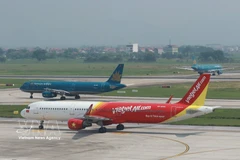
A Vietjet Air aircraft (Photo: VNA)

Vietjet remains among world’s safest airlines

Vietjet Air has consistently maintained AirlineRatings’ highest safety rating of seven out of seven stars since 2018, underscoring its sustained efforts to ensure safe and reliable journeys for passengers.

Illustrative photo (Photo: VNA)

Vietjet to transport apricot, peach blossoms on Lunar New Year occasion

Vietjet Air will transport apricot and peach blossoms on domestic flights from/to Ho Chi Minh City, Hanoi, Da Nang, Da Lat and Hai Phong from January 15 to February 28 on the occasion of the Lunar New Year (Tet) festival, at 450,000 VND (17.13 USD) per bundle (excluding taxes and fees).

The National Spring Fair 2026 will take place at the Vietnam Exposition Centre from February 2 to 8. (Photo: VNA)

National Spring Fair 2026 to boost trade, strengthen value chains

The proactive engagement of Vietnam’s trade offices overseas is also expected to contribute to the success of the fair. From mid-January, these offices have launched coordinated promotion and matchmaking efforts, inviting foreign partners to attend the fair as a gateway to Vietnam’s market, manufacturing capacity and investment environment.

The Song Khoai Industrial Park (Quang Ninh province) attracts numerous enterprises for investment and production, creating jobs for local workers. (Photo: VNA)

Quang Ninh removes bottlenecks to attract 3 billion USD in FDI

Chairman of the provincial People’s Committee Bui Van Khang said that Quang Ninh aims to draw 101 non-state budget domestic investment projects with total registered capital of nearly 569 trillion VND (21.6 billion USD), and 3 billion USD in FDI capital in 2026.

Average economic growth of 6.3% per year, together with an estimated 8.02% expansion in 2025, has placed Vietnam among the world’s most dynamic economies. (Photo: VNA)

Indonesian scholar praises Vietnam as model of sustainable, inclusive growth

These achievements so far stem from the consistent leadership of the Communist Party of Vietnam, the spirit of self-reliance and resilience, and strong national solidarity, laying a solid foundation for the country’s strategic development goals towards 2030 and the vision to 2045, according to a senior researcher at the Centre for Southeast Asian Studies.

Vietnam – India trade hit historic high of nearly 16.46 billion USD in 2025. (Illustrative photo: VNA)

Vietnam – India trade sets new record at nearly 16.5 billion USD

India supplies key inputs such as iron and steel, chemicals, pharmaceuticals, textiles and garments, animal feed and aquatic products, while Vietnam exports technology-intensive goods, electronics, textiles and garments, chemicals, wood products, footwear, spices, coffee and pepper.

Experts discuss at the event (Photo courtesy of the organiser)

Venture capital falls for fifth straight year in 2025

This downturn continues the trend of decline that began in 2021 amid tighter global liquidity and a structural reset in investor risk appetite, according to the 'Vietnam Tech & Venture Capital Outlook 2025' report published by VinVentures.

With many advantages, Vietnam has opportunities to integrate more deeply into the global technology value chain. (Photo: VNA)

Vietnam emerges as typical case of Asia’s FDI success

Vietnam stands out as a representative example. The article cites US technology group Intel as a case in point. Since establishing its testing and assembly facility at the Saigon Hi-Tech Park in 2010, Intel has expanded operations through total investments of 1.5 billion USD.

Vietnamese, Chinese enterprises exchange experience at the networking and exchange programme in Da Nang city on January 13, 2026 (Photo: VNA)

Da Nang promotes logistics cooperation with Chinese businesses

With the goodwill and active engagement of partners, particularly the Chinese business community, the cooperation is expected to generate concrete and long-term opportunities, contributing to the development, deeper integration and sustainability of Da Nang’s startup and innovation ecosystem, said Le Son Phong, Deputy Director of the municipal Department of Science and Technology.