HCM City appreciates RoK-Vietnam Parliamentary Friendship Group

Vice Secretary of the Ho Chi Minh City Party Committee Tat Thanh Cang has hailed the wholehearted support given by the Republic of Korea (RoK) – Vietnam Parliamentary Friendship Group to the two countries’ cooperation, helping foster relations between his city and the RoK.
HCM City appreciates RoK-Vietnam Parliamentary Friendship Group ảnh 1A view of Ben Nghe canal in HCM City (Photo: VNA)

HCM City (VNA) – Vice Secretary of the Ho ChiMinh City Party Committee Tat Thanh Cang has hailed the wholehearted supportgiven by the Republic of Korea (RoK) – Vietnam Parliamentary Friendship Groupto the two countries’ cooperation, helping foster relations between his cityand the RoK.

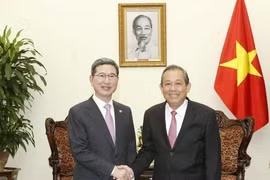
Meeting with the group’s Chairman Kim Hack Yongon September 24, Cang said the cooperation potential between HCM City and Koreanlocalities and businesses remains large, especially in the spheres that caught HCMCity’s interest and are the RoK’s strengths like electricity-electronics, automechanics, hi-tech agriculture and support industries.

The southern city of Vietnam pledges the bestpossible conditions for Korean firms to seek cooperation chances and dolong-term investment and business, thus benefiting both sides, he noted.

Kim appreciated municipal authorities’assistance to Korean companies and citizens in HCM City, adding that he willexert every effort to support the Vietnamese people in the RoK so as to enhancethe two people’s friendship.

Valuing local potential and dynamic development,he affirmed that the RoK – Vietnam Parliamentary Friendship Group will step upactivities to introduce and connect Korean businesses with HCM City ones. It isalso ready to share experience in hi-tech agriculture and sustainableindustrial development.

The RoK – Vietnam Parliamentary Friendship Groupwas set up in the RoK in May 1993. Meanwhile, the Vietnam – RoK ParliamentaryFriendship Group was established in Vietnam two years later.-VNA
VNA
See more

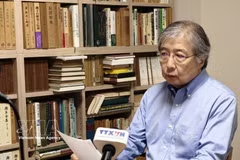
Prof. Furuta Motoo, former Rector of the Vietnam–Japan University (Photo: VNA)

President Ho Chi Minh’s 1946 diplomacy combines steadfastness, flexibility: Japanese expert

In 1946, as President of the Democratic Republic of Vietnam, Ho Chi Minh pursued efforts to ease tensions through both official and informal channels. In addition to official diplomatic negotiations with French government leaders, he met leaders of political parties and forces across the political spectrum, held press conferences, gave interviews, and engaged with the French public.

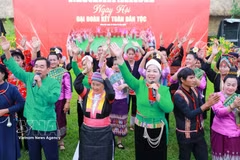
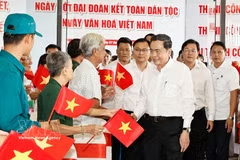
Representatives of ethnic minority groups join in a musical performance at a celebration of the Great National Unity Festival. (Photo: VNA)

📝OP-ED: Optimising cultural strength, reinforcing great national unity from grassroots

Harnessing cultural strength and reinforcing the great national unity bloc begin with concrete action at the grassroots level. In this process, Party committees provide leadership, local authorities create favourable conditions, the Vietnam Fatherland Front (VFF) and its member organisations play a central role in mobilising and bringing people together, while citizens are the creators, practitioners and beneficiaries of cultural values.

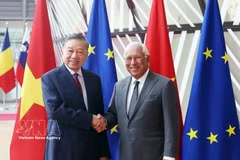
President of the European Council Antonio Costa (R) welcomes General Secretary of the Communist Party of Vietnam Central Committee and President To Lam in Brussels, Belgium, on October 22, 2026. (Photo: VNA)

Proactive diplomacy turns commitments into tangible benefits

Beyond safeguarding independence and self-reliance, diplomacy must proactively anticipate developments, prevent conflicts, expand cooperation and mobilise external resources to create a peaceful environment for sustainable development and enhance Vietnam’s international standing.

☀️ Morning digest on November 9

☀️ Morning digest on November 9

Activities of Party General Secretary and President To Lam's official visit to Japan, the 10th National Buddhist Congress, and the sixth political consultation at the deputy foreign minister level between Vietnam and Spain are among news highlights over last weekend.

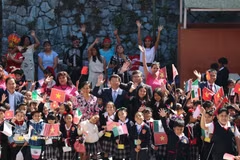
The Vietnamese delegation takes photo with students at the primary school named after the Socialist Republic of Vietnam (Photo: VNA)

CPV values traditional friendship with Mexican Labour Party

Deputy head of the CPV Central Committee’s Commission for Publicity Tran Thanh Lam proposed deeper theoretical exchanges and sharing of experience in Party building and national development; stronger cooperation in education, science, culture, external information, press, publishing and traditional medicine.

General Secretary of the Communist Party of Vietnam (CPV) Central Committee and President To Lam and Japanese Prime Minister Sanae Takaichi during her official visit to Vietnam in May, 2026. (Photo: VNA)

Top Vietnamese leader’s Japan visit to open up new space for bilateral cooperation

The visit is expected to further deepen ties through Party, State, parliamentary and people-to-people channels, while creating breakthroughs in economic, financial, scientific and technological cooperation, innovation, education and training, digital and green transformation, and supply chain diversification, thereby contributing to a peaceful and stable environment for development in both countries.

Politburo Member and Head of the Party Central Committee’s Commission for Publicity Trinh Van Quyet (R) meets with Jiri Mäntysalo, Vice Chairman of the Communist Party of Finland. (Photo: VNA)

Vietnam, Finland move to strengthen political trust, expand cooperation

Politburo Member and Head of the Party Central Committee’s Commission for Publicity Trinh Van suggested that Finland further promote its role as a bridge between Vietnam and the European Union (EU), while Vietnam could serve as a bridge between Finland and the Association of Southeast Asian Nations (ASEAN). He called for effective utilisation of the EU-Vietnam Free Trade Agreement (EVFTA) and urged Finland to encourage the remaining EU member states to ratify the EU-Vietnam Investment Protection Agreement (EVIPA) at an early date.

Representatives of the Japanese State and the Embassy of Vietnam in Japan welcome General Secretary of the Communist Party of Vietnam Central Committee and President To Lam and his spouse at Haneda International Airport in Tokyo. (Photo: VNA)

Top Vietnamese leader begins official visit to Japan

The visit is expected to further translate the potential and achievements of bilateral cooperation into concrete outcomes, strengthen the longstanding bonds between the two countries and ensure that the friendship nurtured across generations continues to deliver lasting benefits to both peoples.

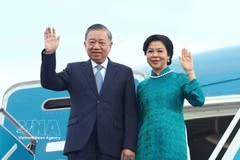
General Secretary of the Communist Party of Vietnam Central Committee and President To Lam, his spouse Ngo Phuong Ly and a high-ranking Vietnamese delegation leave Hanoi on November 8 for a four-day official visit to Japan at the invitation of the Japanese State. (Photo: VNA)

Top leader and spouse depart for official visit to Japan

General Secretary of the Communist Party of Vietnam Central Committee and President To Lam, his spouse Ngo Phuong Ly and a high-ranking Vietnamese delegation left Hanoi on November 8 for a four-day official visit to Japan at the invitation of the Japanese State.

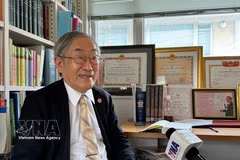
Toshiro Nishizawa, a Senior Fellow at Graduate School of Public Policy under the University of Tokyo in an interview with the Vietnam News Agency (VNA)'s correspondent in Japan (Photo: VNA)

Top leader’s visit to deepen Vietnam-Japan strategic cooperation: expert

The upcoming visit to Japan by General Secretary of the Communist Party of Vietnam Central Committee and President To Lam is expected to give fresh impetus to the Vietnam-Japan Comprehensive Strategic Partnership, reflecting the strategic priorities of both countries, according to a Japanese expert.

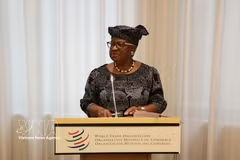
WTO Director-General Ngozi Okonjo-Iweala speaks at the event (Photo: VNA)

WTO hails Vietnam’s 20-year journey since accession

Joining the WTO was a strategic choice for Vietnam, closely associated with its Doi Moi (Renewal) process, opening-up policy and international economic integration. Over the past two decades, international economic integration has become a driving force for institutional reforms, trade expansion, foreign investment attraction and enhancement of the country's international standing.