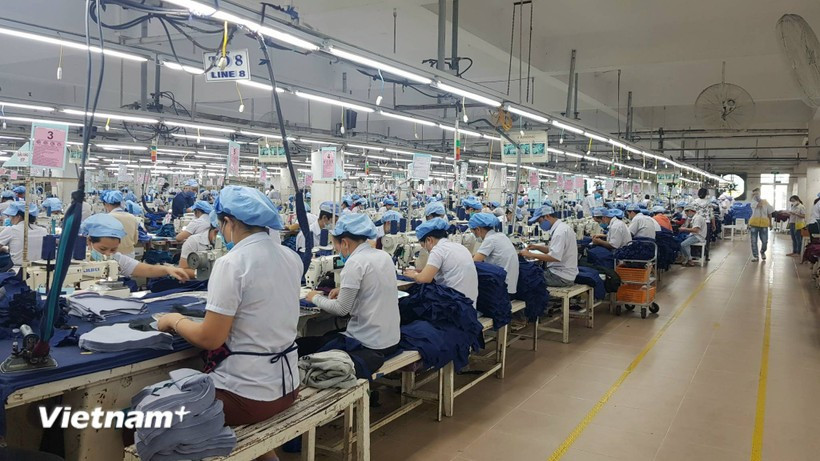
Hanoi (VNA) – Vietnamese enterprises are adapting quickly to the shifting global trade landscape by strengthening regional supply chains, diversifying markets, and accelerating the use of AI to enhance operational resilience, according to HSBC’s Global Trade Survey 2.0 released on November 25.
The survey gathers insights from 6,750 senior executives in 17 markets, including 250 businesses in Vietnam, assessing sentiment, risks, and strategic responses in the current trade environment. The findings indicate that Vietnamese firms are showing stronger clarity and confidence than many international peers as they navigate a “new normal” shaped by ongoing policy changes, supply-chain adjustments, and rising cost pressures.
According to the survey, 88% of Vietnamese companies are prioritising the development of closed-loop or regionalised supply chains in key markets. This shift aims to reduce cross-border exposure and improve supply-chain stability amid global uncertainties.
HSBC experts note a significant improvement in business clarity regarding trade-related policies. Around 73% of Vietnamese enterprises report better visibility of trade-policy impacts compared with six months earlier, while 72% say they better understand recent policy adjustments. This increased clarity is supporting more realistic expectations and more strategic long-term planning.
As tariff-related uncertainties ease, firms expect a more moderate impact from supply-chain disruptions. They forecast negative revenue effects of around 15% over the next two years, down from 20% recorded in the previous Trade Pulse survey.
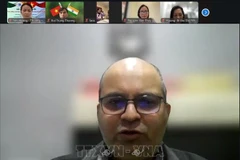
Surajit Rakshit, Country Head of Global Trade and Receivables Finance at HSBC Vietnam, said the data reflects strong adaptability among Vietnamese companies.
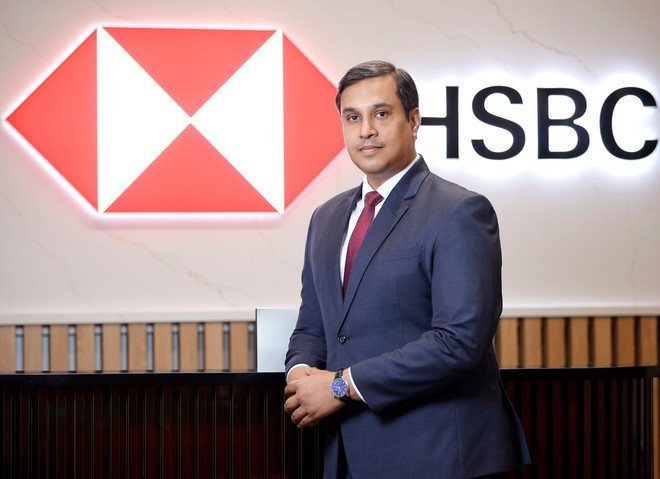
He said while revenue concerns have softened, businesses remain cautious and fully aware of potential risks. Their agile response to shifting policies and market conditions is helping maintain growth momentum.
Vietnamese enterprises are moving faster than global competitors in adjusting market strategies and adopting technology to manage rising costs. Nearly all surveyed businesses are increasing automation, streamlining operations, and renegotiating contracts to maintain competitiveness.
Notably, 90% of Vietnamese firms have adopted or are considering adopting AI or machine learning to optimise supply chains, logistics routes, or inventory levels. Meanwhile, 92% are investing in data-driven forecasting to better assess risks and demand fluctuations.
Beyond technology, companies are also strengthening organisational resilience. Over 90% of respondents are enhancing internal risk management, revising business structures, or rebalancing product and service portfolios to reduce exposure to external shocks.
Despite these efforts, trade-related financial pressures remain. Around 46% of companies report manageable but rising liquidity stress, while 21% have experienced severe pressure on cash flow since 2024. Rakshit emphasised that optimising working capital is no longer a routine financial practice but a strategic lever for resilience and supply-chain diversification.
To offset global uncertainty, Vietnamese enterprises are actively broadening their international footprint. Companies continue to increase exports to Singapore and mainland China, followed by France, Thailand, and Japan.
The survey shows notable differences by business size. Firms with annual revenue between USD 500 million and 2 billion USD lead in deepening regional integration, with 50% increasing reliance on Southeast Asian trade corridors, significantly higher than the 32% recorded among companies in the 50–500 million USD revenue range. Likewise, 46% in the larger group have expanded trade links with East and North Asia, compared to 23% among smaller firms.
Overall, Vietnamese companies remain highly optimistic. Up to 90% expect to grow their international trade over the next two years, surpassing the global average of 87%.
At the global level, the survey highlights improving clarity after a period of intense policy adjustments. Around 67% of international respondents say they now have a clearer understanding of how trade policies affect their operations, a significant increase from six months ago. As a result, concerns over sharp revenue declines have eased, with only 22% expecting drops of more than 25%.
However, cost pressures remain a critical challenge worldwide. Two-thirds (66%) of global businesses anticipate higher operating costs in the next six months due to shifting supply chains, regulatory changes, and competitive pressures. To protect margins, firms are passing on part of the increased costs to customers, renegotiating supply contracts, and accelerating investment in automation and digitalisation.
One of the most pronounced global trends is the renewed emphasis on supply-chain diversification. Around 84% of surveyed companies identify diversification as their top priority to mitigate disruption risk.
At the same time, trade flows are undergoing significant realignment. Companies are actively exploring new trade corridors, with Europe and Southeast Asia emerging as key destinations. Intra-Asian trade is also rising, supported by the Regional Comprehensive Economic Partnership (RCEP), expanding consumer markets, and the region’s growing digital economy.
HSBC concludes that while global challenges persist, Vietnamese businesses are demonstrating strong adaptability, leveraging technology, and accelerating regional integration, positioning themselves well for sustained trade growth in the years ahead./.