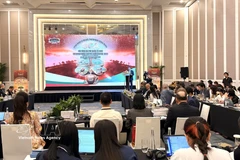
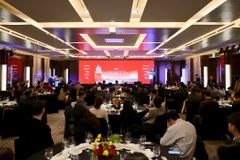
Paris (VNA) - In the context of Vietnam aiming to become a high-income country by 2045, innovation is seen as one of the key drivers. However, to ensure that innovation brings tangible benefits to the economy and people’s lives, it is necessary to clearly define priorities, methods, and implementation approaches suitable to the country’s conditions, according to experts in France.
Professor Le Van Cuong, Honorary Research Director at the French National Centre for Scientific Research (CNRS), emphasised that Vietnam needs to develop innovation in the spirit of Joseph Schumpeter’s theory of "creative destruction" which means boldly creating the new while eliminating outdated practices.
According to Cuong, innovation cannot just remain a slogan or an academic concept; it must be concretised into practical applications closely connected to the daily lives of the people.
He noted that artificial intelligence (AI) and robotics technology need to be developed in ways that practically serve agricultural production, food processing, and everyday livelihoods. If people, especially those in rural areas, do not feel the real benefits of innovation, they will feel marginalised in the development process.
Therefore, innovation only matters when it helps farmers “work less but achieve more,” improving their quality of life, rather than being an abstract concept reserved solely for academics or urban residents, stressed Cuong.
The professor also warned that in investment in AI and high technology, special attention must be given to poor communities and rural areas - those most likely to be left behind in this transformation.
From the perspective of human resources development, Professor Nguyen Van Phu, Senior Researcher at CNRS, said that innovation cannot be separated from the strategy of human development. According to him, Vietnam needs to focus on investing in higher education and postgraduate studies, especially in STEM (science, technology, engineering, and mathematics) fields, while also paying attention to the training of high-quality management personnel. He said that only through systematic, long-term, and focused investment in people can Vietnam build a knowledge- and innovation-based economy.
Phu also noted that Vietnam’s new policies such as the Politburo’s Resolution 57 and Resolution 68 have opened the right path, but the important thing is to quickly concretise and implement them decisively and effectively. He cautioned, “Not only is Vietnam focusing on innovation, but many other countries have been ahead of us by decades. Therefore, if we do not move fast and act strongly, it will be very difficult for us to catch up with.”
Tran Ha My, Director of the France-based Vietnam Innovation Network in Europe (VINEU) and Chairwoman of the Vietnamese Young Entrepreneurs Association in Europe, stressed that in recent years, with the introduction of new policies, a generation of young Vietnamese entrepreneurs and intellectual professionals has been motivated to engage in innovation. However, she identified three major current barriers: lack of initial investment capital, an incomplete institutional framework, and weak links between the State, universities, and businesses.
If these three factors are addressed, she believes innovation activities in Vietnam will boom and produce more practical results.
Jean-Philippe Eglinger from France’s National Institute for Oriental Languages and Civilisations (INALCO) emphasised that political determination is the foundation of success. According to him, Vietnam’s high-level leaders have clearly demonstrated the will to regard innovation as a “national endeavour” and affirmed that Vietnam has no choice but to succeed in this policy.
He recommended that Vietnam, like France, can make the most of the strengths of the public sector to lead innovation, and needs to enhance international cooperation, especially with France, in areas such as innovation incubators, technology transfer, and intellectual property protection.
This collaboration not only helps Vietnam access advanced technologies but also contributes to forming its own technological sovereignty - a core element of sustainable development, Eglinger added./.
See more
Vietnam Online Shopping Day – Online Friday 2025 opens
Vietnam Online Shopping Day – Online Friday 2025 is not only the biggest online shopping event of the year, but also spreads the message of smart, responsible and sustainable consumption, contributing to promoting the strong development of Vietnam's digital economy in the new era.
Ethnic woman grows cashew cooperative's international success
With strong support from local authorities, Khui persuaded 165 farming households to adopt organic cultivation practices. The cooperative now oversees a raw material area of 1,000 hectares, establishing a solid foundation for large-scale organic production.
Prudential Vietnam’s CEO: ‘Long-term capital will define Vietnam’s economic momentum’
Cocoa to cash: How two 32-year-olds build a global chocolate dream
The brand has just secured a three-star provincial rating under Vietnam’s “One Commune, One Product” initiative.
PV GAS races toward 2025 targets, aims for strong 2026 growth
Petrovietnam Gas JSC (PV GAS) is making steady progress in the final stretch of 2025, achieving positive production and business results while setting ambitious growth targets for 2026 and the 2026–2030 period.
HCM City to break ground on 1.8-billion-USD Metro Line 2 in early 2026
HCM City plans to break ground on Metro Line 2 in January 2026 after securing new fast-track approvals for the project. The 11-km line is expected to take nearly five years to build and enter service around 2030.
Vietnam sees ample room to expand trade, investment in ASEAN
ASEAN remains a strategic market with substantial potential for Vietnamese businesses, which must strengthen integration capacity, optimise FTA benefits and prepare for new agreements.
“Golden time” for Vietnam to begin low-altitude economy
The low-altitude economy refers to economic activities conducted below 1,000 metres, extendable up to 5,000 metres depending on a country’s demands.
Foreign firms explore investment opportunities in Da Nang
Chu Lai Open Economic Zone is positioned as an engine economic area in southern Da Nang, geared toward industrial development, logistics, modern urbanisation, and tourism.
Vietnam, Laos promote trade, investment cooperation toward 5 bln USD trade target
In the first nine months of 2025, bilateral trade between Vietnam and Laos reached 2.36 billion USD, up 57% year-on-year and the highest level in a decade.
Vietnam, RoK seek new drivers to advance comprehensive cooperation
The RoK is also Vietnam’s largest foreign investor. As of the end of September, Korean investors operated 10,301 valid projects with combined registered capital of 94.2 billion USD, topping both capital value and number of projects among 154 countries and territories investing in Vietnam. Korean enterprises contribute roughly 30% of Vietnam’s total export value.
Vietnam eyes stronger links with Indonesian firms to tap market potential
Vietnamese enterprises could leverage Indonesia as a strategic hub for regional expansion, while Indonesian companies could come to Vietnam to learn production practices and explore investment partnerships, opening up new avenues for economic collaboration, a diplomat said.
High-tech manufacturing boom fuels demand for green IPs in Vietnam
Investors today not only pay attention to rental prices or location but are also seeking industrial parks that provide a comprehensive and environmentally friendly ecosystem.
Hanoi approves investment policy for road linking Gia Binh airport with capital
The 16th Hanoi People’s Council (2021–2026 term) on November 13 adopted a resolution approving the investment policy for the construction of a road connecting Gia Binh International Airport in the neighbouring Bac Ninh province with the capital.
Workshop seeks to boost agro-forestry-aquatic exports to EU
Participants underlined the importance of complying with the EU’s strict standards, stepping up national branding, developing green and clean products aligned with European consumer preferences and, particularly, embedding cultural value and compelling Vietnamese stories in each product.
Vietnam, US continue technical round of negotiations on balanced, fair reciprocal trade agreement
Both sides agreed to maintain close coordination and intensify exchanges among their technical groups to advance negotiations in line with the guidance of senior leaders and the two ministers, with the aim of soon concluding a new framework for bilateral trade cooperation that further deepens the Vietnam-US Comprehensive Strategic Partnership.
Reference exchange rate continues to drop on November 14
The State Bank of Vietnam set the daily reference exchange rate at 25,122 VND/USD on November 14, down 3 VND from the previous day.
HCM City ready to serve as a bridge linking Italy with Vietnam and ASEAN: official
HCM City’s key European trading partners, with bilateral trade reaching nearly 450 million USD in the first half of 2025. Italy ranks 24th among the 129 countries and territories investing in the city, with total registered capital of nearly 135 million USD.
HCM City hosts dual int’l fashion, mother–baby exhibitions
The SIUF Vietnam 2025 Intimate Fashion and Sourcing Expo and the International Expo for Children, Baby, Maternity Expo (CBME Vietnam 2025) will become a premier platform for international collaboration, helping expand exports, upgrade supply chains, and elevate the global standing of Vietnamese brands.
Retail petrol prices rise in November 13 adjustment
Since the beginning of this year, domestic fuel prices have been adjusted 47 times. Of these, RON95-III recorded 26 increases and 21 decreases, while diesel saw 24 rises, 22 decreases, and one unchanged.