Lang Son promotes folk music value

As peach blossoms flaunt their deep pink colour on the threshold of spring, the melodies of folk music are everywhere in all the hamlets in the northern province of Lang Son.
Lang Son promotes folk music value ảnh 1Nung people in Hai Yen commune, Cao Loc district, perform “sli” singing in early spring (Photo: baolangson.vn)

Hanoi (VNA) - As peach blossoms flaunt their deep pink colour on the threshold of spring, the melodies of folk music are everywhere in all the hamlets in the northern province of Lang Son, which have become an indispensible part in the spiritual life of locals.

Researcher Hoang Huy Am, Vice President of the provincial association of folk music preservation said performances of folk music and songs are a community-based cultural activity. In their traditional costumes, local people sing in their own languages, which is unique and helps popularise the tongues, thus encouraging visitors to seek meaningful and beautiful traits in the ethnic group’s spiritual life.

Lang Son is now home to seven main ethnic groups of Kinh, Tay, Nung, Dao, Hoa, Mong and San Chay (also known as Cao Lan or San Chi). Each group has distinctive folk melodies with different nuances, styles and names.

For example, the Tay people has a gourd lute called “dan tinh”, as well as “then”, “luon”, “vi” and “phong slu” singing melodies, while their Nung brothers and sisters have “sli” and “heo phun” singing.

“Pao dung” is a popular melody of the Dao people, and love duet singing of Mong people is divided into two main parts. Romance-themed folk songs of the San Chay people in Lang Son are called “sang co” or “piac nhat co”, while those of the Hoa people in the province are named “shan co” (Son ca singing).

Folk music of the groups together creates a unique folk culture of Lang Son province. However, those melodies are not immune from outer influence and oblivion risks.

Therefore, authorities of all levels in the locality have launched taken various measures to bolster research and collection of the melodies and systemise data on folk songs of the groups. The culture, sports and tourism sector of the province has reviewed intangible heritage in the locality since 2011.

In addition, various practical activities have been carried out, such as honouring local artisans, devising policies to support and maintain “then” singing clubs, and teaching folk melodies to the next generations. Since 2016, the provincial Department of Culture, Sports and Tourism has opened 10 classes on “sli”, “then”, and “pao dung” singing, which attracted more than 3,000 learners.

The success of the preservation of intangible cultural heritages is attributed to the work by associations, notably the provincial

Association of Folk Singing Preservation which has made active and effective contributions to protecting and upholding values of folk song melodies. Lang Son province is now home to about 500 community cultural and art clubs, attracting some 10,000 members. Several schools in Van Quan, Binh Gia, Bac Son, Cao Loc, Chi Lang and Loc Binh districts are paying attention to adding folk song teaching into their extracurricular activities.

Thanks to such effort, old folk singing genres such as “then”, “sli”, “pao dung” and “xang co” have come back to the community. Since 2017, “then” and “sli” singing by Tay and Nung ethnic groups have been recognised as national intangible cultural heritages.

In particular in June last year, three locals were awarded with the title of People’s Artist and 18 other as Meritorious Artist in the intangible cultural field by the President.

In late 2019, the practice of the “then” singing by Tay, Nung and Thai ethnic people was recognised as Intangible Cultural Heritage of Humanity by the UNESCO. Deputy Director of the provincial Department of Culture, Sports and Tourism Phan Van Hoa said the department will continue reviewing the folk singing situation in the locality, thereby building a plan for preservation. It will also hold folk singing competitions and festivals and pool social resources in the effort, he added./.

VNA

See more

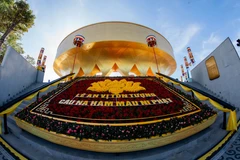
The enshrinement ceremony of the Konagamana Buddha Statue at Ba Den Mountain (Photo: Sun Group)

Tay Ninh: Statue of Konagamana Buddha on Ba Den Mountain to welcome pilgrims, visitors from January 1, 2026

Located at the highest point on the summit of Ba Den Mountain, the Konagamana Buddha Statue is cast in red copper and finished with 24k gold gilding. The statue stands 7.2 metres tall, depicting the Buddha seated in full lotus posture on a lotus pedestal set amid Udumbara Lake, shimmering with golden lotus blossoms. The Buddha’s right hand forms a teaching mudra, symbolising the period of preaching in the Buddha’s life, while the left hand holds a fig fruit an image associated with the path to awakening beneath the Udumbara (stands for fig) tree.

The number of foreign visitors to Hanoi in the first 11 months of 2025 rises by around 25% year-on-year (Photo: VNA)

Tourism emerges as bright spot in Vietnam’s socio-economic landscape

With the governmetn's determination, coordinated efforts of sectors, dynamic local implementation and active engagement from businesses, Vietnam's tourism is poised to accelerate, make breakthroughs and grow sustainably, moving toward becoming a a key economic pillar and enhancing the country’s position on the global tourism map

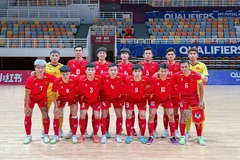
Vietnam national futsal team (Photo: VFF)

Vietnam futsal team gears up for AFC Futsal Asian Cup 2026

The Vietnam futsal team will begin training on January 2, 2026 in Ho Chi Minh City. Under the guidance of Argentine coach Diego Giustozzi, the team will enter a crucial intensive preparation phase with a high training workload, aiming to reach peak form ahead of Asia’s premier futsal tournament.

Sailing teams compete on the Hau River. (Photo: VNA)

Can Tho hosts international standard sailing regatta

The race aims to promote sailing in the city while highlighting Can Tho’s distinctive river-based culture. It also created a vibrant sporting atmosphere, contributing to the development of water-based sports movements and the effective utilisation of the city’s urban waterways, thereby enriching Can Tho’s range of distinctive tourism products.

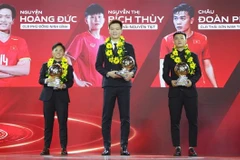
Winners of 2025 Golden Ball awards Nguyen Thi Bich Thuy, Nguyen Hoang Duc and Chau Doan Phat (from left to right). Photo vietnamnet.vn

2025 Golden Ball winners announced

Nguyen Hoang Duc of Ninh Binh FC was voted best player of 2025 and received his third Golden Ball statue at an awarding ceremony in HCM City on December 26.

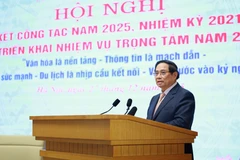
Prime Minister Pham Minh Chinh chairs a conference in Hanoi on December 27 to review the culture, sports and tourism sector’s performance in 2025 and over the past five years, and and outline key tasks for 2026. (Photo: VNA)

Culture must be Vietnam’s strength, people’s spiritual foundation: PM

He emphasised that the sector must cultivate an advanced Vietnamese culture rich in national identity, promote well-rounded human development, and foster a humane, civilised, and modern cultural environment, ensuring that culture permeates society and serves as both a strong spiritual foundation and an internal driver of development.

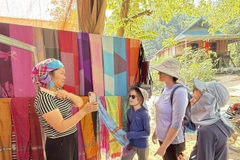
Handcrafted brocade products of Lan Ngoai village are popular with tourists, especially foreigners. (Photo: VNA)

Thanh Hoa focuses on preservation of brocade weaving craft

Lan Ngoai village, nestled in the heart of Pu Luong Nature Reserve in the central province of Thanh Hoa, is dedicated to preserving and promoting its traditional brocade weaving. Here, Thai ethnic minority women keep alive the art of creating unique patterns that reflect the rich cultural heritage of the region.

At the Hoi An – Japan Cultural Exchange in 2024 (Photo: hoianheritage.net)

21st Hoi An – Japan Cultural Exchange opens

After more than 20 years of organisation, the Hoi An – Japan Cultural Exchange has become a strong bridge connecting the two nations, helping to enhance mutual understanding, trust, and affection between their people.

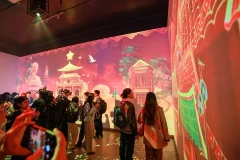
A highlight is the use of cutting-edge tools at the event (Photo: VNA)

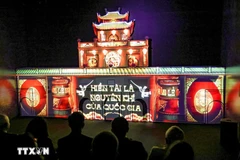
Hanoi launches immersive digital exhibition on capital's heritage

The digital exhibition employs digital projection, lighting, interactive elements and multimedia technologies to vividly and evocatively narrate stories of Hanoi's history, memories and cultural life, while marking an experimental advance in preserving and spreading the capital’s cultural heritage.

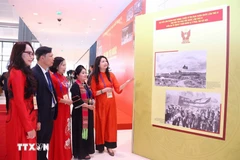
The VNA section at the exhibition (Photo: VNA)

Hanoi exhibition spreads reform ambition, patriotism

The event aims to encourage patriotic emulation, inspire patriotism and solidarity, and promote reform, creativity, and labour productivity improvement to help realise socio-economic tasks and the Resolution of the coming 14th National Party Congress.

Copyright in AI era: Safeguarding Vietnam’s creative value

Copyright in AI era: Safeguarding Vietnam’s creative value

According to a review by the Copyright Office of Vietnam, the legal corridor on copyright protection has been substantially perfected, highlighted by the Intellectual Property Law, amended in 2022, and the 2025 law amending and supplementing several articles of the Intellectual Property Law, which will take effect on April 1, 2026.