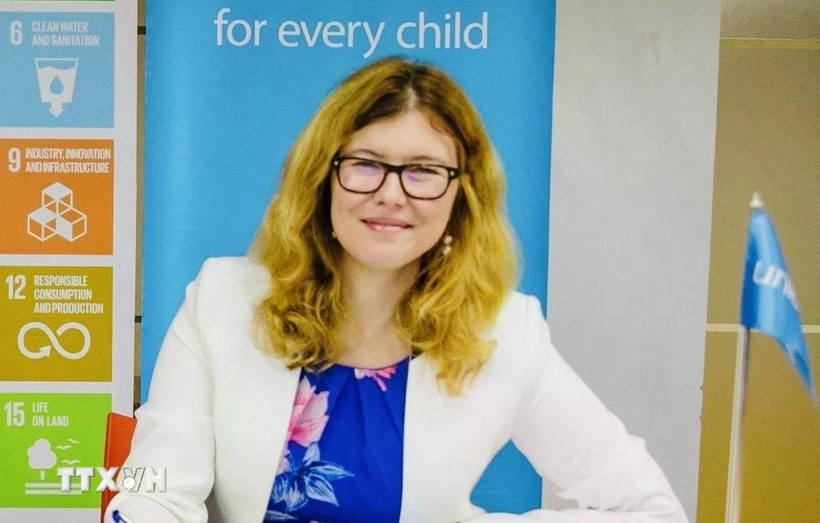
Hanoi (VNA) – The new Law on Teachers is a major step forward that will have a lasting impact on the care and education of children in Vietnam, said Silvia Danailov, UNICEF Representative in Vietnam.
This landmark legislation, adopted at the 15th National Assembly’s 9th session and set to take effect on January 1, 2026, also marks a transformative milestone in elevating the status of teachers nationwide, Danailov told the Vietnam News Agency.
The following is the full text of the interview.
Reporter: What is your assessment of the Vietnamese National Assembly passing the Law on Teachers, particularly the policy that places teachers' salaries at the highest level within the public administrative salary scale?
Silvia Danailov: On behalf of UNICEF, I warmly congratulate the Government of Vietnam on the National Assembly’s overwhelming vote of support for the passing of the Law on Teachers. This landmark legislation marks a transformative milestone in elevating the status of teachers nationwide.
The law is a clear sign that Vietnam truly values its teachers—not just as educators, but as key players in building the country’s future. It aligns closely with Party General Secretary To Lam’s vision of placing investment in human resources at the heart of Vietnam’s human capital development.
We are particularly encouraged by the law’s provisions that ensure teachers receive the highest salary level in the administrative and career salary scale system, along with occupational allowances. These measures are essential for building a strong, motivated teaching workforce.
UNICEF stands ready to support the Government in implementing this important law and in continuing to invest in teachers as the cornerstone of a resilient, inclusive, and high-quality education system for all children.
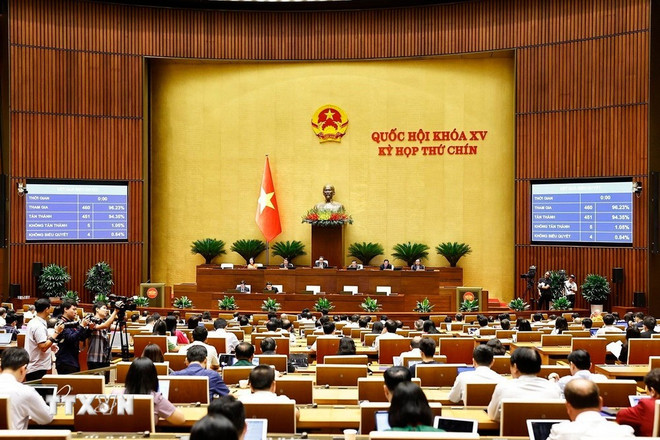
Reporter: In your opinion, what impacts and influences will the new Law on Teachers have on the care and education of children in Vietnam in the coming period?
Silvia Danailov: The new Law on Teachers is a major step forward that will have a lasting impact on the care and education of children in Vietnam. It supports several important shifts in the education sector:
Raising the status of the teaching profession by placing teachers at the highest level of the civil servant salary scale. This move can help attract and retain talented educators—especially in underserved areas—and ultimately lead to better learning outcomes for all children.
Giving schools more flexibility in hiring teachers, especially in remote and disadvantaged areas. By allowing greater autonomy in recruitment, the law helps ensure that schools can quickly bring in qualified, committed teachers who understand the local context and needs.
Defining clear values, responsibilities, and ethical standards for teachers, which helps build stronger trust between educators, students, families, and communities. These standards are essential for creating safe, respectful, and inclusive learning environments where every child feels supported and can thrive.
Reporter: In your statement regarding the passing of the Law on Teachers by the Vietnamese National Assembly, you affirmed UNICEF’s commitment to accompanying the Government of Vietnam in implementing the law. Could you share specific plans or cooperation programmes between UNICEF and Vietnam to effectively implement the Law on Teachers starting next year, with the goal of building a sustainable, inclusive, and high-quality education system?
Silvia Danailov: UNICEF stands committed to continuing support to Ministry of Education and Training in investing in teachers – who are at the core of delivering quality and inclusive education to all children in Vietnam.
As ongoing initiatives in the sector progress – for example, the roll-out of the new early childhood education (ECE) curriculum; the transition of the general education towards competency-based learning; and the sector’s digital transformation – teachers must be equipped with evolving skills to meet these demands.
To support this, UNICEF will continue to support MoET in capacity building for teachers and school administrators around emergent initiatives like integration of social-emotional skills in pre-primary schools; the early integration of computational thinking in pre-primary curriculum to lay the groundwork for digital skills later; and for strengthening of digital and AI skills, and how teachers themselves can lighten their load through the use of AI for things like lesson planning, creating teaching materials, etcetera.
These efforts are part of our broader partnership with the Government of Vietnam to ensure that every teacher is empowered to inspire, innovate, and lead in the classroom—ultimately contributing to a more equitable and resilient education system.
Reporter: On the occasion of Vietnam’s Action Month for Children (annually in June), what is your assessment of the child care and education efforts in Vietnam in recent times, as well as the ongoing discussion in the Vietnam National Assembly regarding the issuance of a resolution on tuition exemption and support for preschool children, general education students, and learners of general education programmes at educational institutions within the national education system?
Silvia Danailov: This year marks two significant milestones: the 35th anniversary of Vietnam ratifying the Convention on the Rights of the Child (CRC) and the 50th anniversary of UNICEF's nationwide programme in Vietnam. Over these decades, Vietnam has made remarkable progress in advancing the care, education, development, and protection of its children.
Thanks to sustained investments, today’s children are better protected from violence, neglect, and abuse than ever before. The vast majority have access to primary and secondary education, quality healthcare, and enjoy a life expectancy that surpasses that of previous generations. These are powerful indicators of how far Vietnam has come in realising children’s rights to health, nutrition, education, and social protection.
Building on this progress, the ongoing discussions in the National Assembly on a resolution for tuition exemption and support for preschool and general education students represent a pivotal step forward. This initiative reflects the Government’s deepening commitment to inclusive, quality education for all children. It also aligns with Vietnam’s long-term vision of strengthening human capital to achieve high-income status by 2045
Complementing these policy efforts, the Ministry of Education and Training has been actively reforming the education system to enhance learning outcomes. Recent initiatives include a revised general education curriculum that emphasises skills and competencies—such as digital literacy—and the development of a national early childhood education curriculum focused on social-emotional learning and foundational skills. These reforms are essential to ensuring that children not only attend school but also receive a quality education that prepares them for the future.
Despite these advancements, challenges remain. Ensuring equitable access to quality early education continues to be a pressing issue, particularly in disadvantaged areas—including provinces with large ethnic minority populations, children with disabilities, and children living in industrial zones.
UNICEF remains committed to working alongside the Government to address these gaps. We will continue to support efforts to reach the most vulnerable children and to implement ambitious reforms that aim to give every child in Vietnam the best possible start in life.
Reporter: Thank you so much!