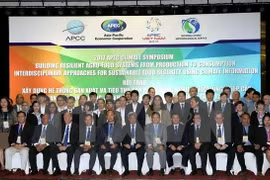
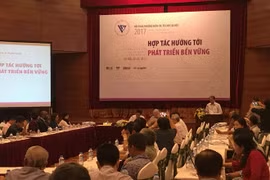
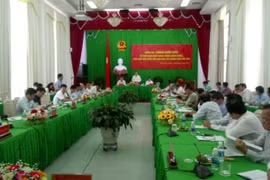
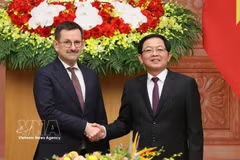
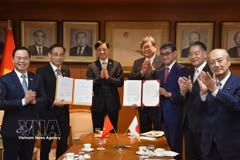
PM Nguyen Xuan Phuc at the meeting to direct meticulous preparations for an upcoming conference that looks to shape a sustainable development transformation model for the Mekong Delta to adapt to climate change.(Photo: VNA)
Hanoi (VNA) – Prime Minister Nguyen Xuan Phuc held a workingsession with relevant ministries, branches and agencies on September 5 todirect meticulous preparations for an upcoming conference that looks to shape asustainable development transformation model for the Mekong Delta to adapt toclimate change.
Based on the Letter of Intent inked with Dutch Prime Minister Mark Rutte duringthe visit to the Netherlands from July 8-11, Prime Minister Nguyen Xuan Phucordered the Ministry of Natural Resources and Environment (MoNRE) to organisethe conference to seek strategic measures for the large-scale transformatiionmodel for the sustainable Mekong Delta region with a vision until 2100.
The event, which is scheduled in the end of September, is expected to deal witheffective coordination mechanisms for interregional and interdisciplinaryactivities in the region, resources needed for the conversion model, as well ascapital solutions.
As the conference is expected to welcome 500 delegates, who are experts,development partners, scientists and enterprises, adequate preparation isrequired, the Government leader said, stressing that solutions given at theconference must have high content of science and technology.
In addition to suitable financial resources and mechanisms, impending measuresas well as long term ones to ensure livelihoods for local people must be putforth at the event, he said.
He asked the MoNRE, the Government Office, Can Tho city and relevant ministriesto set up specific projects and plans to ensure a successful event.
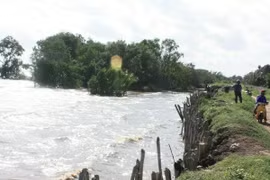
The Mekong Delta, home to 18 million Vietnamese people, is an importanteconomic region of the country. People along the Mekong River, including thosefrom Cambodia, Laos and Thailand, depend much on the river for food andlivelihoods. However, humans’ activities together with critical climate changelike drought, saltwater intrusion and landslides have left negative impacts onlocal sustainable development.-VNA
VNA