Ministry proposes developing green e-commerce law

The MoIT's draft proposal to develop the Law on E-commerce will be included in the National Assembly's law and ordinance development programme in 2025 and will be presented to the NA for consideration and comments in October 2025, before being approved at a NA meeting in May 2026.

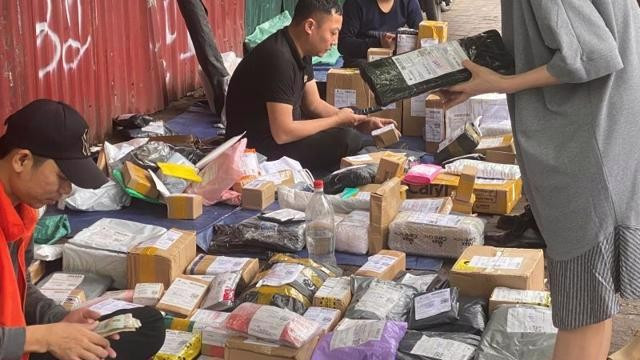
The Vietnamese online shopping and food delivery sector used about 160,000 cardboard boxes and 171,000 tonnes of plastic, mainly single-use plastic, in 2024. (Photo: vneconomy.vn)

Hanoi (VNS/VNA) - The Ministry of Industry and Trade (MoIT) has proposed a new green e-commerce law amid concerns over 800,000 tonnes of plastic waste in 2030.

According to a survey of the Vietnam E-commerce Association (VECOM) announced in 2024, the rapid development of Vietnam's e-commerce industry has caused many environmental problems, especially waste from packaging, order fulfillment and online food deliveries.

The MoIT's draft proposal to develop the Law on E-commerce will be included in the National Assembly's law and ordinance development programme in 2025 and will be presented to the NA for consideration and comments in October 2025, before being approved at a NA meeting in May 2026.

According to the MoIT, e-commerce is currently regulated in Decree 52/2013/ND-CP dated May 16, 2013 and Decree 85/2021/ND-CP dated September 25, 2021. The decrees provide the basic legal framework for the operation models of e-commerce, but the current regulations need to be adjusted towards sustainable e-commerce development to maintain long-term development.

Statistics show that the Vietnamese online shopping and food delivery markets in 2024 reached 22 billion USD and 1 billion USD, respectively. The sector used about 160,000 cardboard boxes and 171,000 tonnes of plastic, mainly single-use, according to the World Wildlife Fund (WWF).

The e-commerce industry alone threw away more than 7,600 tonnes of plastic to sell 1 billion USD worth of goods, while food delivery released nearly 18,600 tonnes of plastic.

According to VECOM, Vietnam’s e-commerce market in 2024 is estimated to reach about 31 billion USD, of which online retail sales account for more than 20 billion USD. VECOM predicts that e-commerce will reach nearly 40 billion USD in 2025 and about 100 billion USD in 2030.

However, since 2019, Vietnam's e-commerce has revealed unsustainable factors. In particular, the boom of e-commerce during the COVID-19 pandemic has clearly revealed negative impacts on the environment, typically the wide scale use of packaging and plastic materials.

It shows that there is a significant increase in waste from packaging and transportation, putting great pressure on the environment. The amount of plastic waste from e-commerce might be up to 800,000 tonnes in 2030.

Green standards and sustainable development responsibilities are becoming common requirements in global e-commerce activities, requiring businesses to integrate emission reduction solutions, use environmentally friendly materials and build green supply chains.

Therefore, the MoIT believes the development of e-commerce needs to emphasise the development of environmentally friendly e-commerce infrastructure, encourage businesses to apply green technology and increase consumer awareness of sustainable consumption. These steps not only help protect the environment but also enhance the competitiveness of Vietnam's e-commerce, contributing to the creation of a sustainable digital economy. The MoIT proposes that the new law will focus on green and sustainable e-commerce development.

According to the MoIT, in terms of economic impact, the State needs to allocate resources from the central to local levels to participate in promoting sustainable e-commerce development.

For businesses, it is necessary to invest more in technology and innovate business processes to meet new standards, especially regarding green e-commerce.

For people, product prices may increase due to the cost of applying environmental standards and improving infrastructure.

However, from the analysis, the MoIT believes that the policy on developing e-commerce in a green and sustainable direction has mostly positive impacts, and will help achieve the best economic benefits and social impacts. Therefore, the MoIT proposes to choose this option for the development of the Law on E-commerce./.


VNA

See more

An overview of the workshop (Photo: VNA)

Project empowers women entrepreneurs to tap into global e-commerce market

Overall, more than 600 women-led enterprises benefited from the project’s training, while 13 partner organisations enhanced their expertise in supporting women in e-commerce. Between June and September 2025, the 32 participating firms recorded over 455,000 buyer searches and 85,000 page views, indicating increased visibility and growing confidence in the global digital marketplace.

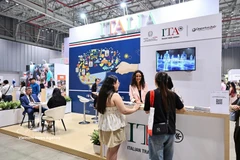
A booth at the trade promotion fair. (Photo: VNA)

Red River Delta trade promotion fair opens in Hung Yen

A trade promotion fair for localities in the Red River Delta opened on November 10 in the northern province of Hung Yen, aiming to foster regional connectivity, promote sustainable development and enhance brand of regional products.

Tan Thuan Export Processing Zone, Ho Chi Minh City (Photo: VNA)

Foreign investors ready to pour capital into HCM City

Administrative reform remains HCM City’s top priority. The city aims to cut at least 30% of procedures, reduce processing times and costs, and shift from a “management mindset” to a “service mindset” to better support the business community.

PM Pham Minh Chinh speaks at the event (Photo: VNA)

PM spotlights solidarity, cooperation, dialogue at annual business forum

Vietnam will maintain political stability and social order, push three strategic breakthroughs in institutional reform, hard and soft infrastructure, and quality human resources, while restructuring the economy and reforming the growth model, sustaining macroeconomic stability, and bolstering connectivity between domestic and FDI enterprises, said PM Pham Minh Chinh.

Officers of the Vam Lang border guard station in Dong Thap disseminate information on the prevention of illegal, unreported and unregulated (IUU) fishing and present a national flag to members of a local ship. (Photo: VNA)

Dong Thap province’s fishing cooperation models prove effective

According to Tran Thi Be Bay, Deputy Director of the provincial Department of Agriculture and Environment, the cooperative groups and cooperatives have members engaging in logistics services, such as purchasing seafood at sea and supplying fuel to fishing vessels, thereby helping fishermen stay longer at sea and increase productivity.

Vietnam’s pepper exports maintain strong growth momentum of over 25%, earning nearly 1.4 billion USD in the first ten months of 2025. (Photo: VNA)

Pepper exports maintains over 25% growth

According to the Vietnam Pepper and Spice Association (VPSA), the country exported 19,430 tonnes of pepper in October, including 16,464 tonnes of black and 2,966 tonnes of white pepper, with a total value of 129.5 million USD.

Vietnam's dragonfruits for export (Photo: VNA)

Tay Ninh expands middle East–Africa markets for farm produce

Leveraging its position as a gateway linking the Southeast and Mekong Delta regions, Tay Ninh province is asserting its role as a strategic hub in expanding agricultural supply chains to Muslim markets, especially the Middle East and Africa, which have emerged as promising destinations for Vietnamese agricultural exports, particularly Halal-certified products.

Vietnam’s Trade Counselor in India Bui Trung Thuong and Nguyen Phi Van, Chairwoman of Go Global Holdings, cut the ribbon at the opening ceremony of a Three O’Clock coffee shop at AIPL Joy Central. (Photo: tuoitre.vn)

Three O’Clock brings Vietnamese coffee to India’s billion-people market

This milestone on November 8 came 11 months after the signing of an international franchise agreement between Three O’Clock (a brand under the Teatime limited company) and its exclusive master franchise partner for the Indian subcontinent FranGlobal. Under the deal, FranGlobal will develop the brand in India, Nepal, Sri Lanka, and Bangladesh, committing to a minimum of 100 outlets within a decade.

A Vietjet flight attendant offers gifts to international passengers during a flight. (Photo: courtesy of Vietjet)

Vietjet reports strong growth in Q3, announces 20% stock dividend

In Q3, Vietjet's air transport revenue reached 16.728 trillion VND, with a pre-tax profit of 393 billion VND. Cumulatively, for the first nine months of the year, the company reported air transport revenue of 52.329 trillion VND and a pre-tax profit of 1.987 trillion VND, which increased by 28% year-on-year.