More opportunities offered for investors in science, technology

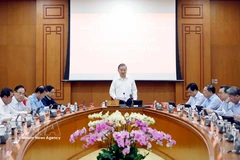
Public-private partnerships are expected to create positive synergy, while also placing greater responsibility on private investors in managing and developing projects. This approach helps ensure the effective use of public funds to advance science and technology, foster innovation, and drive digital transformation.

The Government sets a target to allocate 3% of the total budget expenditure to science and technology in 2025. (Photo: VNA)

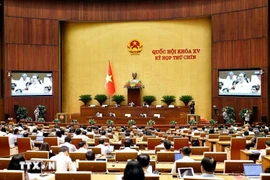
Hanoi (VNA) - The Vietnamese National Assembly and Government have recently issued numerous legal documents aimed at concretely and effectively promoting the development of science and technology, innovation, and digital transformation.

A notable example is Law No. 90/2025/QH15, which amends and supplements eight laws related to finance, procurement, and investment. This law expands fields for PPP (Public-Private Partnership) investment, increases the state capital contribution ratio to 70%, simplifies administrative procedures, and offers special incentives for science and technology projects.

The appraisal process is shortened, and the law allows the direct appointment of investors, particularly those owning strategic technologies. The state will support up to 70% of infrastructure funding and share revenue risks during the first three years. Additionally, the law removes obstacles related to the establishment of project enterprises, introduces flexibility in handling output and revenue for BOT (Build-Operate-Transfer) projects, and creates favourable conditions for investment and sustainable development.

To concretise this law, the Ministry of Finance promptly drafted and submitted to the Government a decree on mechanisms and policies for PPP in these fields. Decree No. 180/2025/NĐ-CP, which came into effect in July, marks an important step in establishing effective mechanisms for mobilising resources, promoting research and the application of new technologies, and fixing limitations in the relationship between the state and businesses.

Taking into account opinions from various stakeholders, the Government prioritises cooperation in digital transformation, workforce training, and the development of digital infrastructure. The decree also encourages private sector participation in scientific research by offering a range of incentives, including financial support, corporate income tax incentives, land exemptions and reductions, and risk-sharing mechanisms. Administrative procedures are simplified, authority is clearly delegated, and processing times are significantly reduced.

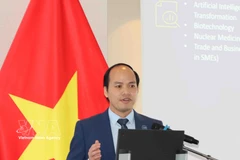
Regarding the responsibilities of the state, scientists and enterprises in implementing policies, Pham Thy Hung, Deputy Director of the Department of Public Procurement, stated that the most important lesson is to clearly define the role of each party in the development of science, technology, and innovation. The State is responsible for setting objectives and providing directions for technological development and digital transformation. Scientific and technological organisations are tasked with conducting research activities, developing technologies, products, and services, as well as training high-quality human resources. Meanwhile, enterprises are responsible for funding research activities, operating infrastructure, serving as platforms for applying new technologies, and organising the production and commercialisation of products.

The decree clearly stipulates the responsibilities of all parties to ensure that in the course of cooperation, each side fully understands its role and duties, emphasised Hung.

It also clearly outlines regulations on intellectual property rights, the use of research outcomes, and data management in these fields to protect the interests of all parties involved and facilitate the application and transfer of technology.

Public-private partnerships are expected to create positive synergy, while also placing greater responsibility on private investors in managing and developing projects. This approach helps ensure the effective use of public funds to advance science and technology, foster innovation, and drive digital transformation./.

VNA

See more

Sucker-mouthed minnow (Supradiscus varidiscus). (Photo: researchgate.net)

Vietnamese fish, bee named among 70 species newly identified in 2025

One of the most notable “hidden” finds is a small sucker-mouthed minnow endemic to Vietnam’s highlands, discovered in the Lo River. Scientifically named Supradiscus varidiscus, the specimen was collected and shelved some 25 years ago but has only now been studied and formally described.

The Ministry of Science and Technology launches a centralised one-stop-shop unit on December 19. (Photo: VNA)

Vietnam pushes sci-tech, innovation as growth drivers under Resolution 57

The Ministry of Science and Technology (MoST) bears the responsibility of “paving the way”, guided by a consistent spirit of transitioning from a management-oriented mindset to a facilitative one, from “input-based management” to “output-based evaluation”, and from fragmented investment to a focused approach centred on strategic technologies.

Prime Minister Pham Minh Chinh visits a display of science and technology development, innovation and digital transformation. (Photo: VNA)

Gov't leader requests greater efforts to step up development of sci-tech, innovation

Emphasising three strategic digital breakthroughs - digital institutions, digital infrastructure and digital human resources - PM Chinh called for close integration of science and technology development, innovation, administrative reforms, digital transformation and Project 06 with efforts to streamline the organisational apparatus and modernise leadership, management and working styles.

Doctors from Cho Ray Hospital (Ho Chi Minh City) and Vinh Long General Hospital (Vinh Long province) test the operation of a linear accelerator radiotherapy system for cancer treatment (Photo: VNA)

Vietnam sets orientations for applying nuclear energy across sectors

The plan aims to ensure the effective implementation of Decision No. 245/QD-TTg dated February 5, 2025, which approved the national master plan, while concretising objectives, orientations, solutions and resources for applying radiation and radioisotopes across sectors. It also assigns responsibilities to ministries, sectors and localities, and sets roadmaps and priorities for key programmes and projects.

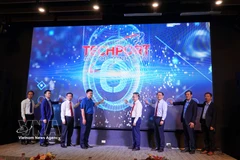
Prime Minister Pham Minh Chinh and delegates visit booths showcasing products at TechFest Vietnam 2025. Photo: VNA

Vietnam to become attractive destination for tech talent, innovative startups: PM

TechFest Vietnam 2025, held from December 12 to 14, is expected to attract more than 60,000 participants both in person and online, with the participation of over 20 corporations, 50 investment funds, more than 100 supporting organisations and incubators, and delegates from Southeast Asia, Northeast Asia, Central Asia, the Middle East, North America, and Europe.

Police offiers mornitor the traffic through AI camera (Photo: VNA)

Applying the Internet of Things in smart transport

The project aims to build a unified, safe and efficient IoT platform to support the management, operation and exploitation of smart transport systems under the Ministry of Construction, with data shared across ministries and localities.