Hanoi (VNA) - Throughout the past eight decades, multilateral diplomacy has always accompanied the glorious revolutionary cause of the Vietnamese nation. From the wartime to the restoration of peace, through the era of renewal to today’s development phase, it has played a crucial role in helping Vietnam transform itself, gaining an increasingly prominent position on the international stage and in the eyes of global friends.
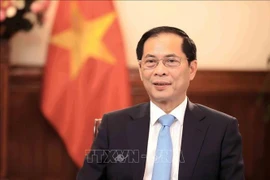
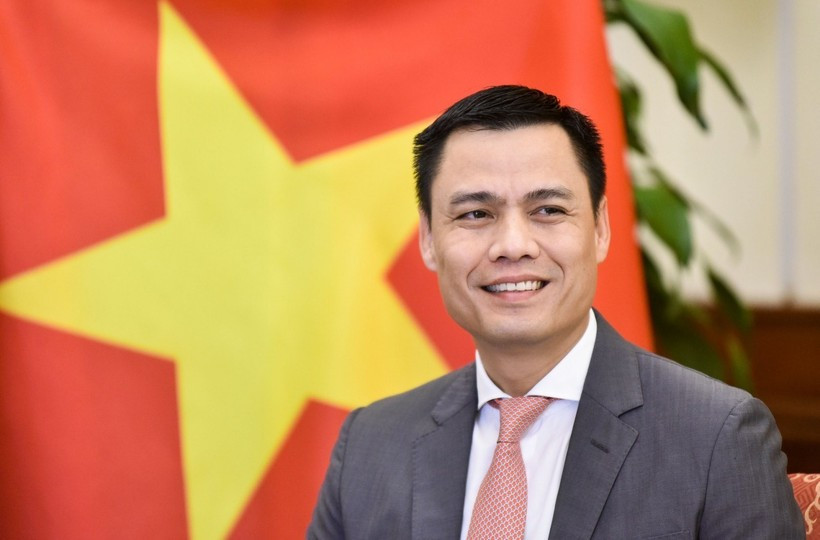
Talking to the press on the occasion of the sector’s 80th founding anniversary, Deputy Minister of Foreign Affairs Dang Hoang Giang said that multilateral diplomacy has been an inseparable component, accompanying Vietnam’s diplomatic efforts since the very early days of the nation’s founding.
Immediately after the establishment of the Democratic Republic of Vietnam in 1945, President Ho Chi Minh identified multilateral diplomacy as one of the priorities of the new Vietnamese diplomatic service. This was demonstrated in President Ho Chi Minh’s letter to the President of the first session of the United Nations General Assembly. The letter expressed Vietnam’s aspiration to join the organisation and its readiness to contribute to the international community’s efforts for peace, security, and development.
Vietnam’s accession to the United Nations in 1977 held significant political and legal importance. It affirmed the full membership status of a unified, independent Vietnam in the world’s largest multilateral organisation and marked its official presence on the international stage.
If Vietnam’s accession to ASEAN in 1995 marked the country's regional integration process, then joining the World Trade Organisation (WTO) in 2007 was a milestone that signified its full integration into the global economy.
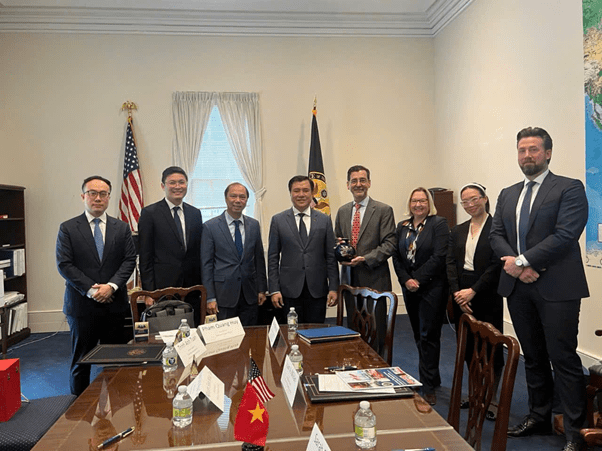
It can be said that multilateral diplomacy has played a key role in Vietnam’s transformation, helping the country gain a more prominent role and position on the international stage and in the eyes of global partners. From a nation once isolated and under embargo, Vietnam has become a member of nearly all major multilateral cooperation and linkage mechanisms. These include the UN, WTO, the World Bank, the International Monetary Fund (IMF), inter-regional forums like the Asia-Europe Meeting (ASEM) and the Asia-Pacific Economic Cooperation (APEC), to regional frameworks like ASEAN, and the Asian Development Bank (ADB). It has also built an extensive network of free trade agreements (FTAs) with most of the world’s leading economic and commercial centres.
After nearly 40 years of comprehensive reforms and deep international integration, Vietnam has emerged as a dynamic developing nation, and now ranks as the 32nd largest economy in the world, stated Giang.
Moreover, Vietnam’s multilateral diplomacy has made a significant mark on enhancing the country’s increasingly important position by actively participating in solving international issues.
Vietnam has assumed many important international positions such as the ASEAN Chair, host of the APEC Economic Leaders’ Week, non-permanent member of the UN Security Council, member of the UN Human Rights Council, and Vice President of the UN General Assembly. Vietnam has also deployed personnel to UN peacekeeping missions.
Vietnam has successfully undertaken many important international responsibilities, notably serving as the Chair of ASEAN, host of the APEC Summit, non-permanent member of the United Nations Security Council, member of the UN Human Rights Council, Vice President of the UN General Assembly, member of the International Law Commission, member of the IAEA Board of Governors, and member of various governing mechanisms of UNESCO. Vietnam has also deployed personnel to UN peacekeeping missions.
With strong shifts both in mindset and action, multilateral diplomacy will continue to play a positive role in the cause of building, developing, and protecting the nation in the new context, the official affirmed.
For future tasks, the deputy minister said that multilateral diplomacy needs to define specific strategic orientations to continue making effective contributions to protecting the country’s independence, sovereignty, territorial integrity, and national interests, while helping to maintain a peaceful and stable environment and strengthening the strategic security belt.
Additionally, multilateral diplomacy should play a pioneering role in the sustainable development of the country, actively participating in multilateral mechanisms related to economy and trade, and mobilising resources, knowledge, and international experience.
It must also promptly grasp opportunities in economic integration, investment, and trade cooperation, promote participation in new-generation free trade agreements, and transform commitments, international norms, and progressive developments to further improve the country’s economic, social, and cultural life.
Furthermore, multilateral diplomacy should continue to elevate Vietnam’s position, prestige, and voice by contributing ideas, human resources, and means in addressing common issues and important multilateral processes, Giang stressed./.