VNA




The event will feature five teams: Vietnam, Thailand, Singapore, Malaysia, and Indonesia. The teams will compete in a round-robin format to determine the winners, with two places up for grabs for the 2025 FIBA U16 Asia Cup.
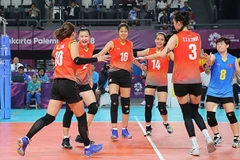
Targeting a gold medal at the SEA Games has an additional incentive, with the team now having a sponsor.
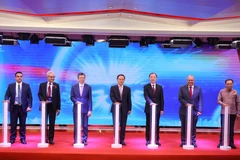
Initiatives like “China Walk” joint media tour serve as a crucial catalyst for nurturing people-to-people connections between Vietnam and China.
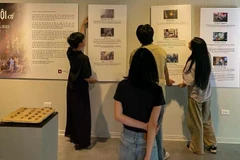
It will showcase 35 photos by nine foreign and domestic photographers, featuring the 1,000-year-old capital city’s iconic scenes and hidden corners.

Vietnam will face Iran in their final group stage match on May 11, and the result of this match will determine Vietnam's opponent in the quarterfinals.
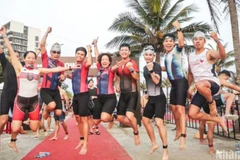
The IRONMAN 70.3 Vietnam 2025, combining a 1.9km swim, 90km of cycling, and a run of 21.1km, allows competitors to compete for 30 slots in the IRONMAN Championship in Marbella, Spain.
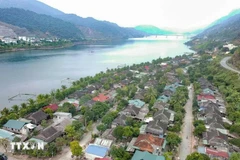
Currently, Muong Lay has 1,192 households living in traditional stilt houses out of a total of 3,198 families, with a stilt house density of approximately 10.58 houses per square kilometre, significantly higher than in other areas with White Thai populations.
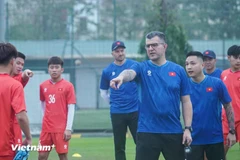
The team will train at the VFF Youth Football Center from May 10 and depart for Hohhot, China, on May 23.
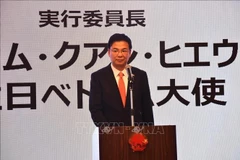
Vietnamese Ambassador to Japan Pham Quang Hieu, who is co-chair of the organising committee, noted that with 17 editions to date, the Vietnam Festival at the Yoyogi Park has become a hallmark of cultural exchange, eagerly anticipated each year by Japanese friends and the Vietnamese community living in Japan.

The players consist of Do Duy Manh and Nguyen Hai Long (Hanoi FC), Nguyen Hoang Duc (Phu Dong Ninh Binh Club), and Nguyen Van Vi (Thep Xanh Nam Dinh FC).
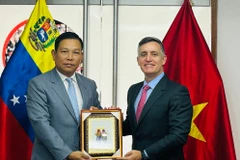
Venezuelan Sports Minister Franklin Cardillo on May 7 expressed his desire to strengthen cooperation with Vietnam in the field of sports, particularly by introducing Vovinam, the Vietnamese traditional martial arts, into official training programmes in Venezuela, thereby making it the first country in Latin America to have a Vovinam martial arts school.
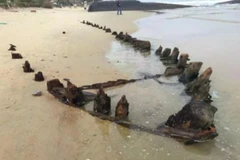
Initial analyses revealed the vessel was constructed using Lagerstroemia (mountain crape myrtle), Hopea spp. (giam), and Pinus spp. (pine), types of wood commonly found in traditional Southeast Asian shipbuilding.

The programme seamlessly blended symphonic, traditional, and contemporary music with modern stage effects, lighting, and visual art, delivering a multi-sensory spiritual experience.
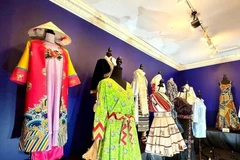
Inspired by the elegance ao dai Nhat Binh, a type of court dress from the Nguyen Dynasty (1802-1945), designer Cao Minh Tien infused the royal motifs and patterns of the Nhat Binh with a youthful, modern arrangement, offering a refreshed perspective on Vietnamese heritage.
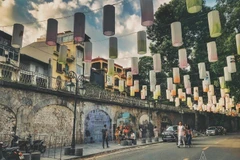
Since officially joining the UNESCO Creative Cities Network in 2019 under the design category, the capital has demonstrated a strong commitment to cultural industry development. With a clear strategic vision and firm foundations, Hanoi is poised to remain a source of creativity, community connection, and international cultural integration.
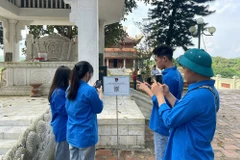
The digitisation of historical and cultural relics is helping to preserve and promote the rich heritage of Phu Tho.
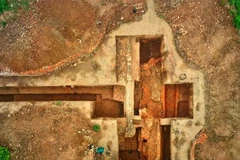
From March 25 to the end of April, scientists conducted archaeological excavations at the western wall of the Luy Lau ancient citadel in the northern province of Bac Ninh, with a total area of about 76sq.m, aiming to explore the historical and cultural values hidden in the citadel.
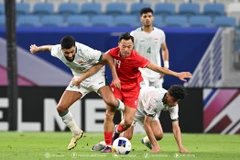
Vietnam currently ranks fifth among Asian U23 teams, following Uzbekistan, Japan, Iraq, and the Republic of Korea.
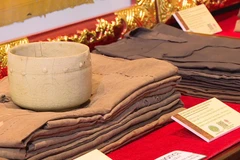
For the first time, information and models of 87 Buddhist national treasures currently preserved in museums, temples, and relic sites across the country are on display.

The New Zealand Herald has run an article by journalist Cath Johnsen affirming that Vietnam offers one of the kindest cultures in the world.