Hanoi (VNA) – Prime Minister Pham Minh Chinh has called for stronger and more coordinated efforts across all sectors to advance Vietnam’s semiconductor industry, stressing that the country must move swiftly to establish itself as a key player in the global value chain.
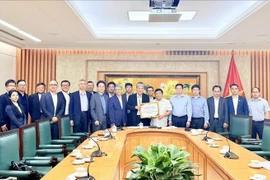
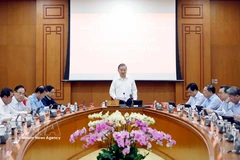
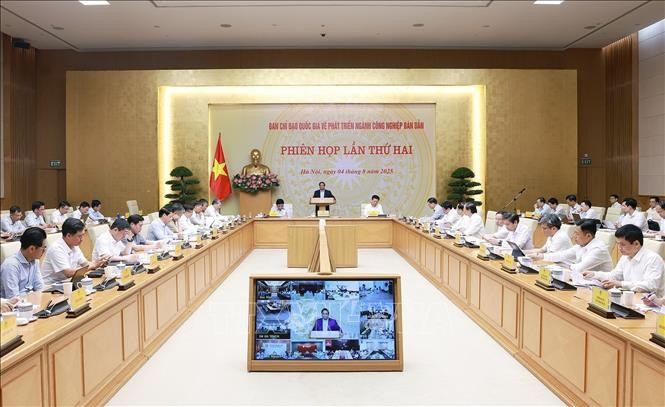
PM Chinh, who is also Head of the National Steering Committee on Semiconductor Industry Development, made the call while concluding the committee’s second meeting in Hanoi on August 4. He urged accelerated implementation of the national strategy for semiconductor industry development and the associated human resources training programme, calling for cohesive efforts across sectors to transform Vietnam into a global semiconductor hub.
The government leader reaffirmed Vietnam’s goal of achieving self-reliance in the design, manufacturing, and test of necessary semiconductor chips by no later than 2027.
PM Chinh emphasised that semiconductors are a fundamental component of the 4th Industrial Revolution, playing an indispensable role in the advancement of artificial intelligence and data infrastructure. In the face of fast-paced global development in the sector, Vietnam can not stand aside, he stressed.
According to the PM, the Party and the State have issued multiple strategic guidelines and frameworks aimed at promoting investment and facilitating the development of the semiconductor industry. The Government and the PM have also enacted decisions and directives specifically targeting the sector’s growth.
The PM commended the contributions of ministries, localities, academic institutions, and businesses, which have laid the groundwork for the semiconductor sector's development and opened new engines of economic growth. He noted that these efforts are also driving breakthroughs in science, technology, innovation, and digital transformation.
However, he acknowledged that the industry still faces significant obstacles, including limitations in capital mobilisation, regulatory frameworks, infrastructure development, technology transfer, skilled labour availability, and inter-sectoral coordination.
To achieve the national objectives, the PM directed ministries, sectors, and localities to maintain momentum in implementing the tasks and solutions outlined in the Semiconductor Industry Development Strategy to 2030, with a vision to 2050, as well as the Human Resources Development Programme for the Semiconductor Industry. He stressed that key tasks must be completed by 2025 to lay a solid foundation for achieving workforce development goals ahead of 2030.
PM Chinh underscored the need to build an integrated, synchronised, and efficient semiconductor ecosystem. This includes refining policy and legal mechanisms, particularly incentive regimes, while removing structural bottlenecks related to infrastructure, governance, and workforce capacity.
The leader called for a transition in policy orientation: from merely attracting investment to promoting meaningful technology transfer. He also advocated for strong collaboration among the “three pillars”: the State, enterprises, and educational institutions, to better connect policy development, research, and manufacturing. He further emphasised equal treatment of public and private sectors and the need to deepen international cooperation. A healthy, competitive, and transparent semiconductor market, aligned with market rules, must also be developed.
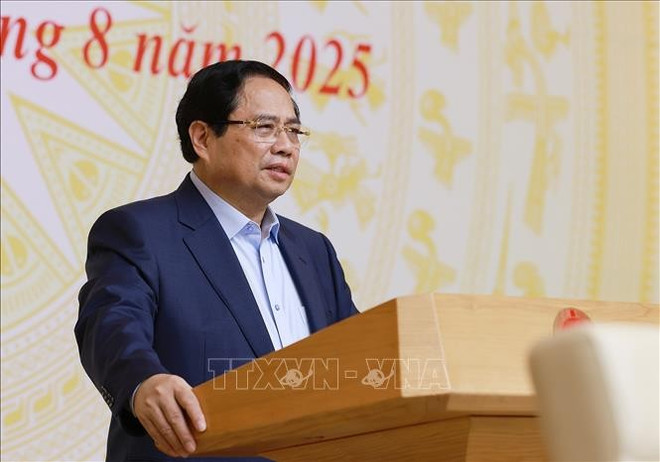
The Semiconductor Industry Development Strategy comprises 38 projects and tasks assigned to 10 ministries. Of these, 10 have been completed on schedule, 24 are currently in progress, and four are slated for implementation at a later date.
Ten months after the strategy’s adoption, ministries and localities have concentrated on developing implementation mechanisms and initiating ecosystem-building activities aligned with the roadmap for the first phase. In terms of human resource development, nine out of the 34 designated tasks have been fulfilled, while the remaining 25 are underway and within their respective timelines.
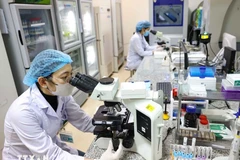
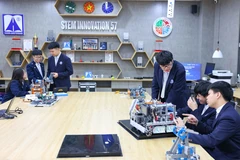
Institutional and policy frameworks for the semiconductor industry are being refined to meet development demands. Human resource training is being ramped up, with the goal of training at least 50,000 semiconductor engineers by 2030.
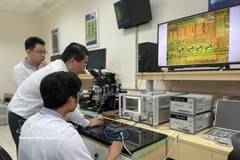
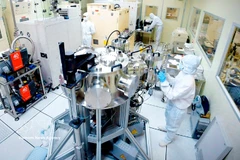
Infrastructure investment is also advancing. Expansion projects are underway for Vietnamese-owned chip manufacturing facilities. International-standard cleanrooms and research labs are being established in major urban centres.
Vietnam has so far attracted 170 FDI projects in the semiconductor and high-tech industries, with registered capital totalling nearly 11.6 billion USD. The country is now home to nearly 50 foreign corporations and over 10 domestic enterprises specialising in chip design; 14 foreign firms and one domestic company operate in packaging and testing; and 15 foreign companies are involved in supporting industries.
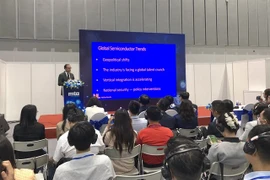
The country has also been selected as one of approximately 10 countries to collaborate with the Global Semiconductor Alliance in hosting the world’s largest series of semiconductor events, marking a major step forward in international engagement.
Participants at the meeting raised pressing concerns regarding talent development, investment attraction, and supporting infrastructure. They proposed a range of solutions including the introduction of special mechanisms and policies, infrastructure upgrades, enhanced training initiatives, and expanded international cooperation across the full semiconductor value chain, from education, design, and manufacturing to assembly, packaging, and integration into global production and supply networks./.